
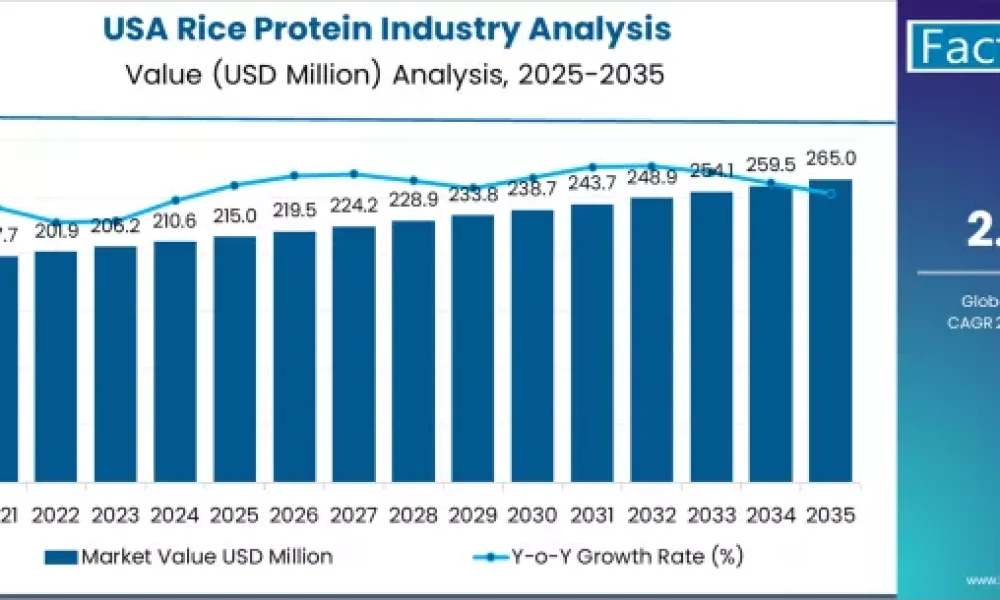
The United States rice protein industry is entering a decade of sustained growth, with market valuation projected to climb from USD 215.0 million in 2025 to approximately USD 265.0 million by 2035. According to a comprehensive industry analysis by Fact.MR, this represents an absolute value increase of USD 50 million, driven by a shift toward hypoallergenic nutrition and a booming sports supplement sector.
As domestic production recovers and consumer preferences align with plant-based lifestyles, the industry is forecast to expand at a CAGR of 2.1% through 2035. This trajectory highlights the transition of rice protein from a niche allergen-free alternative to a foundational ingredient in mainstream American wellness and food manufacturing.
Request for Sample Report | Customize Report |purchase Full Report – https://www.factmr.com/connectus/sample?flag=S&rep_id=11401
Overall sales are expected to grow by nearly 1.23X during the same period, supported by rising plant-based nutrition awareness, increasing sports nutrition consumption, and growing demand for allergen-free protein solutions across dietary applications. The USA, characterized by substantial health food infrastructure and evolving nutritional preferences, continues to demonstrate steady growth potential driven by wellness trends and protein diversification.
Strategic Market Drivers: Why the USA is Leading
The expansion of the U.S. rice protein landscape is underpinned by three primary factors:
Hypoallergenic Dominance: Unlike soy or dairy, rice protein offers a clean-label, non-GMO, and gluten-free profile, making it the preferred choice for the growing demographic of consumers with food sensitivities.
Sports Nutrition Integration: Athletic performance applications are expected to command a 41.7% market share in 2025. Innovations in protein isolates are providing the high-purity, easily digestible amino acid profiles required by professional and amateur athletes alike.
Supply Chain Resilience: Following drought-induced contractions in previous years, California rice acreage saw an 8% recovery in 2025, reaching 434,000 acres. This stabilization of domestic feedstock is critical for manufacturers aiming to reduce reliance on volatile international imports.
Segment Analysis: Concentrates and Regional Leaders
The report identifies Rice Protein Concentrate as the dominant product type, expected to hold a 62.9% share of the market by the end of 2025. This is attributed to its cost-effectiveness and balanced nutritional profile, which serves as a versatile base for infant formulas and dairy alternatives.
Geographically, the West leads the nation in demand, projected to exhibit a 2.4% CAGR through 2035. This leadership is fueled by a concentration of health-innovation hubs in California and the Pacific Northwest, where clean-label integration has become an industry standard. The Northeast follows closely (2.2% CAGR), supported by a mature wellness infrastructure and a high density of health-conscious metropolitan consumers.
Forecast Outlook: 2025 to 2035
The decade ahead is divided into two distinct growth phases:
2025–2030: Sales are expected to rise to USD 238.5 million, accounting for 47% of the total decadal growth. This period will be characterized by the rapid adoption of rice-pea protein blends in the retail sector.
2030–2035: The market is forecast to add a further USD 26.5 million in value. Experts anticipate this phase will focus on bioavailability enhancement, where advanced processing technologies improve the absorption rates of plant proteins to rival animal-based counterparts.
Competitive Landscape and Innovation
Key industry participants, including Axiom Foods Inc., RiceBran Technologies, Kerry Group plc, and BENEO GmbH, are increasingly focusing on textured and hydrolyzed formats. These innovations address historical challenges regarding taste and grittiness, allowing rice protein to be seamlessly incorporated into ready-to-drink (RTD) beverages and snack bars.
While the industry faces competition from lower-cost pea proteins and a complex 2025 tariff environment, the long-term outlook remains robust. The USDA’s 2024 Strengthening Organic Enforcement (SOE) rule has further bolstered the market by favoring traceable, high-quality domestic feedstock, giving U.S. processors a competitive edge in the global clean-label race.
About the Analysis
This industry update is based on the latest report from Fact.MR, a leading provider of market intelligence and consulting. The study offers a granular view of the U.S. rice protein market, utilizing data-driven insights to help investors and manufacturers navigate the evolving plant-based protein ecosystem.
Have a specific Requirements and Need Assistant on Report Pricing or Limited Budget please contact us – [email protected]
To View Related Report :
USA Ackee Industry Analysis
“



