
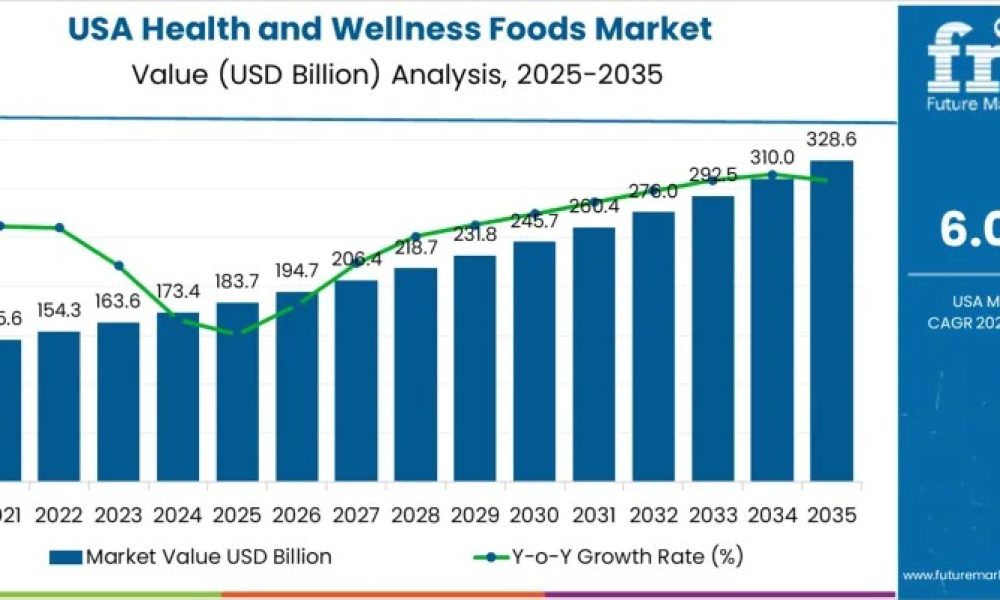
The USA health and wellness foods market is on a robust growth trajectory, valued at USD 183.7 billion in 2025 and projected to reach USD 328.6 billion by 2035, reflecting a compound annual growth rate (CAGR) of 6.0%. Growth is underpinned by rising consumer focus on preventive nutrition, weight management, and digestive wellness, driving demand for nutrient-dense, low-sugar, and clean-label products.
Functional foods lead the category, offering targeted health benefits such as immunity enhancement, metabolic support, and gut health. Products like probiotics, fortified cereals, high-protein snacks, and enriched beverages are increasingly integrated into daily diets by consumers seeking added nutritional value.
Request for Sample Report | Customize Report | Purchase Full Report – https://www.futuremarketinsights.com/reports/sample/rep-gb-29526
Regional uptake is strongest in the West, South, and Northeast, driven by higher urban adoption of health-conscious habits, broad distribution networks, and strong retail visibility. Established foodservice chains further contribute to market expansion by integrating wellness-focused menus. Omni-channel grocery retail also plays a key role in increasing access to fortified and plant-based options.
Top market participants—including Nestlé S.A., Danone S.A., PepsiCo Inc., General Mills Inc., and Kraft Heinz Company—are prioritizing natural ingredient reformulation, portion-controlled packaging, and expanded online and specialty nutrition distribution.
Market Dynamics and Key Drivers
The surge in demand for health and wellness foods stems from several consumer and industry trends:
- Preventive Health Focus: Aging populations and high healthcare costs are encouraging diets targeting long-term health and disease prevention.
- Functional Ingredients: Consumers increasingly select foods enriched with whole grains, probiotics, omega-3s, and high-protein sources.
- Clean-Label Preference: Reduced sugar, sodium, and artificial additives remain central to purchasing decisions.
- Convenience and Accessibility: Ready-to-eat, subscription-based, and online grocery solutions facilitate routine incorporation of healthier options.
Restraints include premium pricing of specialty wellness products, skepticism regarding functional claims, and regulatory scrutiny on health-related labeling. Despite these challenges, lifestyle-driven demand ensures a sustained growth trajectory.
Product Segmentation Insights
Functional foods dominate with a 43.7% share, fueled by fortified snacks, omega-rich items, and probiotics. Better-for-you (BFY) products account for 26%, focusing on reduced-sugar, low-fat, and low-sodium options. Healthy beverages contribute 18%, led by kombucha, infused waters, and energy drinks with functional benefits. Organic foods make up 7.3%, largely among premium buyers, while specialty dietary offerings cover the remaining 5%.
Sales Channel Overview:
- Offline Retail: 79.6% of sales, driven by supermarkets, hypermarkets, and club stores with extensive functional and wellness product assortments.
- Online Retail: 20.4%, growing through subscription models, rapid-commerce platforms, and direct-to-consumer wellness brands.
Offline channels remain dominant due to fresh and refrigerated product requirements, but online platforms increasingly facilitate convenience for health-conscious consumers.
Regional Analysis
- West USA: Highest CAGR at 6.9%, propelled by organic, vegan, and functional-nutrition adoption in California, Washington, and Oregon. Fitness-centric lifestyles and early adoption of superfoods, adaptogens, and sustainable products fuel growth.
- South USA: 6.2% CAGR, with emphasis on lower-sodium regional favorites, diabetic-friendly options, and plant-based alternatives, supported by Gulf Coast logistics hubs.
- Northeast USA: 5.5% CAGR, anchored in urban centers with high disposable income. Demand for portable, ready-to-eat wellness products and traceable sourcing supports adoption.
- Midwest USA: 4.8% CAGR, focusing on family-oriented, value-driven fortified staples and lean proteins, emphasizing cost-efficiency and wider accessibility.
Competitive Landscape
Leading players leverage nationwide retail penetration, nutritional reformulation, and brand trust to maintain dominance:
- Nestlé S.A.: Estimated 29.8% market share; extensive better-for-you and functional portfolio across mainstream and specialized channels.
- Danone S.A.: Focus on probiotic yogurts, plant-based beverages, and digestive wellness products with targeted health claims.
- PepsiCo Inc.: Reformulated snacks and beverages with reduced sodium, whole-grain integration, and hydration-focused lines.
- General Mills Inc.: Cereal innovations with high-fiber content and simplified labeling to appeal to health-conscious consumers.
- Kraft Heinz Company: Core pantry categories augmented with protein-rich, sugar-reduced, and preservative-free options.
Companies investing in credible nutritional science, clean-label reformulation, and enhanced shelf presence across natural, organic, and functional categories are best positioned to capture growth opportunities in the U.S. market.
Future Outlook
The U.S. health and wellness foods market is set to benefit from continued lifestyle-driven demand, innovation in functional and plant-based formats, and omnichannel retail expansion. Consumers’ commitment to preventive health, coupled with accessible and convenient product formats, will continue to drive market expansion through 2035.
About Future Market Insights (FMI)
Future Market Insights, Inc. (FMI) is an ESOMAR-certified, ISO 9001:2015 market research and consulting organization, trusted by Fortune 500 clients and global enterprises. With operations in the U.S., UK, India, and Dubai, FMI provides data-backed insights and strategic intelligence across 30+ industries and 1200 markets worldwide.



