
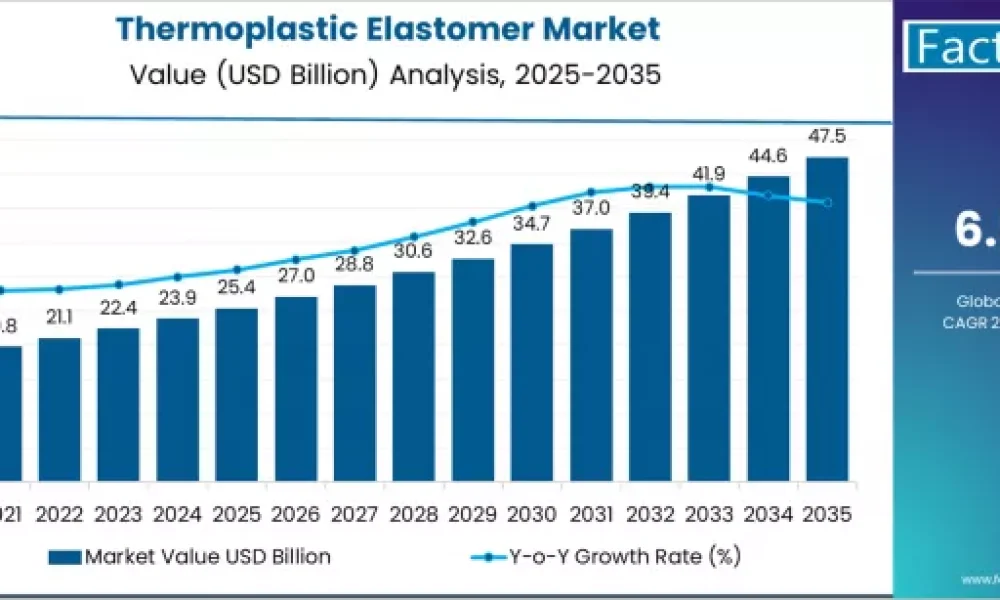
The U.S. thermoplastic elastomer (TPE) market is projected to experience robust growth from 2025 to 2035, driven by rising demand for lightweight, recyclable materials in automotive manufacturing, increasing adoption across consumer electronics, and expanding investments in advanced polymer compounds. Thermoplastic elastomers—including styrenic block copolymers (SBC), thermoplastic polyolefins (TPO/TPV), thermoplastic polyurethanes (TPU), and specialty formulations—offer a unique combination of rubber-like elasticity and thermoplastic processing advantages, making them increasingly vital across multiple industries.
Market Size and Growth
The U.S. TPE market is expected to grow from approximately USD 25.4 billion in 2025 to around USD 47.5 billion by 2035, reflecting a compound annual growth rate (CAGR) of about 6.5%. Automotive applications dominate, accounting for over 38% of market share, with interior components, sealing systems, and under-hood parts leading adoption. Other key segments include electrical and electronics, industrial, medical, and consumer goods, all of which are increasingly integrating flexible, high-performance polymer solutions.
The automotive and electronics manufacturing sectors face mounting pressure to achieve weight reduction targets and improve product sustainability while meeting evolving performance requirements for flexibility and durability, with modern thermoplastic elastomer materials providing documented processing efficiency benefits and rubber-like properties compared to traditional thermoset rubber and rigid plastic alternatives.
Growing electric vehicle production and expanding medical device manufacturing across emerging economies create substantial opportunities for polymer manufacturers and compound developers. However, raw material price volatility and competition from conventional rubber materials may pose obstacles to market penetration in cost-sensitive applications.
To access the complete data tables and in-depth insights, request a Discount On The Report here: https://www.factmr.com/connectus/sample?flag=S&rep_id=7831
Key Growth Drivers
- Automotive lightweighting and sustainability:Pressure to reduce vehicle weight and meet recyclability targets is driving TPE adoption in interior and exterior components.
- Rising electronics demand:Flexible cable insulation, soft-touch surfaces, and wearable devices boost demand for elastomeric solutions.
- Medical device expansion:Specialty TPEs support biocompatible and sterilizable applications.
- Advanced polymer development:Innovations in compound formulations enhance temperature resistance, chemical stability, and recyclability.
Regional Market Insights
North America, led by the U.S., demonstrates steady growth supported by automotive innovation, consumer electronics, and industrial manufacturing. Manufacturers are increasingly focusing on product differentiation through specialty formulations, sustainability initiatives, and partnerships with OEMs to strengthen market presence.
Technology Trends and Competition
Key technological trends include:
- Development of medical-grade and bio-based TPEs.
- Integration with circular economy practices, including recycled content.
- Advanced processing technologies enabling superior design flexibility and efficiency.
Leading players in the U.S. TPE market include BASF SE, Dow Chemical Company, Covestro AG, LG Chem, Kraton Polymers LLC, Arkema S.A., Lubrizol Corporation, and LyondellBasell Industries. These companies compete through product innovation, strategic collaborations, and expansion into high-growth applications like electric vehicles and wearable electronics.
Challenges
The market faces challenges such as raw material price volatility, higher cost compared to conventional plastics, and performance limitations under extreme thermal conditions. Adoption may be slower in cost-sensitive industrial applications, requiring manufacturers to balance price and performance.
Strategic Implications
For manufacturers: Focus on specialized formulations, sustainable products, and partnerships with key automotive and electronics OEMs.
For investors: The market offers steady, high-margin growth opportunities driven by industrial demand, technological innovation, and sustainability initiatives.
For end-users: TPE adoption enhances product performance, weight reduction, recyclability, and design versatility, supporting evolving industry standards.
Outlook Summary
From 2025 to 2035, the U.S. thermoplastic elastomer market is set for strong growth, with automotive and electronics applications driving demand. Technological innovation, sustainability focus, and expanding industrial applications will continue to fuel market expansion. Despite challenges such as material cost and performance constraints, TPE remains a strategic material solution across diverse sectors, offering long-term opportunities for manufacturers, investors, and end-users committed to innovation and sustainability.
Have a specific Requirements and Need Assistant on Report Pricing or Limited Budget please contact us – [email protected]
About Fact.MR
Fact.MR is a global market research and consulting firm, trusted by Fortune 500 companies and emerging businesses for reliable insights and strategic intelligence. With a presence across the U.S., UK, India, and Dubai, we deliver data-driven research and tailored consulting solutions across 30+ industries and 1,000+ markets. Backed by deep expertise and advanced analytics, Fact.MR helps organizations uncover opportunities, reduce risks, and make informed decisions for sustainable growth.



