
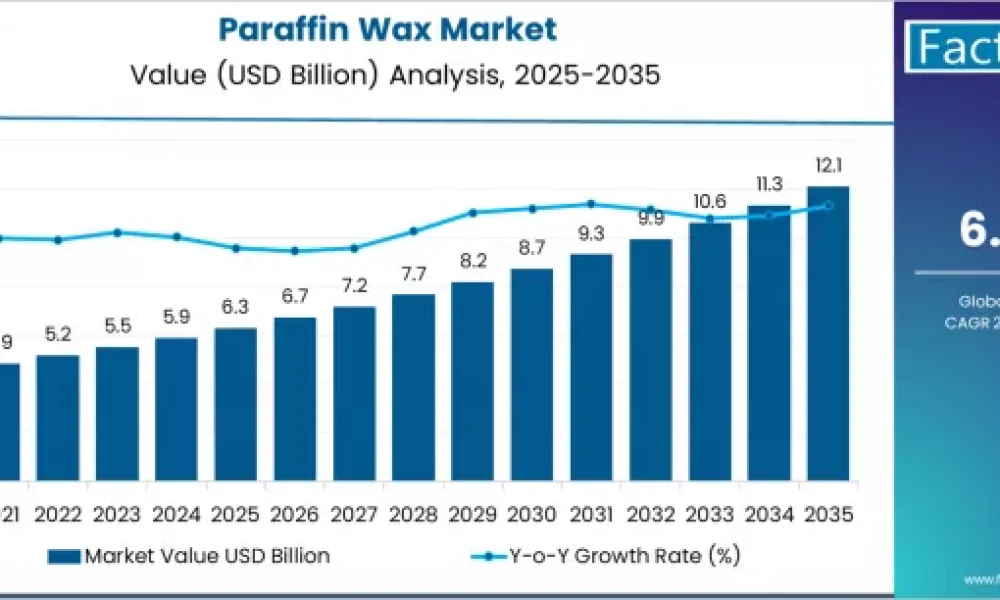
The U.S. paraffin wax industry is poised for a decade of steady, demand-driven expansion as the market navigates evolving consumer preferences, sustainability expectations, and shifting retail dynamics. According to new market modeling and sector analysis, the U.S. paraffin wax market—valued at approximately USD 357 million in 2024—is expected to grow to USD 556 million by 2035, reflecting a resilient 4.1% compound annual growth rate (CAGR) over the forecast period. Growth will be supported by sustained consumption in candles, packaging applications, industrial coatings, and personal-care formulations.
Market Overview
Paraffin wax, a petroleum-derived hydrocarbon wax prized for its low cost, stable melting profile, and versatility, remains a foundational material in several large U.S. consumer and industrial markets. Despite intensifying conversations surrounding sustainability and the emergence of alternative waxes, paraffin continues to dominate because of its performance reliability and affordability.
Three industries—candles, packaging, and personal/industrial care—represent the core pillars of U.S. demand and will shape the market trajectory over the next decade.
To access the complete data tables and in-depth insights, request a Discount On The Report here: https://www.factmr.com/connectus/sample?flag=S&rep_id=12179
Key Demand Drivers for 2025–2035
1. Candle Manufacturing Continues to Lead Consumption
The candle segment represents the single largest application for paraffin wax in the United States. The popularity of scented, decorative, and aromatherapy candles has grown consistently over the past several years and is expected to rise further as consumers increasingly invest in home ambiance, stress relief, and seasonal gifting.
Paraffin remains the preferred choice for mass-market candle producers due to:
Excellent scent throw and fragrance retention
Predictable burn behavior
Smooth appearance and moldability
Cost advantages over natural waxes
While soy, coconut, and beeswax blends have gained traction in premium markets, paraffin continues to anchor the mid-priced and mass retail candle categories, which represent the majority of nationwide unit sales.
2. Packaging & Industrial Coatings Support Steady Demand
Paraffin wax is widely used in paper coatings, corrugated packaging, frozen-food boxes, and moisture-resistant liners. As e-commerce and cold-chain logistics expand, these applications are expected to generate consistent volume growth.
Key advantages include:
Water and vapor barrier protection
Low-cost coating and impregnation properties
Compatibility with food-grade materials
Improved structural integrity for packaging
With U.S. parcel shipping volumes projected to grow throughout the decade, paraffin-coated packaging materials will remain in demand—particularly in applications where biodegradability is less critical than insulation and durability.
3. Personal Care, Cosmetics, and Industrial Applications
Beyond candles and packaging, paraffin wax plays a crucial role in:
Skin-softening treatments
Ointments and therapeutic wraps
Lubricants and molding processes
Adhesives, polishes, and sealants
These smaller but stable segments help diversify market demand and reduce dependence on consumer retail cycles.
Growth Outlook (2025–2035)
Current market modeling points to steady mid-single-digit annual growth, supported by strong baseline consumption. While structural changes in retail channels, raw material volatility, and environmental scrutiny may introduce pockets of short-term uncertainty, the overall long-range outlook remains constructive.
By 2035, U.S. market value is expected to increase by approximately 200 million USD from 2024 levels. Growth will be strongest in:
Refined paraffin grades
Hybrid wax blends
Industrial coatings
High-volume consumer candle lines
Market Tailwinds
1. Continued Expansion of E-Commerce
Rising shipment volumes fuel demand for moisture-resistant packaging and protective coatings. Paraffin’s cost advantage over synthetic barrier materials is expected to remain a core driver of adoption.
2. High Performance-to-Cost Ratio
Even as wax alternatives gain visibility, paraffin maintains significant advantages:
Consistent physical properties
Strong performance in scent and burn applications
Lower production cost compared to renewable waxes
For value-driven product lines, especially mass-market candles, it remains the dominant choice.
3. Improved Refining Technologies
Advancements in refining and blending techniques are enabling:
Cleaner-burning paraffin blends
Lower-odor and lower-VOC formulations
Enhanced compatibility with fragrance oils
These innovations help manufacturers meet evolving consumer expectations while retaining the cost benefits of paraffin.
Market Headwinds and Risks
1. Sustainability Pressures
Consumers are increasingly gravitating toward natural and renewable waxes in certain premium categories. While these categories represent a smaller share of the overall candle market, they may chip away at paraffin’s growth potential in higher-priced product segments.
2. Shifts in Retail Distribution
Retail restructuring—including consolidation among major candle brands—has altered store footprints and purchasing patterns. As brick-and-mortar stores adjust, manufacturers must maintain flexibility in channel strategy, particularly as online retailers and private-label brands expand their presence.
3. Petroleum Price Volatility
As a petroleum by-product, paraffin wax pricing is tied to fluctuations in crude oil markets. Shifts in refinery operations or petrochemical demand can influence supply availability, which may impact pricing for downstream manufacturers.
Strategic Opportunities for Market Participants
1. Hybrid Formulations
Blending paraffin with natural waxes offers a practical solution for brands seeking improved sustainability profiles without sacrificing cost efficiency or performance. Hybrid waxes are expected to gain significant traction in mid-priced candle lines.
2. Speciality Paraffin Products
Manufacturers that invest in differentiated paraffin grades—such as fully refined, ultra-low-oil, or microcrystalline blends—can secure higher-margin opportunities and serve premium applications within packaging, cosmetics, and industrial processing.
3. Supply-Chain and Channel Diversification
As traditional retail landscapes shift, suppliers can strengthen resilience by:
Building direct-to-brand partnerships
Expanding into private-label candle manufacturing
Targeting fast-growing home fragrance subscription services
Leveraging e-commerce and online wholesale platforms
Conclusion
The U.S. paraffin wax market is poised for sustained, consistent growth through 2035. While environmental trends and evolving retail behaviors create certain challenges, core demand in candles, packaging, and personal care remains strong. With a projected increase from USD 357 million in 2024 to USD 556 million by 2035, paraffin wax retains a solid position in consumer goods and industrial applications alike.
Manufacturers that prioritize technical innovation, flexible distribution strategies, and balanced sustainability messaging will be best positioned to capture the opportunities of the next decade.
Have a specific Requirements and Need Assistant on Report Pricing or Limited Budget please contact us – [email protected]
To View Related Report :
About Fact.MR
Fact.MR is a global market research and consulting firm, trusted by Fortune 500 companies and emerging businesses for reliable insights and strategic intelligence. With a presence across the U.S., UK, India, and Dubai, we deliver data-driven research and tailored consulting solutions across 30+ industries and 1,000+ markets. Backed by deep expertise and advanced analytics, Fact.MR helps organizations uncover opportunities, reduce risks, and make informed decisions for sustainable growth.



