
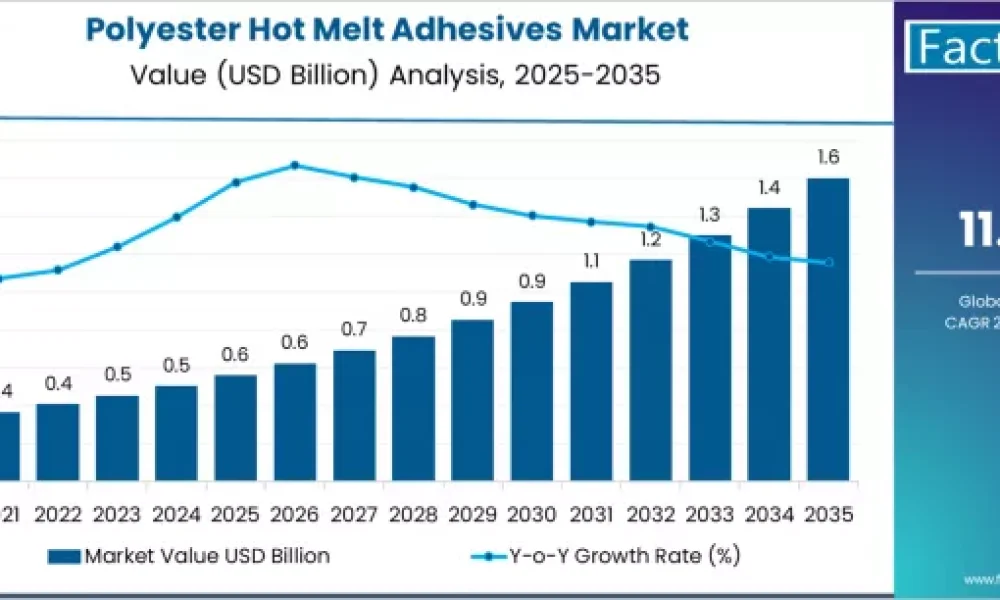
The U.S. polyester hot melt adhesives (PHMA) market is entering a decade of accelerated expansion, supported by structural shifts in packaging, textiles, automotive components, and electronics assembly. As manufacturers transition toward solvent-free, energy-efficient, and recyclable bonding technologies, polyester-based hot melts are gaining a prominent position within the broader adhesives landscape. Market analysts anticipate strong single-digit to low double-digit annual growth between 2025 and 2035, with polyester formulations projected to outpace traditional hot-melt chemistries thanks to their performance advantages and compatibility with next-generation materials.
Market Outlook Through 2035
Across multiple industry models, global demand for polyester hot melt adhesives is projected to expand significantly from the mid-2020s to the mid-2030s. While the exact numbers vary across modeling frameworks, a consistent narrative emerges: polyester HMAs are moving from a specialty adhesive category into a mainstream growth engine, driven by packaging innovation and increasing adoption across high-performance industrial applications.
In the U.S., which accounts for a substantial portion of North American adhesive consumption, PHMAs are benefiting from growth in key domestic markets including e-commerce packaging, apparel manufacturing, engineered fabrics, and lightweight vehicle components. The broader U.S. hot-melt adhesives segment is also expanding steadily, creating a favorable environment for polyester technology to grow its share.
To access the complete data tables and in-depth insights, request a Discount On The Report here: https://www.factmr.com/connectus/sample?flag=S&rep_id=12182
Key Growth Drivers
1. Packaging Transformation
The packaging industry remains the largest accelerator for polyester hot melt adhesives, and the momentum is expected to strengthen over the next decade. Brands and converters are pushing to redesign packaging for recyclability and circularity, which is driving interest in thermoplastic adhesives that enable high-speed production and compatibility with paper-based and flexible-film recycling streams.
Polyester HMAs excel in:
Strong adhesion to multilayer films and coated substrates
High heat resistance for demanding shipping and storage conditions
Fast setting behavior that supports high-speed automated lines
These performance benefits make polyester especially attractive for flexible packaging lamination, case and carton sealing, and label attachment — all fast-growing segments in U.S. packaging.
2. Expansion in Textiles and Technical Fabrics
The rise of technical textiles, nonwovens, athleisure wear, and performance apparel is fueling the use of polyester HMAs in laminating fabrics, bonding trims, and assembling multilayer textile structures. Polyester adhesives deliver wash durability, flexibility, and excellent bonding to polyester-rich fabric blends, which dominate modern apparel and home textiles.
In addition, the growth of U.S. nonwoven and hygiene manufacturing (including wipes, filtration media, and medical disposables) supports additional demand for polyester-based hot melts due to their combination of soft-hand bonding and strong mechanical integrity.
3. Sustainability and Regulatory Tailwinds
The adhesive industry is undergoing rapid transformation as businesses respond to environmental regulations, worker-safety standards, and corporate sustainability targets. Polyester hot melt adhesives align naturally with these goals because they are:
Solvent-free
Low-VOC
Energy-efficient compared to solvent-based alternatives
Compatible with recyclable packaging concepts when formulated appropriately
Growing corporate commitments to climate and waste-reduction goals are pushing converters to adopt adhesives that support recyclability certifications and reduce production emissions. Over the next decade, this shift will remain one of the strongest underlying forces supporting PHMA adoption in the U.S.
4. Product Innovation and Low-Temperature Formulations
Recent R&D investments are expanding the versatility of polyester hot melts. Manufacturers are commercializing higher-performance grades, reactive polyester blends, and low-application-temperature formulations that save energy and improve safety on production lines.
These innovations open up new application arenas such as:
Electronics assembly and component encapsulation
Automotive interior bonding and lightweight composites
Delicate substrate applications in consumer goods
Heat-sensitive flexible packaging films
As more low-temp and specialty polyester formulations reach commercial scale between 2025 and 2030, they will enable PHMAs to compete directly with EVA, polyamide, and polyolefin adhesives in applications where they previously lacked compatibility.
Competitive Landscape
The polyester HMA market includes a blend of major global adhesive manufacturers and specialized formulators. Large chemical and adhesive companies continue to invest in production capacity, polymer innovation, and application-testing support for customers across packaging, industrial, and textile markets. Smaller niche producers are also carving out space by offering custom formulations optimized for specific substrates, line speeds, or performance environments.
Competitive differentiation in the U.S. through 2035 is expected to center on:
Formulation technology and polymer expertise
Technical service and support for converters
Ability to supply recyclable-compatible grades
Supply-chain resilience for polyester feedstocks
Integration with automated application equipment
Companies capable of supporting customers through sustainable-packaging transitions and line-speed optimization will have a strategic advantage.
Opportunities for U.S. Stakeholders
Converters and Packagers
Shifting consumer and regulatory expectations around recyclability make polyester hot melts a strategic opportunity for packaging lines. U.S. converters can benefit from evaluating PHMA trials for laminates, flexible structures, and high-speed label applications — especially where elevated heat resistance or strong film bonding are required.
Adhesive Manufacturers
Producers have a multi-year window to scale reactive polyester hybrids, introduce portfolio variants with improved green credentials, and expand technical-service partnerships. Demand will be especially strong in sectors where PHMAs can replace solvent-based adhesives.
Brand Owners
Companies can leverage polyester HMAs to support circular-economy commitments, enhance packaging durability, and ensure compatibility with widely used recycling systems. Adhesive choice is increasingly included in packaging sustainability audits, and polyester grades will play a larger role in meeting regulatory expectations.
Investors and Equipment Providers
Growth in polyester HMAs will benefit manufacturers of melt tanks, application nozzles, and low-temperature applicators. Investments in equipment optimized for polyester processing will accelerate adoption and improve production efficiency across U.S. industries.
Risks and Headwinds
While the outlook is broadly positive, several risk factors could influence the pace of market growth:
Raw material price fluctuations in polyester and related intermediates
Variability in packaging demand tied to e-commerce and consumer spending
Slower-than-expected conversions on legacy packaging lines
Regulatory uncertainties around recyclability labeling and standards
Volatility in automotive, textile, and electronics manufacturing cycles
These variables may impact short-term adoption, although long-term structural drivers remain strong.
Outlook
From 2025 to 2035, the U.S. polyester hot melt adhesives market is positioned for sustained expansion, supported by sustainability priorities, packaging innovation, and ongoing advances in polymer technology. As industries continue moving toward safer, faster, and more environmentally aligned bonding solutions, polyester HMAs will become a central part of the U.S. adhesives portfolio.
Have a specific Requirements and Need Assistant on Report Pricing or Limited Budget please contact us – [email protected]
To View Related Report :
Polyester Polyol from Bio-Succinic Acid Market
About Fact.MR
Fact.MR is a global market research and consulting firm, trusted by Fortune 500 companies and emerging businesses for reliable insights and strategic intelligence. With a presence across the U.S., UK, India, and Dubai, we deliver data-driven research and tailored consulting solutions across 30+ industries and 1,000+ markets. Backed by deep expertise and advanced analytics, Fact.MR helps organizations uncover opportunities, reduce risks, and make informed decisions for sustainable growth.



