
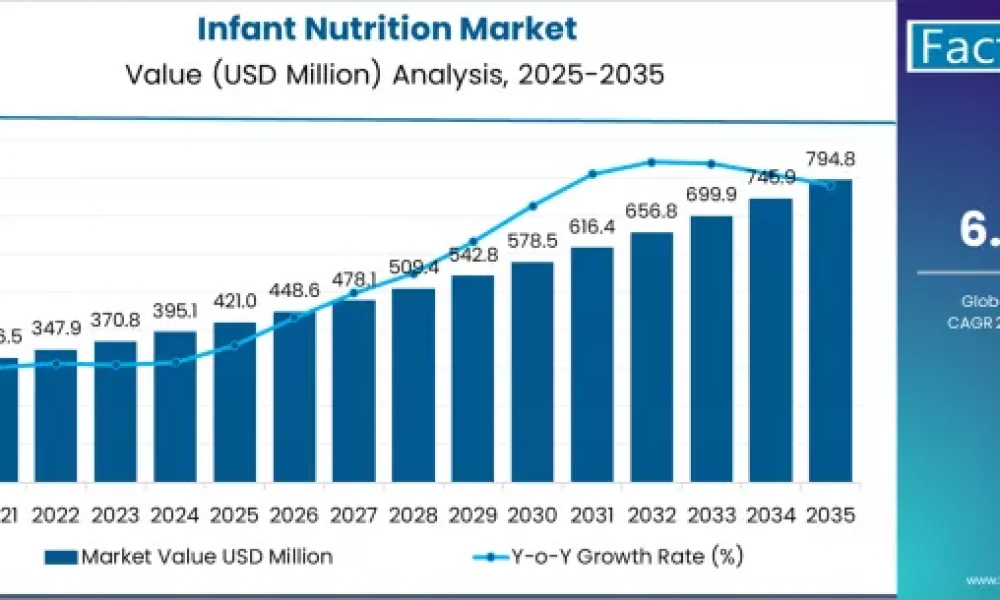
The U.S. infant nutrition market is entering a decisive period of growth and transformation. Between 2025 and 2035, the sector is projected to evolve rapidly as parental expectations shift, product innovation accelerates, and manufacturers adapt to stronger regulatory oversight. With a growing emphasis on clean-label, premium, and functional nutrition, the next decade will redefine how American parents feed their infants—and how companies meet their needs.
Market Size and Growth Outlook
In 2025, the U.S. infant nutrition market—including infant formula, organic formula, functional blends, and complementary foods—is valued at approximately USD 6.56 billion. Over the next ten years, the market is forecast to reach USD 9.08 billion by 2035, reflecting a steady compound annual growth rate (CAGR) of about 3.3%.
This growth is driven by:
Higher willingness among parents to invest in premium and specialized options
Expansion of clean-label and organic product lines
Sustained demand for formula due to workforce participation, medical needs, and feeding preferences
Increased transparency and trust in regulatory improvements
While U.S. birth rates have declined slightly—dropping around 2% between 2022 and 2023—the rise in per-infant nutritional spending more than offsets demographic headwinds.
To access the complete data tables and in-depth insights, request a Discount On The Report here: https://www.factmr.com/connectus/sample?flag=S&rep_id=12341
Segment Breakdown: Where the Growth Is Concentrated
1. Starting Milk Formula (0–6 months)
The largest segment of the market, accounting for roughly 60% of total revenue in 2025, remains starting formula. This dominance is expected to continue, supported by:
More infants requiring early-life supplementation
Higher demand for close-to-breastmilk formulations
Increased prevalence of digestive sensitivities and allergy concerns
This category will see premium and specialty formulas outperform standard formulations.
2. Specialty and Functional Formulas
Digestive-friendly blends, hypoallergenic formulas, and products enriched with prebiotics, probiotics, and human milk oligosaccharides (HMOs) are among the fastest-growing categories. Functional formulas are projected to expand at rates significantly above the market average, driven by:
Higher diagnosis rates of milk protein sensitivities
Growing interest in immune-supporting ingredients
Science-driven parental decision-making
3. Organic, Clean-Label, and Plant-Based Nutrition
Organic and hypoallergenic infant formulas account for an estimated 35% of national sales, marking a dramatic shift in parental priorities over the last decade. Clean-label attributes—such as non-GMO, no artificial additives, minimal processing, and traceable ingredients—are now key purchase drivers.
The clean-label movement is influencing not just formula, but also:
Baby cereals
Purees and toddler foods
Fortified drinks
Plant-forward alternatives
Plant-based formulas, although still a small segment, are projected to grow at double-digit rates through 2035.
Distribution Channels: The Digital Shift Accelerates
Specialty Outlets Lead, but E-Commerce Accelerates
Specialty stores—including baby boutiques, pharmacies, and health retailers—represent about 45% of infant nutrition sales in 2025. However, e-commerce continues to gain share.
Online channels account for more than 20% of formula sales and are growing quickly due to:
Subscription models
Direct-to-consumer (DTC) brand expansion
Convenience for new parents
Inventory reliability
Across the broader baby-products market, pure-play e-commerce platforms command around 55% of online sales, with subscription purchases growing at roughly 45% year over year.
By 2035, digital channels are expected to represent one-third of all infant nutrition sales.
Regulatory and Supply Chain Landscape
Strengthened Oversight
Following nationwide formula shortages earlier in the decade—where nearly 40% of major brands were out of stock at peak disruption—federal regulatory agencies have intensified oversight across:
Ingredient sourcing
Contaminant testing
Manufacturing standards
Recall responsiveness
Cross-border import pathways
The updated regulatory environment is designed to enhance safety, prevent shortages, and ensure multiple layers of supply-chain redundancy.
Supply Chain Resilience
Manufacturers are investing heavily in:
Domestic production facilities
Diversification of ingredient suppliers
On-shore packaging and logistics
Inventory forecasting and predictive analytics
These measures are expected to stabilize supply, reduce price volatility, and build consumer trust in the years leading to 2035.
Innovation Drivers: The Future of Infant Nutrition
1. Scientific Advancements
Product development will be increasingly influenced by emerging research in:
Microbiome health
Cognitive development
Immune support
Precision fermentation for bioidentical breastmilk components
HMOs, omega fatty acids (DHA/ARA), and advanced protein formulations will become standard features of many premium products.
2. Personalization and Smart Nutrition
Technology will play a greater role in helping parents determine ideal nutrition plans. Digital services are emerging to offer:
Feeding recommendations based on infant health profiles
Allergy and sensitivity assessments
Customized subscription bundles
AI-based nutrition guidance
Personalized nutrition is expected to shift from a niche offering to a mainstream value-added service by 2030.
3. Sustainability as a Competitive Priority
Eco-conscious millennial and Gen Z parents now dominate new births, pushing sustainability to the forefront.
Key areas of focus include:
Recyclable and biodegradable packaging
Regenerative agriculture ingredients
Carbon-neutral manufacturing
Reduced-waste processing
Brands that demonstrate measurable environmental progress are likely to capture long-term loyalty.
Strategic Outlook: What 2025–2035 Will Look Like
Despite slower population growth, the U.S. infant nutrition market is set for solid value expansion. The decade will be defined by:
Premiumization: Higher average spend per child
Functional nutrition: Products targeting digestion, immunity, and development
Digital retail growth: Online becoming a primary purchasing channel
Regulatory stability: Better oversight leading to stronger brand trust
Innovation: Bioengineered breastmilk components, plant-based alternatives, and personalized nutrition services
By 2035, the market’s projected rise to USD 9.08 billion signals a sector where science, transparency, and consumer-centric innovation shape competitive advantage.
Have a specific Requirements and Need Assistant on Report Pricing or Limited Budget please contact us – [email protected]
To View Related Report :
Infant Nutritional Premix Market https://www.factmr.com/report/4510/infant-nutritional-premix-market
Infant Clinical Nutrition Market https://www.factmr.com/report/infant-clinical-nutrition-market
Infant Milk Formula Market https://www.factmr.com/report/infant-milk-formula-market
Organic Infant Formula Market https://www.factmr.com/report/organic-infant-formula-market



