
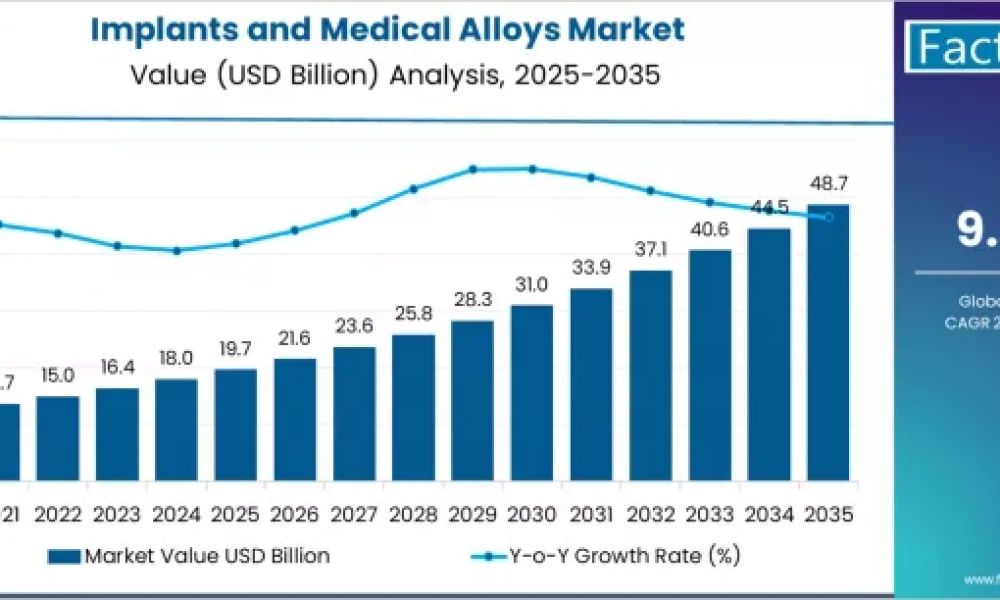
The global implants and medical alloys market is set to experience strong growth from 2025 through 2035, driven by rising demand for orthopedic, cardiovascular, dental, and other surgical implants, an aging population, and growing adoption of advanced biomaterials offering high biocompatibility and performance. Medical alloys — including titanium, stainless steel, cobalt‑chromium and other specialty formulations — are critical materials used in surgical implants for joint replacements, trauma fixation, dental implants, cardiovascular stents and more. This report outlines market size, growth drivers, regional (European) dynamics, technology trends, and strategic implications for key stakeholders.
Market Size and Growth
The global implants and medical alloys market is projected to grow from approximately USD 19.7 billion in 2025 to around USD 48.7 billion by 2035, reflecting a robust compound annual growth rate (CAGR) of about 9.5%.
This growth trajectory reflects substantial increases in surgical procedures globally — especially in orthopedic, cardiovascular, and dental sectors — along with expanding healthcare infrastructure in both developed and emerging markets.
To access the complete data tables and in-depth insights, request a Discount On The Report here: https://www.factmr.com/connectus/sample?flag=S&rep_id=12102
Key Growth Drivers
- Rising demand for surgical implants: Increasing incidence of orthopedic conditions (e.g., osteoarthritis, trauma-related injuries), cardiovascular diseases, and dental issues — especially among aging populations — is driving demand for implants requiring reliable metal-alloy materials.
- Superior material properties: Alloys such as titanium dominate the market due to their favorable properties — biocompatibility, corrosion resistance, strength-to-weight ratio, and proven long-term clinical outcomes.
- Advancements in implant technology: Innovations such as customized implants through additive manufacturing (3D printing), bioactive surface coatings for better osseointegration, and minimally invasive implant designs are expanding the scope of applications and boosting adoption.
- Growing healthcare infrastructure and surgical access: Expansion of hospitals, clinics, and specialized surgical centers worldwide — especially in Asia‑Pacific, Europe, and North America — is increasing capacity for implant procedures, fueling market growth.
Regional (European) Market Dynamics
Europe remains a significant region for implants and medical alloys, supported by mature healthcare systems, high standards of surgical care, established regulatory frameworks, and strong demand for both orthopedic and dental implants.
European demand is strengthened by demographic trends — an aging population with increasing musculoskeletal, cardiovascular, and dental needs — as well as rising acceptance of advanced biomaterials and custom implants. Continued innovation by European implant manufacturers and adoption of advanced surface-treated alloys contribute to the region’s growth momentum.
Segment & Application Insights
- By Material Type: Titanium alloys lead the market share, appreciated for their biocompatibility and clinical performance. Stainless steel, cobalt‑chromium, and other alloy types cater to applications where cost-effectiveness or specific mechanical properties are needed.
- By Application: Orthopedic applications dominate, driven by joint replacements, fracture fixation, spinal implants, and trauma surgeries. Other significant segments include cardiovascular implants (stents, valves), dental implants and prosthetics, and craniomaxillofacial/neurological implants.
- By End-Use Setting: Hospitals and clinics account for the majority share of implant procedures, due to requirements for sterile operating theatres, specialized surgical infrastructure, and post-operative care.
Challenges & Market Restraints
- High material and manufacturing costs: High‑quality medical alloys — especially titanium and specialty formulations — require advanced processing, surface treatments, and compliance with regulatory standards, which increases cost, potentially limiting adoption in cost-sensitive markets.
- Regulatory and compliance requirements: Medical alloys and implants must meet stringent biocompatibility, sterilization, and clinical safety standards. The approval process, testing, and quality documentation can be time-consuming and resource-intensive, slowing down market entry and expansion.
- Supply‑chain and production constraints: Scaling up manufacturing — particularly for high‑purity alloys or custom implants — necessitates robust supply chain, consistent raw materials, and quality control, which can be challenging especially in emerging markets.
Strategic Implications for Stakeholders
- Manufacturers & Alloy Suppliers: Should offer diversified alloy portfolios (titanium, stainless steel, cobalt‑chromium, etc.), including standard and advanced formulations, with options for custom implants using additive manufacturing and surface-treated implants for enhanced performance.
- Implant OEMs & Device Manufacturers: Investing in R&D for 3D printed implants, patient‑specific designs, and surface-modified implants can differentiate products and meet varied clinical requirements.
- Healthcare Providers: Hospitals and surgical centers should prepare for increasing demand by investing in infrastructure, training for advanced implant procedures, and adopting best practices for implant procurement and post‑operative care.
- Investors: Given robust forecasted growth (from USD 19.7B to USD 48.7B), the implants and medical alloys market offers long-term opportunities — particularly in high-growth geographies and among players innovating in additive manufacturing, surface treatment, and custom implants.
- Policymakers & Regulators: Supporting regulatory frameworks, quality standards, and incentivizing adoption of advanced biomaterials and custom implants can drive better patient outcomes and stimulate market growth.
Outlook Summary
From 2025 to 2035, the global implants and medical alloys market is poised to more than double in value — from USD ~19.7 billion to ~48.7 billion — reflecting strong growth in orthopedic, cardiovascular, dental, and other implant procedures worldwide. Europe will remain a key region, balancing mature markets with ongoing demand for advanced biomaterial implants. While challenges — including cost, regulation, and manufacturing complexity — persist, the long‑term outlook is strongly positive. The market presents significant opportunities for manufacturers, medical device companies, healthcare providers, and investors committed to advancing surgical care, improving patient outcomes, and fostering innovation in implant technologies.
Have a specific Requirements and Need Assistant on Report Pricing or Limited Budget please contact us – [email protected]
About Fact.MR
Fact.MR is a global market research and consulting firm, trusted by Fortune 500 companies and emerging businesses for reliable insights and strategic intelligence. With a presence across the U.S., UK, India, and Dubai, we deliver data-driven research and tailored consulting solutions across 30+ industries and 1,000+ markets. Backed by deep expertise and advanced analytics, Fact.MR helps organizations uncover opportunities, reduce risks, and make informed decisions for sustainable growth.



