
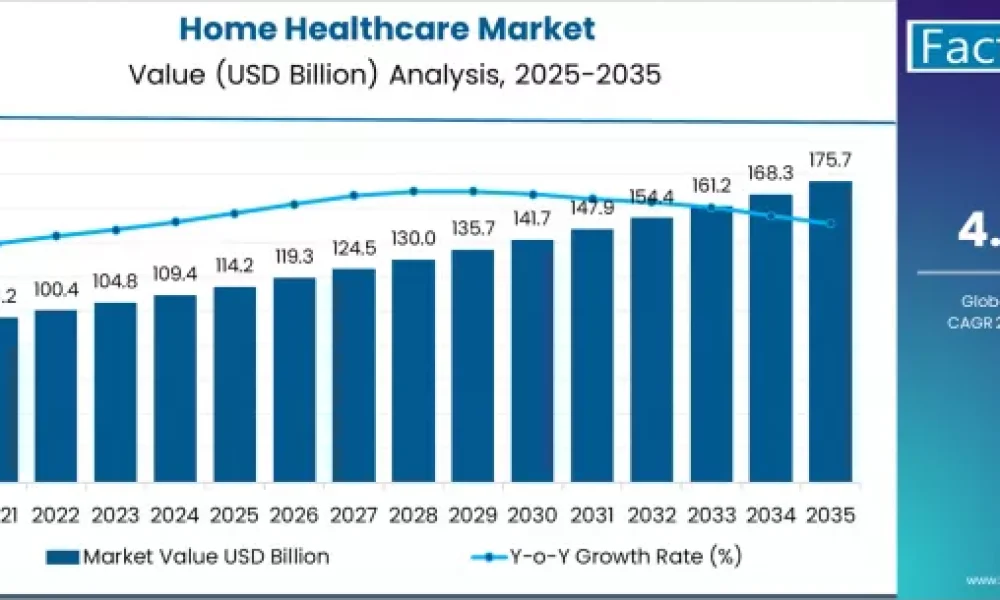
The global home healthcare market is set for strong expansion through 2035, driven by rising demand for personalized care, the shift toward home-based medical management, and growing adoption of digital health technologies. As healthcare systems worldwide face capacity constraints and cost pressures, home healthcare is rapidly emerging as a scalable, patient-centric alternative to hospital-based treatment.
From an estimated USD 390.0 billion in 2025, the home healthcare market is projected to reach approximately USD 650.0 billion by 2035, reflecting a robust CAGR of around 5.3% over the forecast period.
Key Market Highlights
2025 Market Size: USD 390.0 billion
2035 Forecast Value: USD 650.0 billion
Projected CAGR (2025–2035): ~5.3%
Leading Segment: Home healthcare equipment
Top User Base: Geriatric and chronic disease patients
High-Growth Regions: North America, Asia Pacific, Europe
To access the complete data tables and in-depth insights, request a Discount On The Report here: https://www.factmr.com/connectus/sample?flag=S&rep_id=9397
Major Growth Drivers
Growing Geriatric Population
The rapid growth of the elderly population is one of the most influential drivers. Increasing rates of mobility limitations, cognitive decline, and chronic illnesses are prompting families and healthcare providers to adopt home-based care solutions that support independence and improve quality of life.
Rise in Chronic Diseases
Chronic conditions—such as cardiovascular disorders, diabetes, COPD, renal diseases, and arthritis—are driving long-term care demand. Home healthcare services and devices enable continuous monitoring, timely intervention, and reduced hospital readmissions.
Shift Toward Cost-Efficient Care Models
Home-based care is significantly more affordable than long-term hospitalization or institutional care. Healthcare providers and insurance companies are increasingly prioritizing home-based care pathways to reduce treatment expenses without compromising outcomes.
Advancements in Remote Monitoring & Digital Health
Remote patient monitoring devices, wearable sensors, AI-enabled diagnostics, and telehealth platforms are transforming home healthcare delivery. These tools enable real-time data tracking, medication adherence monitoring, and virtual consultations, creating a safer and more efficient patient experience.
Post-Acute and Rehabilitation Demand
Post-surgery patients and individuals recovering from injuries prefer home settings with professional nursing support and physiotherapy services. Rehabilitation at home can reduce infection risk and accelerate recovery timelines.
Market Segmentation
By Component
Home Healthcare Equipment (Largest Segment):
Includes oxygen therapy devices, blood pressure monitors, glucose monitors, mobility aids, respiratory care equipment, and infusion pumps. Increasing adoption of self-diagnostic devices is driving segment dominance.
Services:
Includes skilled nursing, physical therapy, occupational therapy, respiratory therapy, palliative care, and personal assistance. As care models shift from hospitals to homes, demand for professional medical and support services continues to rise.
Solutions & Software:
Remote monitoring platforms, telehealth systems, medication management applications, and connected care technologies.
By Indication
Diabetes – High adoption of glucose meters and continuous glucose monitoring (CGM) systems.
Cardiovascular Disorders – Remote ECG devices and blood pressure monitoring solutions.
Respiratory Diseases – Home oxygen therapy and CPAP devices for COPD and sleep apnea.
Mobility Impairments – Wheelchairs, walkers, home modification services.
Post-Operative Care – Wound care, infusion therapy, and skilled nursing.
By End User
Geriatric Patients (Dominant Segment)
Chronic Disease Patients
Palliative & Long-Term Care Patients
Post-Surgical Patients
Home-Based Rehabilitation Users
Regional Outlook
North America
Largest market supported by advanced healthcare systems, high adoption of remote monitoring devices, reimbursement support, and a fast-growing elderly population.
Asia Pacific
Fastest-growing region driven by increasing healthcare spending, expansion of home care service providers, rising chronic disease cases, and supportive government policies.
Europe
Growth shaped by strong telehealth adoption, patient-centric care models, and expanding national home care programs.
Challenges & Risks
Workforce Shortages
Shortage of trained home care nurses and caregivers can limit service availability across several countries.
Data Privacy & Cybersecurity
Growing reliance on digital tools increases the need for secure patient data management.
Cost Barriers for Advanced Devices
High costs of connected medical devices can deter adoption in emerging economies.
Regulatory Complexities
Home healthcare quality standards and licensing regulations vary significantly across regions, impacting service deployment.
Competitive Landscape
Leading companies are focusing on:
Developing advanced remote monitoring and diagnostic devices
Expanding professional home nursing and therapy services
Integrating telehealth, AI analytics, and mobile health solutions
Offering bundled care packages for chronic disease management
Strengthening collaborations with hospitals, insurers, and government programs
Key players include major medical device manufacturers, digital health platform providers, and specialized home care service providers.
Strategic Recommendations
Expand Telehealth Capabilities: Strengthen virtual care platforms and data-driven decision tools.
Develop Cost-Effective Solutions: Increase accessibility of monitoring devices for emerging markets.
Build Integrated Care Models: Combine device, software, and service offerings for comprehensive care.
Enhance Workforce Training: Invest in caregiver and nursing skill development.
Strengthen Cybersecurity: Prioritize secure digital infrastructure for patient data protection.
Market Outlook
With the global home healthcare market projected to reach USD 650 billion by 2035, the sector is becoming a crucial pillar of modern healthcare systems. Growth will be driven by aging populations, chronic disease prevalence, technology-driven care delivery, and increasing preference for home-based treatment. Companies offering reliable, connected, and affordable solutions will be best positioned to lead this accelerating transformation.
Have specific requirements or need assistance on report pricing or have a limited budget? Please contact [email protected]
About Fact.MR:
Fact.MR is a global market research and consulting firm, trusted by Fortune 500 companies and emerging businesses for reliable insights and strategic intelligence. With a presence across the U.S., UK, India, and Dubai, we deliver data-driven research and tailored consulting solutions across 30+ industries and 1,000+ markets. Backed by deep expertise and advanced analytics, Fact.MR helps organizations uncover opportunities, reduce risks, and make informed decisions for sustainable growth.



