
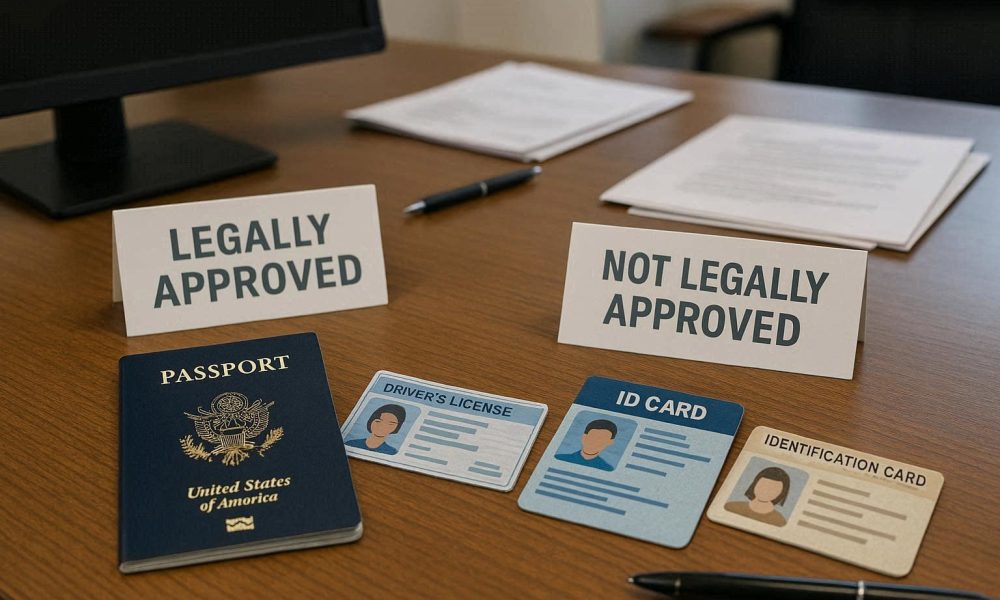
Amicus International Consulting explains the legal boundary between lawful multiple citizenship or residence status and unlawful attempts to maintain parallel identities across jurisdictions.
WASHINGTON, DC, June 15, 2026
The phrase “government-approved multiple identities” sounds dramatic, but in legal practice, it usually refers to something very different. Governments may recognize multiple citizenships, multiple residence rights, lawful name changes, and layered travel documents. What they do not lawfully approve is one person maintaining separate contradictory biographies, separate incompatible truths, or separate legal personas designed to deceive institutions. In 2026, what is legal is a layered status. What is not legal is a fragmented truth.
That distinction matters because many globally mobile families, founders, and high-net-worth individuals are asking more sophisticated questions than they did only a few years ago. They are not simply asking where they can travel, invest, or reside. They are asking how to reduce overdependence on a single jurisdiction, how to protect family continuity, how to move lawfully across borders, and how to ensure their records remain coherent when banks, employers, landlords, regulators, or border systems ask routine questions.
For those clients, the legal line has to be understood precisely. A person may hold more than one nationality. A person may be a citizen of one country and a permanent resident of another. A person may change their name lawfully and update their records across systems. A person may even qualify for a second passport book in limited travel circumstances. All of those are lawful structures attached to one real human being. What a person cannot lawfully do is present different life stories to different institutions as though each were independently true.
The law can accommodate more than one status for the same person. It does not accommodate more than one truth for the same person. That is the clearest way to understand the entire issue.
The U.S. government’s guidance on dual nationality makes the starting point clear. A person may hold dual or multiple nationalities where the laws of the countries involved permit it. That means lawful complexity is possible. It also means the legal system already has a vocabulary for layered status. It does not need the language of “parallel identities” to explain what is happening.
That point alone resolves much of the public confusion. People often use the word identity when they really mean nationality, residence, travel document, or legal name. Those are not the same thing. A nationality is a legal bond between a person and a state. A residence right is permission to live lawfully in a country. A legal name is part of a person’s civil record. A passport is a travel document. None of those, by themselves, creates a new human being in law.
What governments do legally recognize
The cleanest lawful category is multiple nationality. One person may be recognized as a citizen by more than one country at the same time. That result may arise by birth, descent, naturalization, marriage-related laws, or investment-based citizenship in jurisdictions that permit it. When that happens, the legal system is not pretending the person has become two separate people. It is recognizing that the same person now has more than one formal relationship with multiple states.
That structure can be powerful. It can improve mobility, create family continuity, and reduce overreliance on one national framework. But it also creates obligations. Different countries may have different travel requirements, tax exposure, reporting duties, military obligations, or entry and exit rules. A second nationality expands legal status. It does not eliminate legal consequences.
This is one reason sophisticated clients approach second citizenship as a lawful redundancy rather than a fantasy escape. The second status can widen options, but it does not remove the need for truth, compliance, or coherent records.
Residence rights are another lawful category. A person may be a citizen of one country while holding long-term or permanent residence in another. That structure is common, legal, and often strategically useful. It may support family relocation, education planning, business expansion, changes in tax residence, or simple geographic flexibility. But again, it does not create a second legal person. It creates another legal attachment for the same person.
A lawful name change is another recognized category. Courts and civil authorities can approve name changes through established procedures. Marriage and divorce can also trigger legal name changes. When those changes are documented and records are updated properly, the law recognizes continuity. The person is still the same person. The legal record has simply been updated to reflect a new lawful civil reality.
The same logic applies to a second passport book. The existence of a second passport book does not create a second identity. It is an administrative travel accommodation for the same person under limited circumstances, usually tied to practical travel needs. It is not a separate legal self.
What governments do not lawfully approve
What governments do not approve is far more important than what they do. They do not authorize one person to maintain separate, incompatible factual realities across systems. They do not approve forged civil records. They do not approve unsupported name histories. They do not approve false employment backgrounds, invented residence histories, fabricated personal timelines, or misleading declarations used to obtain banking access, immigration benefits, security clearance, or travel entry.
This is where many people drift from lawful planning into unlawful conduct without clearly understanding the boundary. They may begin with a legitimate interest in privacy, safety, or mobility. Then they start thinking in terms of separate personas rather than coherent legal transitions. That is where risk begins.
The moment a structure relies on deception rather than documentation, it ceases to be a lawful multi-status strategy and becomes a liability. It does not matter how polished the paperwork looks if the underlying facts are incompatible.
This point matters especially in a world where banks, employers, border agencies, tax authorities, insurers, and compliance teams compare records more often than before. The question they tend to ask is not whether a person has more than one legal status. That is often entirely acceptable. The question is whether the record can be explained by authentic documents, lawful progression, and a single continuous human being.
If the answer is yes, the structure may be lawful. If the answer requires concealment, contradiction, or incompatible stories depending on who is asking, the structure is not lawful, no matter how carefully it has been packaged.
Why do people ask this question in the first place
Many clients who ask about “multiple identities” are not actually looking for multiple identities. They are usually seeking one of three lawful outcomes.
First, they may want a second nationality. Their concern is mobility, family continuity, jurisdictional diversification, or long-term resilience. In that case, the right framework is second citizenship or residence planning, not parallel persona planning.
Second, they may want a lawful transition of identity. Their concern may be divorce, reputational recovery, professional reinvention, family safety, or simply the need to update a life that has moved far beyond its earlier records. In that case, the right framework is a legal name change, synchronized civil records, and a continuity file, not an alternate persona.
Third, they may want privacy. Their concern is not nationality alone, but exposure. They want fewer unnecessary disclosures, better document discipline, and less reliance on a single overexposed legal structure. In that case, the right framework is lawful privacy planning, record coherence, and strategic status diversification.
Once the real objective is identified, the confusion around “multiple identities” usually disappears. Most people do not need another self. They need another lawful platform from which to live, travel, work, or protect continuity.
That distinction is especially important for high-net-worth families and founders. They are not usually looking for mystery. They are looking for resilience. A second citizenship can create fallback options. A lawful name change can repair or clarify the civil record. Better-organized identity files can reduce friction with banks, employers, and borders. But none of those tools works if the underlying truth changes from one file to the next.
The difference between continuity and contradiction
The most useful legal concept here is continuity. Governments and regulated institutions are built to understand continuity. They understand that a person may have been born in one country, naturalized in another, and resident in a third. They understand that a person may have one lawful name at birth and another lawful name later. They understand that one person may hold multiple passports or multiple residence permits over time.
What they are not built to accept is contradiction. They are not built to treat one person as though they were several unrelated legal people with unrelated pasts. That is not continuity. That is conflict.
A lawful transition, therefore, requires records that tell a single continuous story. The person can point to the initiating legal event, the subsequent record updates, the current documents, and the sequence that explains why older and newer materials differ. That is a recognizable administrative pattern. It reduces scrutiny because it makes sense.
The strongest legal planning is almost always the least theatrical. Institutions do not reward cleverness in matters of identity. They reward paperwork, chronology, and consistency.
That is why the best outcomes are often quiet ones. A well-documented shift from one lawful name to another, or one nationality to two, is ordinary in legal terms. A structure that asks institutions to accept different truths in different places is not ordinary. It is unstable.
How should lawful planning be approached?
The right way to approach lawful second-status planning is to ask a simpler question than the dramatic one. Instead of asking whether governments approve of multiple identities, ask whether the current and future record can be explained by authentic documents, lawful status, and a single continuous human being.
That question forces clarity. If the answer begins with a real legal event, real documents, and a sequence that can be followed across civil, travel, employment, banking, and residence records, the structure may be lawful and useful.
If the answer begins with the need to keep one story separate from another, or one biography from another, then the person is no longer dealing with lawful status planning. They are drifting toward deception risk.
This is why continuity files matter so much. A well-organized continuity file allows a person to explain the relationship between older and newer records without improvisation. It can include legal name-change instruments, prior and current identification, proof of address progression, employment or business support, and other authentic materials that explain how the present legal structure emerged from the past one.
A continuity file is not a theatrical prop. It is an administrative safeguard. It ensures that when a bank, employer, border official, or regulator asks the obvious question, the answer is already documented.
That is what lawful planning looks like in practice. It is not built around myth. It is built around records.
The 2026 legal reality
The legal reality in 2026 is not that governments approve multiple identities. It is that they may recognize multiple statuses for the same person, provided the record remains truthful, documented, and internally coherent.
That means dual or multiple citizenship can be lawful. Residing in one country and being a citizen of another can be lawful. A legal name change can be lawful. A second passport book can be lawful. But all of those structures must still point back to one continuous person whose record can withstand ordinary scrutiny.
For clients trying to navigate that boundary carefully, Amicus International Consulting operates at the intersection of lawful second citizenship, privacy planning, and documented identity transition. Those considering a more structured second citizenship strategy are usually best served by approaching the issue as continuity planning rather than “multiple identity” planning.
The line is not hard to state once the language becomes accurate. Multiple lawful statuses may be recognized. Multiple contradictory selves are not. That is the legal boundary, and that is what separates sound planning from unacceptable risk.




