
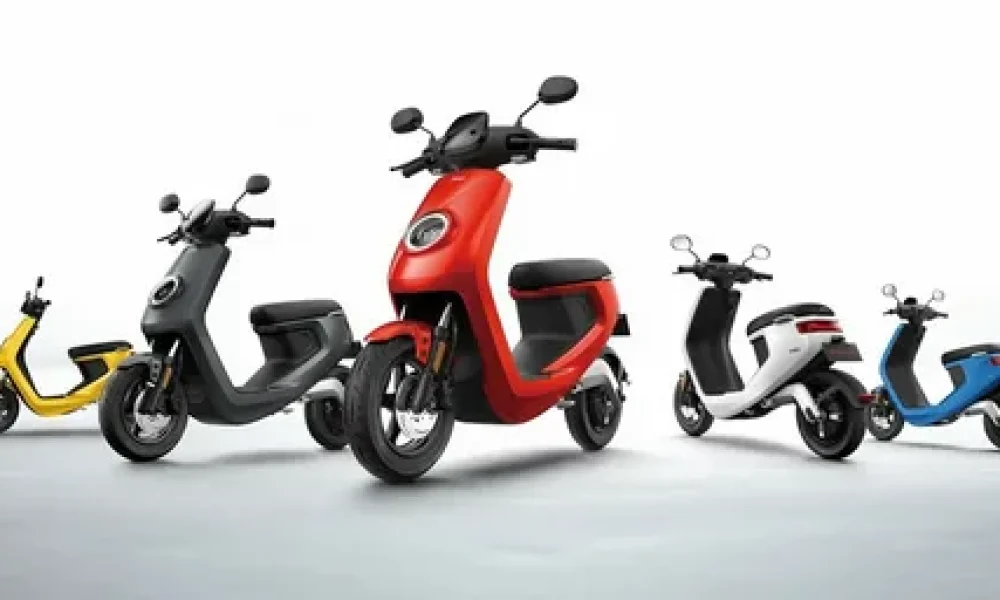
The global Electric Scooter Market is entering a decade of accelerated transformation as cities worldwide prioritize clean mobility, digital infrastructure, and low-cost transport solutions. According to the latest industry assessment, the market is projected to expand from USD 38.4 billion in 2025 to USD 91.1 billion by 2035, registering a CAGR of 9.1% during the forecast period.
The rapid shift toward compact, zero-emission mobility options—prompted by rising fuel costs, stricter emissions norms, and surging urban congestion—has placed electric scooters at the forefront of the global micro-mobility revolution. With advancements in battery efficiency, lightweight materials, IoT connectivity, and smart fleet management, electric scooters are now widely embraced for personal commuting, shared mobility, and last-mile delivery operations.
Micro-Mobility Demand Fuels Sectoral Upswing
Electric scooters are witnessing adoption at unprecedented levels as consumers seek affordable, flexible, and eco-friendly alternatives to traditional fuel-powered two-wheelers. Government incentives—including EV purchase subsidies, tax rebates, and investment in public charging infrastructure—are significantly accelerating uptake.
The increasing push toward sustainable cities has further strengthened the market. From Europe’s low-emission zones to India’s FAME II incentives and the U.S. expansion of micro-mobility infrastructure, regulatory support remains a key market catalyst. Technological advances—such as swappable batteries, regenerative braking, IoT tracking, mobile app integration, and remote diagnostics—have enhanced usability and reliability, making electric scooters a mainstream mobility choice.
Subscribe for Year-Round Insights → Stay ahead with quarterly and annual data updates
https://www.futuremarketinsights.com/reports/sample/rep-gb-2705
Regional Market Outlook
North America
The region is witnessing sharp growth led by large-scale shared-scooter programs in cities such as Austin, San Francisco, and Washington D.C. Rising gig-economy usage, strong consumer interest, and smart-city mobility integrations are bolstering adoption. Standardization efforts and evolving regulatory clarity are further driving market maturity.
Europe
Europe remains one of the most mature electric scooter markets. Countries like Germany, Italy, France, and Spain are investing in micro-mobility lanes, smart traffic systems, and EV subsidies. Strict carbon-emission goals and the popularity of shared e-scooter platforms are expanding demand for lightweight, high-performance scooter models.
Asia-Pacific
The region dominates global production and consumption, led by China’s massive manufacturing ecosystem. India, Indonesia, Vietnam, and Thailand are emerging growth hotspots as urban density rises and fuel prices climb. Japan and South Korea are driving demand for premium, connected, and technologically advanced electric scooters. Overall, Asia-Pacific remains the fastest-scaling market.
Key Market Challenges and Growth Opportunities
Despite strong growth potential, the sector faces limitations such as limited charging infrastructure, battery replacement costs, and range anxieties, particularly in emerging markets. Urban safety concerns and regulatory inconsistencies—covering helmet rules, speed limits, and road-sharing policies—also require coordinated policy interventions.
However, the opportunities ahead remain significantly larger. Expansion of Mobility-as-a-Service (MaaS), shared mobility platforms, battery-swapping ecosystems, modular scooter design, and the introduction of AI-enabled safety systems will reshape the next decade of electric scooter development.
2020–2024 Market Shift and Outlook for 2025–2035
Between 2020 and 2024, electric scooters benefited from post-pandemic shifts toward personal mobility, expansion in charging zones, and rapid progress in lithium-ion batteries. From 2025 onward, the industry is expected to transition to:
- Solid-state batteries
- AI-based diagnostics
- V2X (vehicle-to-everything) communication
- Autonomous fleet operations
- Subscription-based ownership models
OEMs are increasingly prioritizing lightweight composites, smart connectivity, and second-life battery applications to improve sustainability. The shift toward fleet electrification for delivery and logistics is expected to add substantial commercial volume to the market.
Country-Level Growth Projections (2025–2035)
| Country | CAGR |
| United States | 8.5% |
| United Kingdom | 8.7% |
| European Union | 9.3% |
| Japan | 7.5% |
| South Korea | 9.1% |
Segment Insights
By Product Type
Retro Electric Scooters:
A premium, design-driven segment gaining popularity among young urban consumers in Europe and Asia. These models combine classic styling with modern EV features such as regenerative braking and app integration.
Standing/Kick Scooters:
The fastest-growing and most accessible product category. Lightweight frames, folding mechanisms, and swappable batteries make them ideal for commuting and shared mobility services.
By Application
Personal Mobility:
The dominant segment globally as commuters seek cost-effective, zero-emission transport options for short urban trips. Smart locking, GPS tracking, and compact storage features drive adoption in cities like London, Delhi, and São Paulo.
Commercial & Delivery:
A rapidly emerging segment, especially in Asia-Pacific. Logistics, hyperlocal delivery platforms, and e-commerce players are increasingly deploying e-scooters for low-cost, high-efficiency last-mile delivery.
Personalize Your Experience: Ask for Customization to Meet Your Requirements
https://www.futuremarketinsights.com/customization-available/rep-gb-2705
Competitive Landscape
The market exhibits strong competition with notable players focusing on technology-led differentiation, battery innovation, and geographic expansion.
Market Share by Leading Companies
| Company | Market Share (%) |
| Yadea Group Holdings Ltd. | 13–16% |
| Niu Technologies | 10–13% |
| Hero Electric | 9–12% |
| Ather Energy | 7–10% |
| Ola Electric Mobility | 6–9% |
| Others | 40–50% |
Company Highlights
Yadea Group Holdings Ltd.
A global leader with strong vertical integration, offering long-range scooters equipped with digital dashboards and anti-theft technology.
Niu Technologies
Known for IoT-enabled scooters featuring OTA updates, GPS anti-theft systems, and cloud-connected analytics.
Hero Electric
A dominant Indian manufacturer with affordable, low-maintenance electric scooters suited for mass-market adoption.
Ather Energy
Premium high-performance scooters with touchscreen dashboards, fast charging, and proprietary charging networks.
Ola Electric
A rapidly scaling EV innovator with AI-driven mobility solutions and a large domestic manufacturing footprint.
Outlook
With global urbanization accelerating and governments prioritizing green mobility, electric scooters are set to become a defining element of future transportation ecosystems. Integration with smart cities, expansion of connected mobility platforms, and continued innovation in battery technology will spur robust industry growth through 2035.
About Future Market Insights (FMI)
Future Market Insights, Inc. (FMI) is an ESOMAR-certified, ISO 9001:2015 market research and consulting organization, trusted by Fortune 500 clients and global enterprises. With operations in the U.S., UK, India, and Dubai, FMI provides data-backed insights and strategic intelligence across 30+ industries and 1200 markets worldwide.
Why Choose FMI: Empowering Decisions that Drive Real-World Outcomes: https://www.futuremarketinsights.com/why-fmi



