
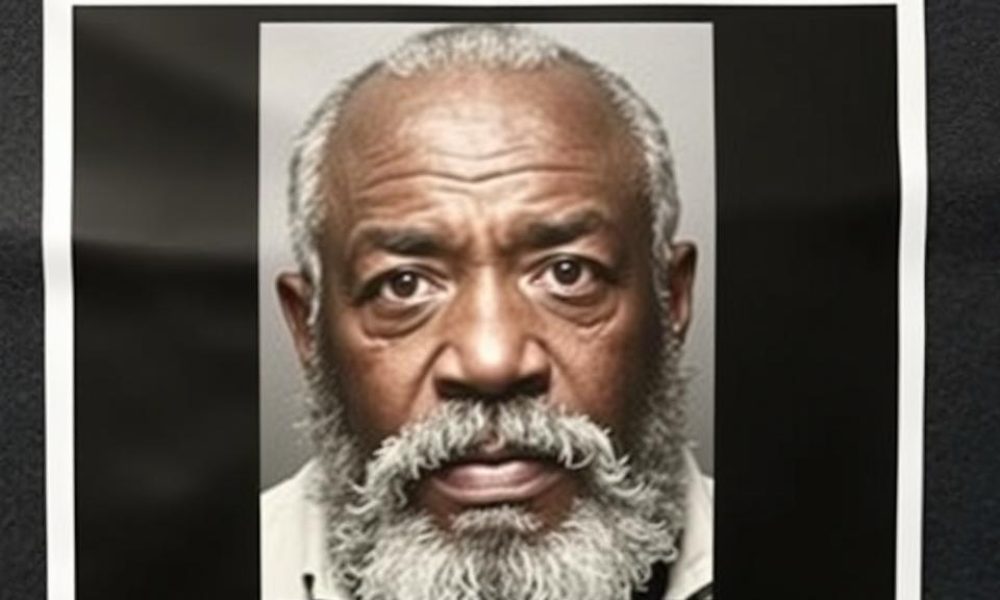
Part 16: The Legal Trap
With his plea deal voided but his guilty plea locked into the court record, the former federal cooperator has lost his probation recommendation and now faces maximum sentencing exposure on the pleaded charges, along with separate consequences tied to his failure to appear.
VANCOUVER, BC, June 29, 2026, Herbert “Herb” Kimble’s legal trap is not that prosecutors must prove the original Medicare brace conspiracy from the beginning, because his guilty plea already placed the core admission inside the federal court record.
The trap is that the generous plea structure that once protected him from prison has been voided, while the guilty plea that exposed him to punishment remains the central fact that Judge Joseph F. Anderson Jr. can still use at sentencing.
For years, Kimble occupied an extraordinary legal position because he was a confessed participant in a massive healthcare fraud conspiracy, yet prosecutors reportedly recommended probation after crediting him with substantial cooperation and a promised restitution payment.
According to the U.S. Department of Health and Human Services Office of Inspector General profile for Herbert “Herb” Kimble, Kimble pleaded guilty on April 4, 2019, and later failed to appear for sentencing on October 7, 2024.
The plea deal protected him until it no longer did.
Kimble’s original plea agreement functioned like a legal shield, not because it erased the fraud, but because it allowed prosecutors to recommend leniency in exchange for cooperation, restitution, and continued compliance with the court.
That arrangement made him different from ordinary defendants because his insider knowledge reportedly helped federal investigators identify other participants connected to call centers, telemedicine companies, durable medical equipment suppliers, and prescription-purchase arrangements.
The government’s position was strategic, because a defendant who understands the architecture of a billion-dollar fraud network can help authorities build cases that documents alone may not fully explain.
However, the shield only worked while Kimble continued to satisfy the conditions that justified it, including appearing in court, remaining reachable, honoring financial promises, and submitting to sentencing when ordered.
Once he failed to appear and was believed to be abroad, the same agreement that had once protected him became one the court could no longer trust.
The guilty plea remained the anchor.
The most dangerous legal reality for Kimble is that the collapse of the plea agreement did not erase the fact that he had already pleaded guilty.
A voided plea agreement can remove the negotiated benefits, sentencing recommendation, and protective structure that gave the defendant hope for probation, but it does not necessarily erase the admissions that already placed guilt before the court.
That distinction matters because public discussion often treats plea agreements as all-or-nothing contracts, when the legal consequences can be more complicated and more dangerous for a defendant.
Kimble lost the deal that supported mercy, but he did not gain a clean return to innocence or a fresh start outside the admitted conduct.
The guilty plea remained locked into the record, while the probation recommendation disappeared from practical reach.
The probation recommendation collapsed first.
The probation recommendation was always controversial because the underlying case involved more than $1.2 billion in Medicare charges connected to orthotic brace prescriptions, telemedicine companies, offshore call centers, and DME billing.
Federal prosecutors reportedly supported probation because Kimble had provided substantial assistance and was expected to pay approximately $40 million in restitution when sentenced.
That position could be defended only if the court believed the cooperation was extraordinary, the financial accountability was real, and the defendant remained completely compliant with every obligation attached to his freedom.
When the money became uncertain, and Kimble failed to appear, the moral and legal foundation of probation began to collapse.
A defendant cannot plausibly ask for mercy while also refusing the courtroom appearance that makes mercy possible.
Judge Anderson voided the bargain.
In November 2024, Judge Anderson voided Kimble’s plea deal after the defendant missed court and the expected financial arrangement had already come under scrutiny.
A report from The State on the voided Kimble plea agreement stated that the judge canceled the deal after Kimble failed to appear for the third time at a sentencing hearing.
The report also stated that Kimble then faced the maximum sentence provided by law, which was described as five years for the charges to which he had pleaded guilty.
That detail is critical because the legal trap is severe, but public records do not support exaggerating the original plea exposure into decades on those admitted charges.
The real danger is that Kimble lost the no-prison recommendation and became exposed to the maximum penalty that the plea structure had once helped him avoid.
The five-year maximum became a dramatic reversal.
Five years may sound modest beside the scale of a billion-dollar healthcare fraud scheme, but the number becomes dramatic when compared with the probation recommendation Kimble had previously hoped to receive.
The legal reversal is therefore measured not only by the absolute sentence, but by the distance between no prison and the maximum prison term available under the charges to which he pleaded guilty.
For a defendant who once appeared positioned to avoid incarceration because of cooperation, the difference between probation and maximum imprisonment represents a complete collapse of courtroom protection.
That reversal also matters symbolically because it shows that cooperation cannot permanently insulate a defendant who later violates the conditions supporting leniency.
Kimble did not merely lose a technical advantage, because he lost the entire sentencing posture that made his deal valuable.
The failure-to-appear indictment added another layer.
Kimble’s exposure did not end with the voided plea deal, as federal authorities later indicted him for failure to appear in connection with his pending criminal case.
The Department of Justice’s 2026 national healthcare fraud case summaries stated that Kimble, listed as 60 and of the Philippines, was charged by indictment with failure to appear after being included on the new Most Wanted Fraudsters list and apprehended shortly afterward.
That separate charge matters because failure to appear can create consequences beyond the original sentence, especially when the defendant was released and then knowingly failed to attend a required court proceeding.
Federal law provides that punishment for failure to appear depends on the seriousness of the underlying offense, and any imprisonment imposed under that statute must run consecutively to the sentence for another offense.
This means the missed court date was not merely a bad fact at sentencing; it could also become a separate path to punishment.
The consecutive-sentence rule is the trap’s steel edge.
The federal failure-to-appear statute is harsh because it not only allows punishment for missing court, but it also requires that any term of imprisonment imposed under that section run consecutively to the sentence imposed for the underlying offense.
That consecutive rule matters because a defendant cannot assume that the punishment for flight will simply merge into the sentence for the original case.
If convicted of failure to appear, Kimble could face a separate punishment that begins only after the court accounts for the sentence tied to the underlying guilty plea.
The exact sentence would depend on the court, the applicable statute, the indictment, the underlying offense, the sentencing guidelines, arguments from counsel, and the final findings.
The legal point is clear because flight can create a new penalty structure rather than merely worsen the old one.
Flight turned mitigation into aggravation.
Before Kimble disappeared, his cooperation was central to his mitigation story because he could argue that his information helped prosecutors investigate a broader fraud network.
After he disappeared, the same cooperation became less powerful because the court had to weigh it against nonappearance, bond breach, foreign residence, and the public cost of locating and returning him.
Mitigation works only when the defendant appears reliable enough for the court to believe that leniency will serve justice rather than undermine it.
Kimble’s flight gave prosecutors and the court a new aggravating fact that directly attacked his credibility.
The former cooperator became a defendant whose conduct forced federal and foreign authorities to spend additional resources on his recovery.
The legal trap was self-created.
Kimble’s current predicament was not created by a surprise law, an obscure procedural technicality, or a sudden reinterpretation of his original guilty plea.
It was created by the sequence of decisions that followed the plea agreement, including incomplete financial performance, missed court appearances, loss of communication, and eventual presence in the Philippines.
Those actions gave the court grounds to treat the bargain as broken and gave prosecutors a basis to pursue separate failure-to-appear consequences.
The legal trap is therefore especially damaging because Kimble once held the key to avoiding it.
If he had honored the bargain, appeared for sentencing, and completed the financial and cooperative obligations, the probation recommendation might have remained in effect.
The court’s patience had limits.
Federal courts can tolerate long periods of cooperation, delayed sentencing, complex restitution negotiations, and sealed investigative work when prosecutors explain that a defendant is helping to dismantle a larger criminal network.
However, that patience depends on the defendant remaining under control and obeying every order issued by the court.
Kimble tested that patience by failing to appear after the court had already extended years of freedom and allowed prosecutors to use his cooperation against others.
Once he was believed to be in the Philippines, the court had little reason to continue treating him as a special cooperator deserving unusual mercy.
The voided plea agreement marked the moment when judicial patience became judicial consequence.
The fraud scale still shapes the narrative of the sentence.
Even if the pleaded-charge maximum is measured in years rather than decades, the scale of the fraud remains central to public and judicial understanding of the case.
Kimble’s operation was tied to more than $1.2 billion in Medicare charges, an extraordinary figure that makes any leniency difficult to explain without exceptional cooperation and restitution.
The scheme allegedly used offshore call centers to contact Medicare beneficiaries, telemedicine companies to generate prescriptions, and DME suppliers to bill Medicare for orthotic braces.
That structure turned patient information, physician orders, and federal reimbursement systems into a commercial pipeline.
When a case has that scale, a defendant’s later flight becomes even harder for the public to tolerate.
The elderly-beneficiary harm remains part of the sentencing story.
Kimble’s case is not only about federal dollars because the brace scheme allegedly reached elderly and disabled Medicare beneficiaries through advertisements, call-center scripts, and telemedicine channels.
Those beneficiaries were often told they qualified for braces, routed through remote prescription systems, and used as the human entry points into a claims process that generated enormous financial exposure.
A sentencing court can consider the broader context of the offense, including the vulnerable populations targeted and the institutional damage caused by the fraud.
That context does not change the statutory maximum tied to the charge, but it shapes the public meaning of why maximum punishment may now be sought.
The victims remain present in the case even when the legal argument focuses on plea agreements and failure-to-appear statutes.
The missing money deepened the exposure.
Kimble’s reported failure to deliver the full $40 million restitution expectation weakened one of the strongest arguments for extraordinary leniency.
A defendant who cooperates and pays a major sum can argue that punishment should reflect both assistance to law enforcement and meaningful financial accountability.
A defendant who cooperates, does not fully deliver the expected money, and then fails to appear faces a much harder argument because the court sees promises without complete performance.
The missing money, therefore, interacts with the legal trap by making the voided plea agreement appear not only procedurally broken, but financially broken as well.
When payment and appearance both fail, mercy becomes difficult to justify.
The bond failure removed another safeguard.
Kimble’s $5 million bond was supposed to secure his appearance, but the fact that he still missed court showed that the financial safeguard was not enough.
A bond can deter flight only when the defendant values the financial loss more than the perceived benefit of staying away.
When that deterrent fails, courts often respond more severely because the defendant has shown that traditional release conditions were ineffective.
The bond failure mattered because it gave the court another reason to reject the idea that Kimble could be trusted under lenient supervision.
The same defendant, once positioned for probation, had demonstrated conduct that made freedom look unsafe and unreliable.
The Philippines chapter changed everything.
Kimble’s presence in the Philippines changed the legal narrative by transforming a missed court hearing into an international fugitive case.
The Philippines had already been associated with the offshore call-center side of the brace scheme, making his later residence there more significant, both symbolically and operationally.
Once the Philippine Bureau of Immigration arrested him in Pasig City, deported him, and blacklisted him, the foreign refugee’s story became part of the official public record.
The court no longer had to evaluate only the original healthcare fraud because it also had to consider the defendant’s conduct after receiving the benefit of years of freedom.
The foreign chapter turned his sentencing from delayed justice into recovered justice.
The guilty plea gave prosecutors a clear path.
The government does not need to restart the case from scratch because Kimble’s guilty plea remains the procedural anchor for sentencing.
That anchor matters because complex fraud cases can be difficult to prove at trial, especially when they involve many companies, doctors, suppliers, call centers, invoices, and cross-border relationships.
A guilty plea simplifies the final stage because the court already has an admitted offense and can focus on sentence, breach, failure to appear, restitution, and related consequences.
Kimble’s mistake was assuming that breaking the agreement would somehow improve his position.
Instead, it left him without the protection of the deal while preserving the admissions that make punishment possible.
The maximum penalty now carries symbolic weight.
The legal maximum on the pleaded charges may not align with the public’s intuitive sense of punishment for a billion-dollar fraud scheme, but it now carries symbolic weight because Kimble once had a path to probation.
The phrase “maximum penalty,” therefore, matters because it describes the loss of every negotiated cushion that once separated him from imprisonment.
A defendant who was once asking the court for no prison time now faces the harshest sentence available under the original admitted charges, subject to the court’s final decision.
That reversal is the legal trap’s central drama.
Kimble’s own conduct converted a plea agreement designed to reduce punishment into a pathway toward the strongest punishment available under that plea.
Failure to appear also damages credibility.
Credibility is critical at sentencing because defendants often ask judges to believe their remorse, cooperation, financial disclosures, medical claims, family circumstances, and promises of future compliance.
A failure-to-appear attack attacks credibility at its core because it tells the court that the defendant did not obey one of the most basic obligations imposed after release.
Kimble may still present arguments through counsel, but every argument now exists against the backdrop of missed court, foreign residence, bond revocation, and forced return.
That background makes it much harder to persuade the court that leniency would be respected.
The defendant’s actions have become the prosecution’s strongest rebuttal to his request for mercy.
The public lesson is severe but precise.
Kimble’s legal situation should be described severely, but it should also be described precisely because exaggerating the penalty exposure undermines credibility.
The public record supports that the voided plea agreement exposed him to a five-year maximum on the charges to which he pleaded guilty, while the separate failure-to-appear indictment creates additional exposure under federal law.
That combination is serious because it replaced a probation recommendation with prison exposure and added a new criminal consequence tied to flight.
It does not need to be described inaccurately as “decades of confirmed exposure” in the original plea.
The accurate story is strong enough because Kimble lost the deal, kept the plea, triggered new charges, and returned to court in a far worse position.
White-collar defendants should study the collapse.
Kimble’s case is now a warning for every white-collar defendant who believes cooperation can permanently neutralize punishment.
Cooperation can be powerful, but it is not a lifetime immunity card, and it depends on the defendant continuing to obey the court that controls sentencing.
A defendant who provides useful information may still lose the benefit of that information if he fails to appear, misleads the court, hides abroad, or breaks financial promises.
The federal system rewards assistance, but it also punishes breach.
Kimble’s trajectory shows that the same cooperation story that once supported probation can become irrelevant when the court decides the defendant cannot be trusted.
The privacy boundary remains clear.
Kimble’s legal trap reinforces the distinction between lawful privacy and unlawful evasion: legitimate privacy protects compliant people, whereas fugitive conduct triggers warrants, indictments, public wanted notices, arrests, deportations, and maximum-exposure sentencing.
For lawful clients facing harassment, extortion, stalking, doxing, or personal-security threats, anonymous living strategies should remain grounded in accurate records, lawful residence, court compliance, secure communications, and truthful disclosure where legally required.
That lawful approach is entirely different from missing federal sentencing dates after a guilty plea and relying on foreign distance to delay punishment.
Privacy reduces unnecessary exposure for people who obey legal obligations, while nonappearance creates the strongest possible reason for exposure.
Kimble’s case shows that court compliance is the line separating protected privacy from public legal collapse.
Identity planning cannot escape sentencing exposure.
Court obligations remain attached to the person through guilty pleas, bond orders, sentencing dates, warrants, restitution duties, indictments, and failure-to-appear charges.
For legitimate clients seeking continuity of compliant documentation, new legal identity planning must remain government-recognized, truthful, and consistent with all existing legal duties.
No lawful identity strategy can erase a guilty plea, revive a voided plea agreement, undo a missed hearing, defeat a failure-to-appear indictment, or prevent a court from imposing maximum penalties allowed by law.
Kimble’s legal trap proves that official records remain more durable than geography, aliases, private addresses, or foreign familiarity.
A defendant may leave the courtroom, but sentencing exposure waits in the file.
The final lesson is that he lost the protection but kept the risk.
Herb Kimble’s current legal peril stems from the worst possible combination for a defendant: the protective benefits of his plea agreement were stripped away while the guilty plea itself remained in place.
He once had a probation recommendation, cooperation credit, a restitution-based argument for leniency, and years of freedom, which made his case unusually favorable given the scale of the fraud.
After missed appearances, unresolved financial issues, a chapter on a Philippine fugitive, arrest, deportation, and a separate failure-to-appear indictment, that favorable posture no longer defines the case.
The legal trap is not that Kimble faces a new trial on everything from the beginning; rather, the court can now punish an admitted offense without the deal that once softened the outcome.
In 2026, Kimble’s case stands as a warning that when a cooperator destroys the conditions of mercy, he may keep the guilty plea, lose the leniency, face the maximum available penalty, and discover that flight did not protect him from prison at all.




