
Part 17: New Charges Await
After his fugitive run in the Philippines collapsed, the $1.2 billion Medicare fraud cooperator faced independent failure-to-appear charges that could add consecutive prison exposure to the sentence already awaiting him in South Carolina.
VANCOUVER, BC, June 29, 2026, Herbert “Herb” Kimble’s return to American custody did not close his criminal exposure, because federal prosecutors had already opened a new front against the former fugitive before he was placed back before the South Carolina court.
The man, once positioned for probation through cooperation, now faces the consequences of a far darker posture because his missed hearings, overseas flight, bond revocation, and status as a captured individual have transformed him from a government witness into a defendant facing fresh criminal allegations.
According to the Department of Justice’s 2026 National Health Care Fraud Takedown, Kimble was indicted in the District of South Carolina on June 16, 2026, with three counts of failure to appear at court hearings.
That date is critical because the new charges were not merely an administrative footnote after his deportation, but an independent prosecution step that intensified his exposure while the original Medicare fraud case remained alive.
The new indictment changed the stakes.
Kimble’s earlier legal peril stemmed from his 2019 guilty plea to conspiracy to defraud the United States, the voided plea agreement, and the loss of a probation recommendation that had once protected him from immediate prison exposure.
The new indictment added a separate legal problem because failure to appear is not only a bad fact at sentencing, but a distinct federal charge that can carry its own punishment if prosecutors prove the elements beyond a reasonable doubt.
That matters because Kimble is no longer facing only the sentence tied to the fraud conspiracy charge to which he pleaded guilty.
He must also answer for the alleged conduct that followed, including the court dates he missed, the bench warrant issued after his absence, and the international fugitive episode that ended in the Philippines.
The case moved from one broken deal to a broader system of punishment.
The phrase “failure to appear” sounds mild, but it is not.
In ordinary language, failure to appear may sound like a scheduling problem, a missed appointment, or an administrative lapse that can be repaired with an explanation.
In federal criminal law, the phrase carries far more serious meaning because it can describe a defendant who was released under court authority and then knowingly failed to attend required proceedings.
Kimble’s case shows why prosecutors treat the issue severely, because his missed appearances interrupted sentencing, forced federal authorities to pursue him abroad, damaged the court’s control, and undermined a cooperation structure built over several years.
A defendant who fails to appear does not merely inconvenience a judge; he challenges the court’s power to impose judgment after guilt has been admitted.
For Kimble, that challenge became a new criminal case.
The consecutive-sentence risk is the hard edge.
Federal failure-to-appear law is especially dangerous because any term of imprisonment imposed under the statute must run consecutively to the sentence imposed for the underlying offense.
That rule means a defendant cannot assume that punishment for missing court will simply blend into the sentence for the original case.
If convicted and sentenced on the new failure-to-appear counts, Kimble could face additional prison time on top of the punishment connected to the admitted fraud conspiracy, subject to the court’s final findings and applicable law.
That is why the new indictment is so damaging: it threatens to treat flight as a separate sentencing event rather than merely an aggravating fact.
The legal system punishes the original offense, and then it can punish the act of running from accountability.
The indictment followed a dramatic public capture.
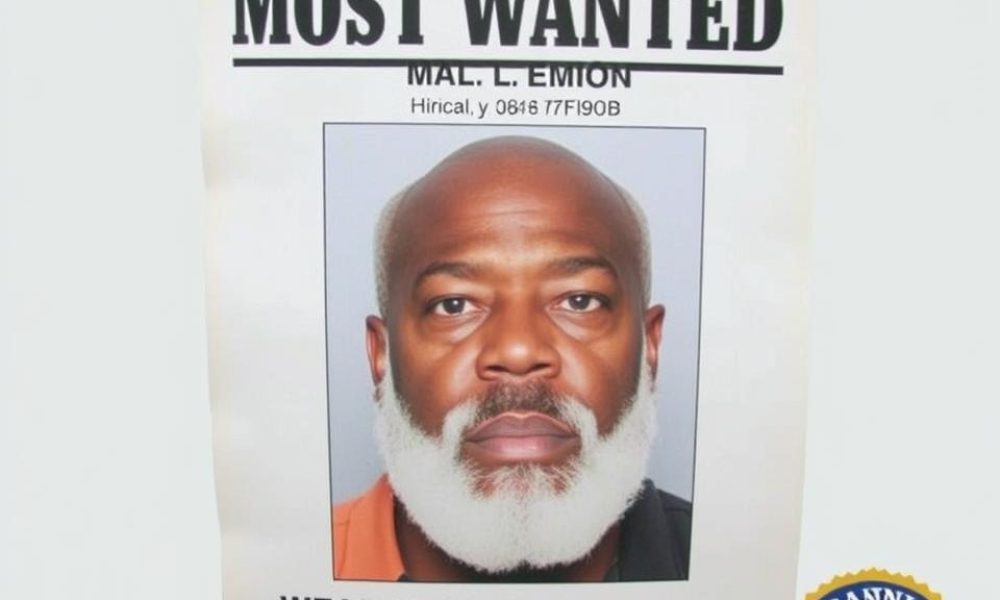
Kimble’s fugitive chapter became a national story after the FBI placed him on the new Most Wanted Fraudsters list, highlighting his alleged role in a $1.2 billion telemedicine and durable medical equipment fraud scheme.
Within days, U.S. officials said he was apprehended in the Philippines, while Philippine reporting described his arrest in Pasig City by the Bureau of Immigration’s Fugitive Search Unit and subsequent deportation.
A South Carolina report on Kimble’s return to court noted that he was scheduled to appear at the Matthew J. Perry Jr. Federal Courthouse in Columbia after being arrested in the Philippines.
That return did not reset the case to its state before he fled, because the failure-to-appear indictment ensured that his absence became part of the prosecution rather than merely part of the narrative.
The courtroom he had avoided became the place where a new charge awaited him.
The old plea deal no longer protected him.
Kimble’s original plea agreement had once functioned as a shield because prosecutors reportedly valued his cooperation and supported a lenient sentencing posture tied to his assistance and expected financial payment.
That shield collapsed when Judge Joseph F. Anderson Jr. voided the agreement after Kimble missed court, and the plea structure lost the trust that had kept it alive.
The failure-to-appear indictment makes that collapse even more serious because it shows prosecutors are no longer treating his absence as merely a breach of trust.
They are treating it as alleged criminal conduct worthy of separate charges.
The defendant, who once helped the government build cases against others, now faces prosecutors as they build a new case against him.
The missed hearings became the prosecution’s focus.
The DOJ’s case summary says Kimble was indicted on three counts of failure to appear at court hearings, indicating prosecutors are focusing on more than one missed obligation.
That number matters because repeated absences can make the conduct appear less like confusion and more like deliberate evasion, especially when the defendant was believed to be outside the United States.
Kimble’s lawyer had previously told the court that his client was in the Philippines, and public reporting described the court’s frustration after he did not appear as required.
The new indictment turns those courtroom events into charged allegations, requiring the government to prove the case while allowing Kimble to defend himself through counsel.
Still, the public meaning is already clear because the missed hearings are now central to his legal exposure.
Flight destroyed his mitigation story.
Before Kimble disappeared, his strongest argument for leniency was cooperation, because prosecutors had reportedly credited him with helping charge dozens of other defendants connected to the broader brace-fraud network.
That mitigation story depended on the court seeing him as useful, truthful, compliant, and committed to completing the bargain he made after pleading guilty.
The flight changed the story because his nonappearance made him look unreliable, undermined the value of his cooperative posture, and forced authorities to spend additional resources to bring him back.
The new charges deepen that damage because they convert the flight from a sentencing context into a separate criminal allegation.
Kimble’s cooperation history still exists, but it now competes against the far more recent record of missed court and international capture.
The fraud scale makes the new charges more powerful.
The failure-to-appear charges would be serious in any federal case, but they carry special weight because Kimble’s original case involved one of the largest healthcare fraud schemes in American enforcement history.
Federal authorities connected him to an operation that used offshore call centers, telemedicine companies, physician prescriptions, durable medical equipment suppliers, and Medicare billing to generate enormous charges for orthotic braces.
The fraud allegedly targeted Medicare beneficiaries through advertisements and call-center scripts, then routed them into prescription pipelines that often lacked genuine medical necessity.
When a defendant tied to that kind of scheme misses sentencing, the public does not see a travel problem.
The public sees a sophisticated fraud defendant using distance to avoid the moment when the court finally imposes accountability.
The Philippines chapter became evidence of consequence.
Kimble’s time in the Philippines gave prosecutors a dramatic factual backdrop because he was not simply late for court while living quietly under supervision in the United States.
He was believed to be residing in Manila, later arrested by Philippine immigration authorities in Pasig City, deported, and returned to the jurisdiction he had avoided.
That sequence gives the failure-to-appear case a vivid international dimension because the alleged nonappearance was followed by foreign residence, public wanted status, and law-enforcement coordination across borders.
The geography matters because it shows that the missed hearings did not remain a local scheduling problem inside South Carolina.
They became a transnational fugitive matter involving U.S. agencies, Philippine immigration officers, and public pressure on fraud fugitives.
The indictment also protects court authority.
Failure-to-appear prosecutions protect more than the schedule of one judge because they protect the court system’s ability to control released defendants.
If a defendant can plead guilty, remain free under bond, miss hearings, leave the country, and return without separate consequences, the authority of bond conditions and sentencing orders is weakened.
The new charges, therefore, send a broader message that a defendant’s release is conditional, not optional.
Kimble’s case is especially important because he had received years of unusual freedom due to his cooperation value, which made his later nonappearance feel like a direct breach of judicial trust.
The indictment tells other defendants that cooperation does not create a license to disappear.
The $5 million bond did not stop the spiral.
Kimble’s $5 million bond was supposed to secure his appearance, but the fact that he still failed to appear showed that financial guarantees can fail when a defendant decides to test distance and delay.
The court revoked that bond after his nonappearance, stripping away one of the main structures that had allowed him to remain outside custody.
The new indictment shows that bond revocation was not the end of the consequences, because prosecutors could still pursue criminal charges for the missed appearances themselves.
That layered response matters because the court system has several tools when a defendant violates release conditions.
A bond can be revoked, a plea agreement can be voided, a warrant can issue, and a new indictment can follow.
The new charges changed the sentencing psychology.
Judges often evaluate defendants by looking not only at the original offense, but also at what the defendant did after being charged, released, and placed under court authority.
A defendant who cooperates, pays, appears, and accepts responsibility builds a sentencing record that can support mercy.
A defendant who misses court, becomes unreachable, leaves the country, and returns only after a foreign arrest builds a record that supports punishment.
Kimble’s new charges reinforce the second narrative because prosecutors can now argue that his post-plea conduct deserves its own consequences.
The sentencing psychology has shifted from cooperation to breach, from assistance to evasion, and from negotiated leniency to maximum accountability.
The failure-to-appear case is easier for the public to understand.
The original brace-fraud case involved complex structures, including Medicare billing rules, telemedicine prescriptions, DME suppliers, call-center marketing, kickback allegations, and invoices disguising prescription purchases.
The failure-to-appear case is far simpler for the public.
Kimble had court hearings, he was required to appear, he did not appear, a warrant followed, and he was later found abroad.
That simplicity makes the new charges powerful because they do not require the public to understand every billing code or supplier agreement.
The new case tells a straightforward story about a defendant who had already pleaded guilty and still did not show up.
The indictment may add prison exposure, but it does not guarantee a fixed term.
The subtitle’s claim that new charges guarantee additional prison time should be stated carefully, as no sentence is guaranteed until conviction, sentencing, and a final judicial decision.
However, the exposure is serious because federal law allows punishment for failure to appear and requires any prison term imposed for that offense to run consecutively to another sentence.
That means the charges create a real risk of additional prison time rather than a purely symbolic accusation.
Kimble remains entitled to legal process, but the government now has an independent charging path tied to his fugitive conduct.
The warning is accurate and severe enough because the new indictment threatens to make the cost of flight separate from the cost of the fraud.
The DOJ used Kimble as a national example.
The DOJ’s 2026 healthcare fraud takedown announcement did not mention Kimble in isolation, as it framed him within a nationwide enforcement event involving hundreds of defendants and billions in alleged fraud.
That placement matters because Washington used his case to show that healthcare fraud enforcement now includes public wanted lists, international fugitive recovery, and separate charges for defendants who flee.
Kimble became a symbol of the government’s broader message that fraud defendants cannot rely on complexity, cooperation history, or distance to avoid consequences.
The failure-to-appear indictment was therefore more than a local South Carolina development.
It was part of a national fraud-enforcement narrative designed to show that the system was closing gaps.
The FBI wanted list intensified the pressure.
Kimble’s inclusion on the FBI’s Most Wanted Fraudsters list publicly elevated his case and placed his name beside other defendants accused of major financial crimes.
The list stripped away the complexity of the Medicare brace scheme by presenting the core facts in a format the public could recognize quickly.
That public pressure helped turn his case into one of the first major success stories from the new list, especially after U.S. officials highlighted his apprehension in the Philippines within days of the launch.
The new charges then completed the narrative arc because he was not only found and returned but also confronted with consequences for failing to appear.
The wanted list found the fugitive, while the indictment answered the flight.
The court now has a fuller record of conduct.
When Kimble eventually faces sentencing, the court will not be looking only at the 2019 guilty plea or the cooperation history that once helped him.
It will also look at the voided plea agreement, the unpaid restitution issues, the revoked bond, the missed hearings, the Philippines fugitive chapter, the arrest, the deportation, and the failure-to-appear indictment.
That fuller record gives prosecutors a stronger argument that Kimble should no longer receive the benefit of doubt that once supported leniency.
A sentencing record is cumulative because each event reshapes the judge’s view of the defendant’s character, reliability, remorse, and respect for the law.
Kimble’s post-plea conduct may now matter as much as the original offense.
The new charges make cooperation less valuable.
Cooperation is valuable because it helps prosecutors build cases, recover information, and pursue wider networks, but it does not erase later misconduct.
Kimble’s years of assistance may still be part of his story, but failure-to-appear charges weaken the claim that he deserves extraordinary trust.
The reason is simple because a cooperator who disappears before sentencing damages the government’s ability to present him as reliable.
That is especially true when the defendant’s absence becomes public, international, and expensive to correct.
The new charges make it harder for defense counsel to maintain the focus on earlier cooperation, as prosecutors can now point to later alleged criminal conduct.
The victims remain central to the new case.
Although failure to appear is a crime against the authority of the court, Kimble’s original victims remain part of the moral background.
Medicare beneficiaries were allegedly targeted through advertisements, offshore call centers, telemedicine prescriptions, and brace shipments that turned their healthcare eligibility into a source of federal claims.
Taxpayers funded the system the scheme exploited, while legitimate healthcare providers faced increased scrutiny due to fraud committed under the cover of medical necessity.
When Kimble missed court, those victims and taxpayers were forced to wait longer for accountability.
The failure-to-appear charges therefore protect not only the court’s schedule, but also the public’s interest in seeing a guilty defendant brought to judgment.
The return to custody did not restore the lost deal.
Kimble’s return to U.S. custody did not revive the probation recommendation, restore the voided plea agreement, or erase the conduct that led to the new indictment.
Capture solves the location problem, but it does not undo the legal consequences created while the defendant was absent.
The court record still contains the missed hearings, bond revocation, warrant, Philippines arrest, and failure-to-appear charges.
That is why flights often fail strategically, even when they succeed temporarily.
The defendant may buy time abroad, but the price can be a worse sentencing posture and new charges waiting when he returns.
The new case is a warning to released defendants.
Kimble’s situation sends a direct warning to defendants released pending sentencing, especially those who believe cooperation or financial resources can protect them from full consequences.
Release is not freedom from the case, because it is a conditional status controlled by the court.
A defendant who violates that status may lose bond, lose a plea deal, lose sentencing credit, face a warrant, become a fugitive, and face separate criminal charges.
The chain can move quickly once nonappearance becomes clear.
Kimble’s case shows that the legal system can convert one missed hearing into a far larger punishment problem.
The public should not confuse indictment with conviction.
The new failure-to-appear charges are serious, but an indictment is an accusation, and Kimble retains the right to contest the charges, review the evidence, and present defenses through counsel.
That distinction matters because responsible reporting must separate proven, admitted, and alleged conduct from sentencing exposure.
Kimble has already pleaded guilty in the underlying fraud case, but the failure-to-appear charges are independent and must proceed through the criminal process.
The public can understand the seriousness of the indictment without treating every allegation as already adjudicated.
Accuracy is especially important in fraud cases because the legal record is complex enough without exaggeration.
Lawful privacy remains different from fugitive conduct.
Kimble’s new charges reinforce the boundary between lawful privacy and unlawful evasion because legitimate privacy protects compliant people, whereas nonappearance leads to warrants, indictments, public wanted lists, arrest, deportation, and additional sentencing exposure.
For lawful clients facing harassment, extortion, stalking, doxing, or personal-security threats, anonymous living strategies should remain grounded in accurate records, lawful residence, court compliance, secure communications, and truthful disclosure where legally required.
That lawful approach is entirely different from missing federal court hearings after a guilty plea and relying on foreign distance to delay punishment.
Privacy reduces unnecessary exposure for people who obey legal obligations, while fugitive conduct creates the strongest possible reason for exposure.
Kimble’s failure-to-appear indictment proves that hiding can become its own criminal problem.
Identity planning cannot erase new charges.
Court obligations remain attached to a defendant through guilty pleas, bond orders, sentencing dates, warrants, indictments, restitution duties, and failure-to-appear allegations.
For legitimate clients seeking continuity of compliant documentation, new legal identity planning must remain government-recognized, truthful, and consistent with all existing legal duties.
No lawful identity strategy can erase an indictment, revive a voided plea deal, undo missed hearings, defeat a warrant, or prevent a court from imposing consecutive punishment if the law and evidence support it.
Kimble’s case shows that official records are stronger than foreign distance, commercial anonymity, or private arrangements.
A defendant can cross borders, but new charges can cross back with him.
The final lesson is that flight created a second case.
Herb Kimble’s legal situation worsened because the act of missing court did not remain confined to the original Medicare fraud case as a background detail.
Federal prosecutors charged him by indictment with three counts of failure to appear, creating a new criminal front that now sits beside the voided plea agreement, revoked bond, guilty plea, and unresolved sentencing exposure.
The timing is devastating because he returned to U.S. custody after the government had already moved to make his fugitive conduct an independent allegation.
Kimble once stood before the system as a cooperator seeking probation, but he now returns as a captured fugitive facing both the punishment for the admitted fraud conspiracy and the potential consequences of failing to appear.
In 2026, the new charges stand as a warning that flight from sentencing can turn one criminal case into two, and the second case may punish the very act that the fugitive believed would buy him time.




