
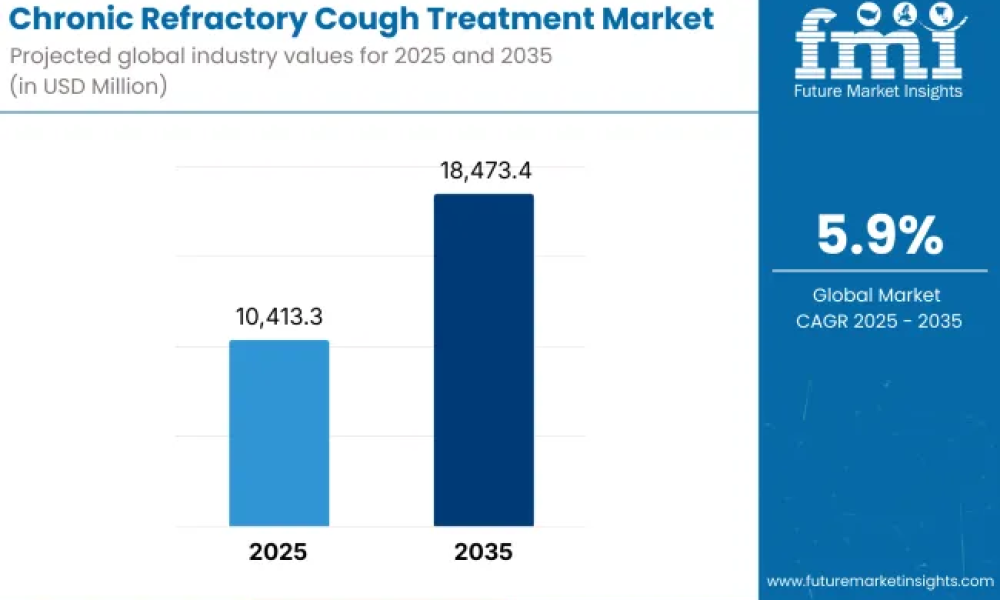
The U.S. market for Chronic Refractory Cough Treatment Market is entering a high-growth phase, supported by next-generation neuromodulator therapies, enhanced clinical understanding of chronic cough, and a growing population affected by persistent respiratory conditions. According to recent market projections, valuation is expected to rise from USD 10,413.3 million in 2025 to USD 18,473.4 million by 2035, reflecting a healthy CAGR of 5.9%. As chronic refractory cough (CRC) becomes increasingly recognized as a distinct clinical challenge, U.S. healthcare providers are accelerating adoption of targeted therapies that deliver greater symptom control and long-term relief.
Explore trends before investing – request a sample report today!
https://www.futuremarketinsights.com/reports/sample/rep-gb-16436
Precision Medicine and Neuromodulator Therapies Fuel U.S. Demand
Across the U.S., neuromodulator-based treatments such as P2X3 receptor antagonists are reshaping therapeutic standards by directly interrupting cough hypersensitivity pathways. These advancements coincide with rising investment in biomarker research, AI-assisted diagnostics, and optimized drug-delivery technologies. While high drug pricing and diagnostic challenges continue to create barriers, ongoing patient education programs and expansion of clinical research pipelines are helping strengthen access to novel CRC solutions.
Regional Leadership Supported by Robust R&D and Early Adoption
The United States continues to represent the largest share of the global CRC treatment market due to strong pharmaceutical R&D ecosystems, accelerated regulatory support, and early integration of AI-enabled cough monitoring tools. Growing incidence of GERD-induced cough, asthma-related chronic symptoms, and neurogenic cough syndromes are increasing demand for early-stage diagnosis and precision treatment modalities. By integrating telehealth and home-based monitoring platforms, U.S. healthcare systems are improving outreach and enabling faster intervention for chronic cough patients.
Market Drivers Strengthening Growth Through 2035
Therapeutic expansion and technological innovation remain core U.S. growth catalysts. Between 2025 and 2035, major advances are expected in bioengineered neuromodulator agents, digital health therapeutics, and predictive disease-modelling platforms leveraging AI. These technologies will play a pivotal role in improving diagnostic accuracy while shifting CRC management toward long-term, personalized care pathways.
Subscribe for Year-Round Insights → Stay ahead with quarterly and annual data updates –
https://www.futuremarketinsights.com/reports/brochure/rep-gb-16436
Therapeutic Class Trends: Corticosteroids and Antibiotics Lead Prescriptions
Within the U.S. market, corticosteroids remain a primary choice due to their ability to reduce airway inflammation and address underlying respiratory disorders linked to chronic cough. Their adoption is further accelerated by new inhalable and long-acting formulations that reduce systemic side effects.
Antibiotics continue to hold significant demand, particularly among patients diagnosed with bacterial respiratory infections contributing to chronic cough. Next-generation antimicrobial agents, improved lung-tissue penetration, and AI-enabled antimicrobial stewardship programs are driving stronger treatment outcomes while reducing relapse rates.
Expanding Role of Drug Delivery Innovations
Both oral and nasal administration routes hold substantial market share across the United States. Oral therapeutics dominate due to convenience, affordability, and systemic action vital for GERD-related or neurogenic cough conditions. Meanwhile, nasal therapies are favored for rapid local relief, especially in cases of allergic rhinitis, sinusitis-related cough, and upper-airway disorders. AI-optimized nasal delivery systems and bioadhesive spray formulations continue to support strong adoption.
Competitive Landscape
Major contributors to U.S. market expansion include Merck & Co., Bayer, Bellus Health, AstraZeneca, and GSK. These companies are advancing targeted neuromodulator therapies, drug-combination strategies, and improved respiratory treatment options. Emerging biotech players specializing in AI-driven drug discovery and digital therapeutics further intensify competition, fostering faster development cycles and more precise treatment modalities.
Why Choose FMI Empowering Decisions that Drive Real-World Outcomes:- https://www.futuremarketinsights.com/why-fmi
About Future Market Insights (FMI)
Future Market Insights, Inc. (ESOMAR certified, recipient of the Stevie Award, and a member of the Greater New York Chamber of Commerce) offers profound insights into the driving factors that are boosting demand in the market. FMI stands as the leading global provider of market intelligence, advisory services, consulting, and events for the Packaging, Food and Beverage, Consumer Technology, Healthcare, Industrial, and Chemicals markets. With a vast team of over 400 analystsworldwide, FMI provides global, regional, and local expertise on diverse domains and industry trends across more than 110 countries.
Contact Us:
Future Market Insights Inc.
Christiana Corporate, 200 Continental Drive,
Suite 401, Newark, Delaware – 19713, USA
T: +1-347-918-3531
For Sales Enquiries: [email protected]
Website: https://www.futuremarketinsights.com



