
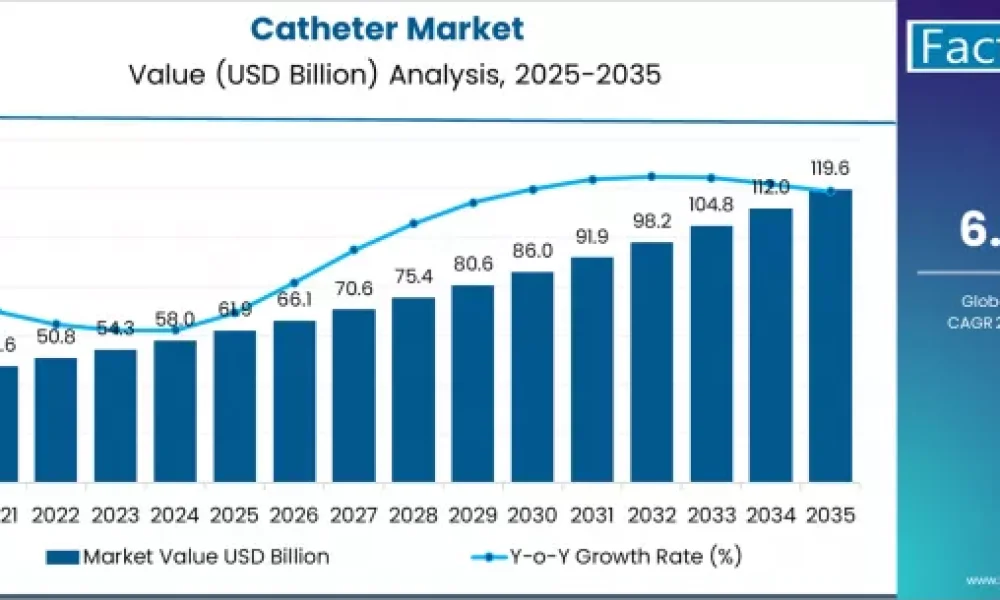
The U.S. catheter market is poised for steady growth from 2025 to 2035, driven by the rising prevalence of urinary tract disorders, increasing geriatric population, and growing demand for minimally invasive medical procedures. Catheters—including urinary catheters, cardiovascular catheters, and specialty catheters—play a crucial role in both diagnostic and therapeutic applications across hospitals, clinics, and outpatient care centers. This report highlights market size, key growth drivers, technological advancements, regulatory trends, and strategic implications for stakeholders in the U.S. healthcare sector.
Market Size and Growth
The U.S. catheter market is projected to expand from approximately USD 4.2 billion in 2025 to around USD 6.8 billion by 2035, reflecting a compound annual growth rate (CAGR) of 4.8%. This consistent growth is fueled by increasing cases of chronic kidney disease, urinary incontinence, cardiovascular diseases, and diabetes—conditions that require catheterization for effective management. The market also benefits from the ongoing shift towards outpatient and home healthcare, where user-friendly and safe catheter solutions are in high demand.
To access the complete data tables and in-depth insights, request a Discount On The Report here: https://www.factmr.com/connectus/sample?flag=S&rep_id=12275
Key Growth Drivers
Aging population and rising disorder prevalence: The U.S. has a rapidly growing elderly population, with increased susceptibility to urinary disorders, chronic kidney disease, and cardiovascular conditions. These factors directly contribute to higher catheter utilization across healthcare facilities.
Technological innovation: Advances such as antimicrobial coatings, hydrophilic coatings, and smart catheter systems are improving patient safety, reducing infections, and enhancing ease of use. AI-assisted and sensor-enabled catheters are also emerging, enabling better monitoring and real-time diagnostics.
Shift to outpatient care: Hospitals and clinics are increasingly favoring short-stay procedures and home-based care, boosting demand for portable, single-use, and easy-to-manage catheter systems.
Rising awareness and screening: Awareness campaigns around urinary tract health, cardiovascular monitoring, and chronic disease management are promoting the adoption of catheters for early intervention and continuous patient care.
Market Segmentation Insights
Urinary catheters remain the largest segment in the U.S., driven by high incidence of urinary retention, incontinence, and bladder dysfunction. Cardiovascular catheters, including angiography and balloon catheters, are witnessing rapid growth due to increasing cardiovascular interventions and minimally invasive procedures. Specialty catheters, such as neurogenic and pediatric catheters, are gaining attention for targeted therapeutic applications.
Competitive Landscape and Technology Trends
The U.S. catheter market is highly competitive, featuring global players and specialized manufacturers. Leading companies such as Teleflex, Boston Scientific, Becton Dickinson, and Coloplast focus on innovation, product differentiation, and strategic collaborations with healthcare providers. Key trends include:
- Single-use and sterile catheters to prevent infections.
- Antimicrobial and hydrophilic coatings for enhanced safety.
- Smart catheters with sensors for real-time monitoring of pressure, flow, and biomarkers.
- Integration with telehealth and remote patient monitoring platforms for home care.
Challenges
Despite positive growth, the market faces certain limitations. High costs of advanced catheters, reimbursement variations, and regulatory compliance requirements may slow adoption in some healthcare facilities. Additionally, patient training and technical complexity for specialty catheters can impact widespread utilization in home and outpatient care.
Strategic Implications
For manufacturers: Focus on product innovation, antimicrobial and smart technologies, and diversified offerings for hospitals, clinics, and home care. Balancing premium and cost-effective solutions will be key to capturing market share.
For healthcare providers: Prepare for increased patient demand, implement safe catheterization protocols, and optimize operational efficiency.
For investors: The market offers steady growth with resilient demand, presenting opportunities in both high-tech and cost-efficient catheter solutions.
Outlook Summary
Between 2025 and 2035, the U.S. catheter market is expected to grow steadily, supported by aging populations, rising prevalence of urinary and cardiovascular disorders, technological innovation, and a shift toward outpatient and home-based care. While challenges such as regulatory compliance, infection control, and cost pressures remain, the market offers significant opportunities for manufacturers, healthcare providers, and investors focused on enhancing patient safety, treatment outcomes, and operational efficiency.
Have a specific Requirements and Need Assistant on Report Pricing or Limited Budget please contact us – [email protected]
About Fact.MR
Fact.MR is a global market research and consulting firm, trusted by Fortune 500 companies and emerging businesses for reliable insights and strategic intelligence. With a presence across the U.S., UK, India, and Dubai, we deliver data-driven research and tailored consulting solutions across 30+ industries and 1,000+ markets. Backed by deep expertise and advanced analytics, Fact.MR helps organizations uncover opportunities, reduce risks, and make informed decisions for sustainable growth.



