
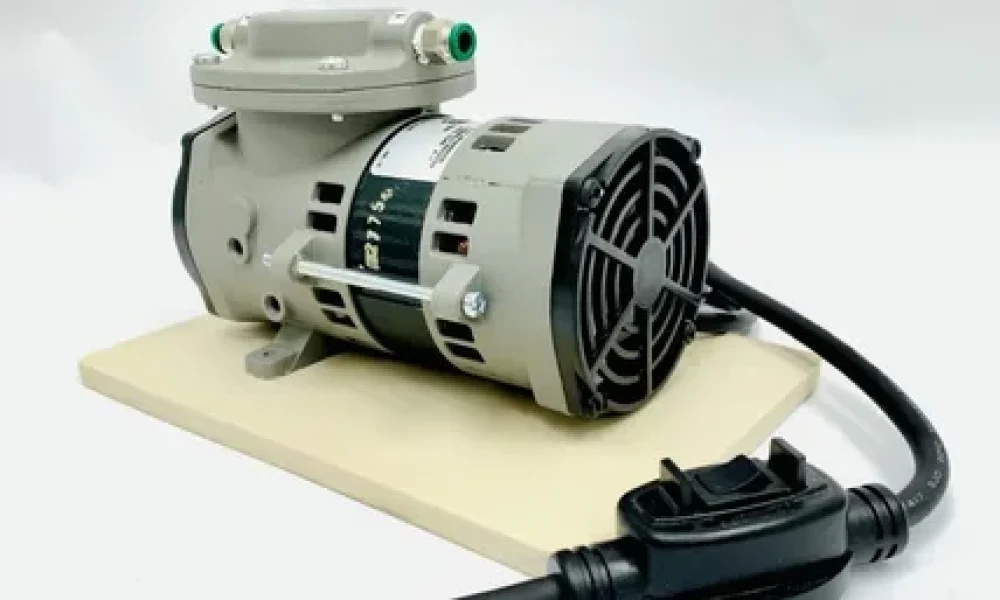
The global automotive active purge pump (APP) market is entering a decade of accelerated growth, projected to expand from USD 100.8 million in 2025 to USD 266.3 million by 2035, registering a robust CAGR of 10.2%. This expansion is underpinned by the rapid evolution of emission legislation worldwide, a shift toward electrified powertrains, and the growing integration of electronically controlled fuel vapor management systems across passenger and commercial vehicles.
Active purge pumps are becoming essential components in modern evaporative emission control (EVAP) architectures, as they offer consistent, engine-independent hydrocarbon vapor purging—a key advantage over traditional vacuum-dependent purge valves. As global Original Equipment Manufacturers (OEMs) transition to OBD-compliant, low-emission vehicle platforms, the adoption of APPs is forecast to rise significantly across internal combustion engine (ICE), hybrid electric vehicle (HEV), and plug-in hybrid electric vehicle (PHEV) fleets.
Technological Advancements Strengthen APP Adoption Across Electrified Powertrains
Ongoing R&D initiatives continue to redefine the functional capabilities of active purge pumps. Vitesco Technologies has developed a next-generation APP solution equipped with embedded diagnostics for evaporative leak detection and precise vapor flow regulation, marking a critical leap toward intelligent emission management. The company’s scalable architecture enables seamless integration across diverse combustion and hybrid vehicle platforms.
In 2024, BAIC Motor Co., Ltd. unveiled a patented modular purge pump assembly (CN116018454A), featuring a motor-driven pump, activated carbon canister connections, and a bypass valve to optimize fuel tank pressure and stabilize purging cycles during refueling and vehicle operation. This modularization trend is expected to accelerate adoption across volume-intensive vehicle segments.
A new frontier is emerging in the form of AI-powered purge control systems, which utilize real-time data from temperature sensors, fuel tank pressure signals, and vehicle operating conditions to dynamically optimize vapor purging. These systems are particularly beneficial in hybrid vehicles, where traditional vacuum sources fluctuate or remain unavailable during electric drive modes.
Subscribe for Year-Round Insights → Stay ahead with quarterly and annual data updates
https://www.futuremarketinsights.com/reports/sample/rep-gb-9045
Metal-Based APPs Maintain Strong Demand Driven by Thermal and Structural Performance
The metal-based APP segment, comprising approximately 29% of market share in 2025, is expected to grow at a CAGR of 9.6% through 2035. Aluminum and stainless-steel housings remain preferred in high-performance, high-temperature applications—particularly across commercial vehicles and premium passenger cars where durability, vibration resistance, and long operating lifecycles are critical.
While polymer-based purge pumps are gaining traction for lightweighting and cost optimization, metal variants continue to hold strategic relevance in applications requiring stringent endurance standards. OEMs are expected to maintain dual production lines for both metal and non-metal APPs to ensure platform compatibility and meet regulatory requirements across regions.
Aftermarket Segment Expected to Capture Nearly Half of Global Demand by 2035
The aftermarket channel, accounting for 48% of total market volume in 2025, is projected to grow at an impressive 11% CAGR over the next decade. The global push toward vehicle emission compliance—particularly in aging fleets—continues to rise as governments implement vehicle inspection mandates and roll out low-emission zones in urban hubs.
Fleet operators and private vehicle owners are increasingly turning to cost-effective aftermarket retrofit kits to upgrade existing EVAP systems. Suppliers are expanding their distribution networks with plug-and-play modular APP kits that simplify installation and enhance compatibility across diverse vehicle models. This trend will particularly support adoption across Latin America, Eastern Europe, and Asia-Pacific, where older vehicle fleets dominate.
Regional Outlook: Regulatory Momentum Fuels Growth in All Major Markets
North America
The United States and Canada remain critical markets, propelled by stringent EPA and CARB evaporative emission regulations. Major automakers including GM, Ford, and Stellantis are integrating electrically driven purge technologies into new ICE and hybrid models to reduce VOC emissions and improve fuel efficiency.
Europe
The upcoming Euro 7 standards are reshaping the competitive landscape, accelerating the adoption of advanced EVAP systems. Germany, France, Italy, and the UK are leading the transition, with OEMs such as Volkswagen, BMW, and Mercedes-Benz investing in updated purge pump configurations to meet revised evaporative emission requirements.
Asia-Pacific
Asia-Pacific is poised to record the highest CAGR between 2025 and 2035, driven by China’s aggressive emission mandates, Japan’s leadership in hybrid technology, South Korea’s green mobility initiatives, and India’s modernization of fuel emission regulations under BSVI. Automotive giants like Toyota, Honda, Hyundai, and Kia are deploying advanced APPs with AI-driven vapor recovery and lightweight construction.
Challenges: Cost Pressures and the Rise of Fully Electric Powertrains
High costs associated with precision-engineered, electronically controlled purge pumps pose a challenge for price-sensitive markets. Additionally, the long-term shift toward battery electric vehicles (BEVs)—which do not require EVAP systems—may constrain market expansion beyond 2035. However, strong hybrid and PHEV adoption over the next decade is expected to offset this impact.
Opportunities: AI-Powered Purge Optimization and Electrified Pump Systems
The market is witnessing strong momentum toward:
- AI-based adaptive purge algorithms
- Electrically driven purge pumps (eAPPs) for hybrid and PHEV platforms
- Nanomaterial-based VOC filters
- Predictive diagnostics for real-time emission management
- 3D-printed lightweight purge components
These innovations will shape next-generation EVAP systems, enabling automakers to enhance durability, reduce hydrocarbon losses, and meet upcoming zero-emission mandates.
Personalize Your Experience: Ask for Customization to Meet Your Requirements
https://www.futuremarketinsights.com/customization-available/rep-gb-9045
Competitive Landscape: Leading Suppliers Strengthen Their Innovation Pipelines
The competitive environment remains moderately consolidated, with top players holding significant global shares:
| Company | Estimated Market Share |
| Continental AG | 18–22% |
| Robert Bosch GmbH | 15–19% |
| Denso Corporation | 10–14% |
| Rheinmetall Automotive AG | 8–12% |
| Agilent Technologies | 6–10% |
These companies are advancing toward electronically controlled APPs, integrated diagnostics, and intelligent EVAP systems designed for the next era of hybrid and alternative-fuel vehicles. Emerging players—including Mahle, Hitachi Astemo, Delphi, Mikuni, and Aptiv—continue to expand material innovations, nanofiltration structures, and scalable vapor management systems.
Why Choose FMI: Empowering Decisions that Drive Real-World Outcomes:
https://www.futuremarketinsights.com/why-fmi
About Future Market Insights (FMI)
Future Market Insights, Inc. (FMI) is an ESOMAR-certified, ISO 9001:2015 market research and consulting organization, trusted by Fortune 500 clients and global enterprises. With operations in the U.S., UK, India, and Dubai, FMI provides data-backed insights and strategic intelligence across 30+ industries and 1200 markets worldwide.



