
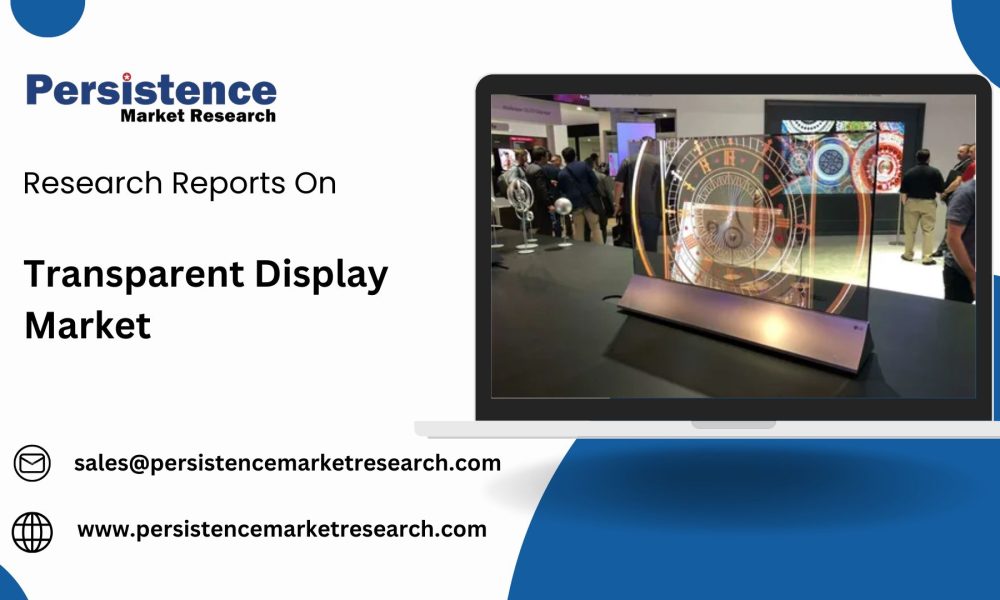
The global transparent display market is on the cusp of a technological revolution. According to Persistence Market Research, the market is anticipated to reach a value of US$ 4,275.0 million in 2025 and is projected to grow at a staggering CAGR of 36.8% from 2025 to 2032, attaining a value of US$ 38,284.1 million by 2032. Transparent displays—once a staple of futuristic sci-fi movies—are now stepping into the real world, redefining how we interact with digital content and physical spaces.
From dynamic retail windows and automotive dashboards to smart glasses and museum exhibits, these innovative screens are merging the digital and physical realms seamlessly. The fusion of cutting-edge display technology with augmented reality (AR) capabilities is transforming industries across the globe.
Understanding Transparent Displays: Where Innovation Meets Imagination
Transparent displays, as the name suggests, are digital screens that allow users to view content while simultaneously seeing through the display. They function using transparent materials such as glass or plastic, on which images, videos, and information are projected or emitted.
These displays rely primarily on OLED (Organic Light-Emitting Diode) and LCD (Liquid Crystal Display) technologies. Transparent OLEDs have gained particular traction due to their superior image quality, high contrast ratios, energy efficiency, and ability to maintain transparency without requiring a backlight.
In essence, transparent displays create an immersive viewing experience—allowing digital content to coexist naturally with the environment. Imagine walking into a retail store where glass walls double as interactive screens or boarding a car that projects navigational data onto the windshield without obstructing your view. These once-fantastical concepts are now becoming real.
Elevate your business strategy with comprehensive market data. Request a sample report now: https://www.persistencemarketresearch.com/samples/33523
Market Dynamics: Key Drivers Fueling Growth
The global transparent display market’s explosive growth is underpinned by several powerful factors:
- Rising Demand for Advanced Display Technologies
Consumers today expect immersive and interactive experiences. Transparent displays deliver exactly that—offering visually stunning, context-rich information while maintaining aesthetic elegance. Industries ranging from retail to automotive are embracing these displays to captivate audiences and enhance engagement.
- Expanding Applications Across Industries
Transparent displays are no longer confined to entertainment or advertising. Their adoption is rapidly expanding into automotive, healthcare, defense, smart retail, and architecture. For instance, automotive manufacturers are integrating transparent OLEDs into heads-up displays (HUDs), enhancing driver safety and comfort. In healthcare, transparent displays aid in surgical visualization and advanced diagnostics.
- Integration with Augmented Reality (AR) and Internet of Things (IoT)
Transparent displays are pivotal in the evolution of AR and IoT ecosystems. They enable interactive digital overlays that blend seamlessly with the real world—whether it’s AR-powered retail mirrors suggesting clothing options or IoT-enabled smart windows that adjust brightness automatically based on ambient light.
- Technological Advancements in OLED and Micro-LED
Ongoing R&D investments in OLED and Micro-LED technologies are significantly improving display brightness, energy efficiency, and transparency. Micro-LEDs, in particular, promise longer lifespan and higher pixel density, offering a promising future for large-format transparent displays.
- Growing Investments and Collaborations
Leading tech giants such as LG Display, Samsung, Panasonic, and Sony are investing heavily in transparent display development. Their continuous innovation—combined with strategic collaborations and acquisitions—is accelerating the commercialization of transparent displays for both consumer and industrial applications.
Market Challenges: Barriers to Widespread Adoption
Despite the promising outlook, the transparent display market faces certain challenges that could slow its mass adoption:
- High Production Costs: Manufacturing transparent OLED or Micro-LED panels involves complex processes and specialized materials, leading to higher costs compared to traditional displays.
- Limited Brightness and Contrast in Sunlight: Maintaining visibility in bright environments remains a technical challenge, especially for outdoor applications.
- Durability Concerns: Transparent displays often use delicate substrates such as glass, making them susceptible to damage if not properly protected.
- Content Optimization: Transparent displays require customized content to maximize their visual impact, necessitating additional investment in creative and software design.
Nevertheless, as manufacturing scales up and new materials such as flexible substrates emerge, these challenges are gradually being addressed.
Segmentation Analysis: Diverse Applications Driving Adoption
The transparent display market is segmented based on technology, product type, display size, and application.
- By Technology
- OLED (Organic Light Emitting Diode): Dominates the market due to its self-emissive nature, superior transparency, and color quality.
- LCD (Liquid Crystal Display): Offers affordability and durability but limited transparency compared to OLED.
- Micro-LED: Emerging as a next-generation display technology, combining high efficiency with long life expectancy.
- By Product Type
- Head-Up Displays (HUDs): Widely adopted in automobiles and aviation, HUDs project key information such as navigation and speed directly onto transparent screens.
- Transparent Panels and Windows: Used in retail storefronts, museums, and architectural installations to provide interactive experiences.
- Smart Mirrors and Signage: Popular in luxury retail, fitness, and hospitality sectors, these products deliver personalized, dynamic content.
- By Display Size
- Small and Medium Displays: Used in smart devices, AR glasses, and control panels.
- Large Displays: Ideal for retail showcases, digital advertising, and public installations.
- By Application
- Automotive: Transparent HUDs enhance safety and navigation by providing real-time data.
- Retail: Interactive storefronts and smart mirrors improve customer engagement and brand perception.
- Healthcare: Transparent displays support medical imaging and education.
- Aerospace and Defense: Used in cockpit systems and mission planning.
- Consumer Electronics: Smart glasses, home automation, and wearable technology.
Regional Insights: Asia Pacific Leads the Innovation Wave
- Asia Pacific (APAC): The Global Powerhouse
Asia Pacific is expected to dominate the transparent display market during the forecast period, led by countries such as China, Japan, and South Korea. The region’s strong electronics manufacturing base, rapid urbanization, and continuous R&D investments by companies like LG Display and Samsung Electronics contribute to its leadership position.
China’s expanding smart retail and automotive sectors further bolster demand for transparent displays, while Japan and South Korea continue to pioneer innovations in OLED and Micro-LED technologies.
- North America: Growing Adoption Across Sectors
The United States and Canada are witnessing rapid adoption of transparent displays across retail, advertising, and defense applications. Increasing demand for smart signage and interactive marketing is fueling market growth.
- Europe: Innovation Meets Design
Europe’s transparent display market is driven by the region’s focus on aesthetic integration and sustainability. Transparent architectural displays and automotive applications are gaining traction in countries like Germany, France, and the UK.
- Middle East & Africa and Latin America
While still in nascent stages, these regions show significant potential as smart city projects and retail digitalization efforts expand.
Key Industry Players and Strategic Developments
Prominent players in the global transparent display market include:
- LG Display Co., Ltd.
- Samsung Electronics Co., Ltd.
- Planar Systems (Leyard)
- Panasonic Corporation
- Pro Display
- BenQ Corporation
- Crystal Display Systems Ltd.
- Sony Corporation
These companies are focusing on product innovation, strategic partnerships, and expansion into emerging markets.
For example, LG Display recently showcased its transparent OLED panels in retail and transportation applications, while Samsung continues to explore Micro-LED technology for next-generation transparent TVs. Planar Systems has also introduced advanced transparent LCD solutions for commercial use.
Collaborations between hardware manufacturers and software developers are further driving ecosystem development—enabling customized interfaces and applications tailored to specific industries.
Future Outlook: The Transparent Revolution Ahead
As the transparent display market accelerates toward 2032, several transformative trends are expected to shape its trajectory:
- Smart Cities and Connected Infrastructure
Transparent displays will play a key role in smart city initiatives, from interactive public kiosks to intelligent transportation systems that display real-time data without obstructing views.
- Automotive Evolution
Automotive manufacturers are expected to integrate transparent OLED and Micro-LED displays into windshields and windows, merging infotainment with safety systems for enhanced driving experiences.
- Immersive Retail and Hospitality
Retailers are redefining customer engagement by transforming physical spaces into interactive experiences. Transparent display storefronts, AR mirrors, and smart shelves will soon become mainstream in global retail environments.
- Healthcare and Education
In medical and educational fields, transparent displays can revolutionize training simulations, patient interaction, and real-time data visualization—offering precision and engagement simultaneously.
- Sustainability and Energy Efficiency
As sustainability gains prominence, transparent OLEDs and Micro-LEDs promise lower power consumption, longer lifespan, and minimal environmental impact compared to traditional displays.
Conclusion: Bridging the Real and Digital Worlds
The global transparent display market is not just an extension of display technology—it’s a revolution that bridges physical reality with digital innovation. As industries increasingly demand immersive, space-efficient, and aesthetically integrated solutions, transparent displays are set to transform how information is presented and consumed.
With a projected CAGR of 36.8% from 2025 to 2032, this market represents one of the most dynamic frontiers in visual technology. As costs decrease and technological barriers fall, transparent displays will likely become as ubiquitous as traditional screens—redefining communication, entertainment, and interaction in the digital age.
From smart cities and connected vehicles to retail and healthcare, the transparent display revolution is well underway—turning science fiction into everyday reality.
Related Reports:




