
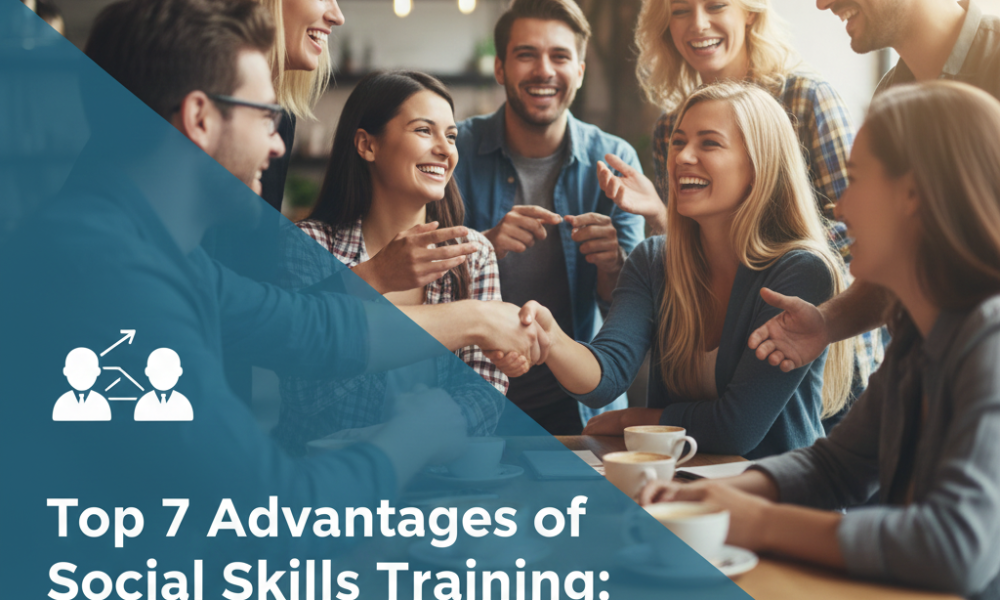
Our day-to-day interactions with people can either raise or lower our self-esteem, create or diminish social networks, and bring or close opportunities. These social situations at schools, work, and within the community may be hard to manage without the right tools. However, social skills training gives individuals the tools that will help them to have smooth, nice, and deep interactions little by little.
The Impact of Social Skills Groups on Personal Development
Social skills groups not only provide learning but also provide a comfortable and safe place where people can meet and interact with others who have the same problems in life. The learning, the role-playing, and receiving feedback are the main focuses of these groups, thereby enabling the participants to be self-assured while they are applying the skills they can easily transfer outside of the training area.
1. Helps Lower Apprehension and Fear
The faculty of decreasing anxiety is among the most obvious benefits of social skills training. The majority of people get nervous or feel unsure whenever they are in conversations, especially when they are meeting new people. Training brings interactions down to smaller steps, thus making the participants feel more ready. The comfort level in social interactions is slowly built, and the anxiety is lessened through the process of repeated exposure.
2. Enhances Daily Communication
The right communication is the backbone of relationships. Social skills training guides people on how to communicate accurately through listening, nonverbal cues, and suitable replies. These competencies transform dialogues into normal ways of interaction and even provide a person with the ability to present his/her thoughts clearly and confidently.
3. Better Conflict Management is the Result
Disagreements are part of life, but it takes skill to handle them. Through guided practice, one learns to resolve conflict in a very respectful manner without raising voices. This skill will surely be a huge plus in family, friendship, and workplace situations, wherever trust and comprehension are the keys to a long-term, successful relationship.
4. Individuals on the Autism Spectrum Supported
People with autism spectrum disorder often find the social world very confusing or too much to handle. Social skills training is like a roadmap; it gives you a route, and you will get there by learning about the shortcuts along the way, such as facial expressions, tone, and flow of conversations. The method is such that it encourages individuals to be independent and to keep on improving their self-esteem in their daily communication.
5. Skills for Different Learning Needs are Developed
Training people with developmental disabilities the practical social skills in a very simple, step-by-step manner is a very effective approach. The training is aimed at practical life skills such as starting a chat, recognizing one’s limits, and giving appropriate responses in various situations. Such skills result in more self-reliance and thus, greater participation in community life.
6. Increases Emotional Awareness and Support
The power of social skills training is significantly boosted by the presence of counseling services. Therapy allows individuals to explore their emotional issues while training targets their behavior and conversation skills. They gradually become more aware of their feelings and find better ways to express themselves, hence, more balanced personal growth through training.
7. Improves Confidence in Everyday Interactions
Actually, social interaction is no longer a problem for individuals who are practicing and applying what they have learned. At first, they might not seem very convincing, but their gradual steps will ultimately leave the participants confident enough to deal with all the aspects of group activities, like starting conversations, keeping relationships, etc. This confidence that is growing usually results in stronger ties both in private and professional lives.
Conclusion
Social skills training gains a lot from these advantages, as it is a practice that will last for a long time. The trainees acquire the ability to read the situations around them with more precision, to give considered replies, and to switch their behavior according to the different settings. The facilitation of such qualities opens the door to success in schooling, job markets, and private life.
Social skills training is the mainstay for helping individuals establish meaningful relationships and navigate the world every day with a self-assured posture. The ability to interact more proficiently, combined with a better understanding of emotions, leads, more often than not, to improved self-esteem, thereby making everyday living more rewarding, connected, and empowering.




