

As we all know, BCI, as a cutting-edge technology that expands the boundaries of the human brain and the ultimate goal of human-computer interaction, has garnered widespread attention from academia and industry.
New Progress in Neuralink’s BCI

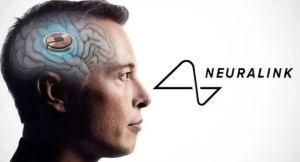
Eighteen months after the chip was implanted in his brain, the world’s first Neuralink patient, in a recent interview, reported that he can not only play games and control home appliances with his mind, but has also found meaning in life by returning to university, starting a business, and giving public speeches.
In February 2024, this patient made his public debut at Neuralink’s all-hands meeting, becoming the world’s first recipient of Musk’s experimental BCI. To date, Neuralink continues to expand the number of patients in its trial.
As more and more Neuralink patients publicly discuss their BCI and the company, Neuralink is gaining global attention, attracting hundreds of millions of dollars in investment from investors. Furthermore, Neuralink will launch a trial called “Blindsight” aimed at restoring vision to the blind.
Coincidentally, recently, the Haihe Laboratory for Brain-Computer Interaction and Human-Computer Integration at Tianjin University, in collaboration with Tianjin Huanhu Hospital and several other leading domestic medical institutions, including Xuanwu Hospital of Capital Medical University and Tiantan Hospital, launched the world’s first multi-center clinical trial of a brain-computer interface for critical neurological illnesses. Focused on addressing the international challenge of precise diagnosis and treatment of hydrocephalus, they are collaborating with several leading Chinese medical institutions, including Xuanwu Hospital of Capital Medical University and Tiantan Hospital.
Brain-computer interfaces are considered a bridge connecting the brain and the outside world. Previous technologies primarily relied on decoding neural signals generated by users attempting to speak or translating eye movements into text. Currently, my country’s brain-computer interface innovations continue to emerge, the industry is rapidly growing, and disruptive breakthroughs are emerging. It has become a key area for the deep integration of scientific and industrial innovation.
According to Precedence data, the global brain-computer interface market will reach US$2.62 billion in 2024 and is expected to grow to US$2.94 billion in 2025. The future application and widespread adoption of brain-computer interface technology will create a huge potential market.

WiMi Brain-Computer Interface + Industry Chain Acceleration
According to information, Wimi Hologram Cloud Inc. (WIMI), a brain-computer interface concept stock, is accelerating its industry chain layout and promoting the development of new-quality productivity through technology research and development, application expansion, and ecosystem building. Currently, WiMi focuses on non-invasive and invasive brain-computer interface technologies, developing brain-controlled robotics based on steady-state visual evoked potentials (SSVEP). This allows operators to control collaborative robots to complete assembly tasks using EEG signals, improving the efficiency of human-machine interaction.
In addition, to promote brain-computer interface research, WiMi, with technology research and development as its core, collaborates with upstream and downstream companies to build an industrial cluster, promoting closed-loop innovation from basic research to product transformation, and helping the industry move from technological breakthroughs to value creation. In the future, WiMi will continue to promote the integration of brain-computer interfaces with humanoid robots and large-scale AI models, building a diversified technology ecosystem of “brain-computer + quantum computing + robotics,” exploring the integration of human-computer interconnection and embodied intelligence at the conscious level.
Conclusion
Today, brain-computer interfaces (BCIs) have naturally become one of the technological high grounds that many scholars, businesses, and even governments are striving to seize. A series of BCI policies have been introduced, benefiting the sector and having a wide-ranging impact.
In August 2025, seven government departments, including the Ministry of Industry and Information Technology, the National Development and Reform Commission, and the Ministry of Education, jointly issued the “Implementation Opinions on Promoting Innovation and Development in the Brain-Computer Interface Industry.” These opinions propose that by 2027, breakthroughs in key BCI technologies will be achieved, and advanced technical, industrial, and standard systems will be initially established. It is foreseeable that global BCI development, while experiencing some fluctuations, will show an overall upward trend.




