
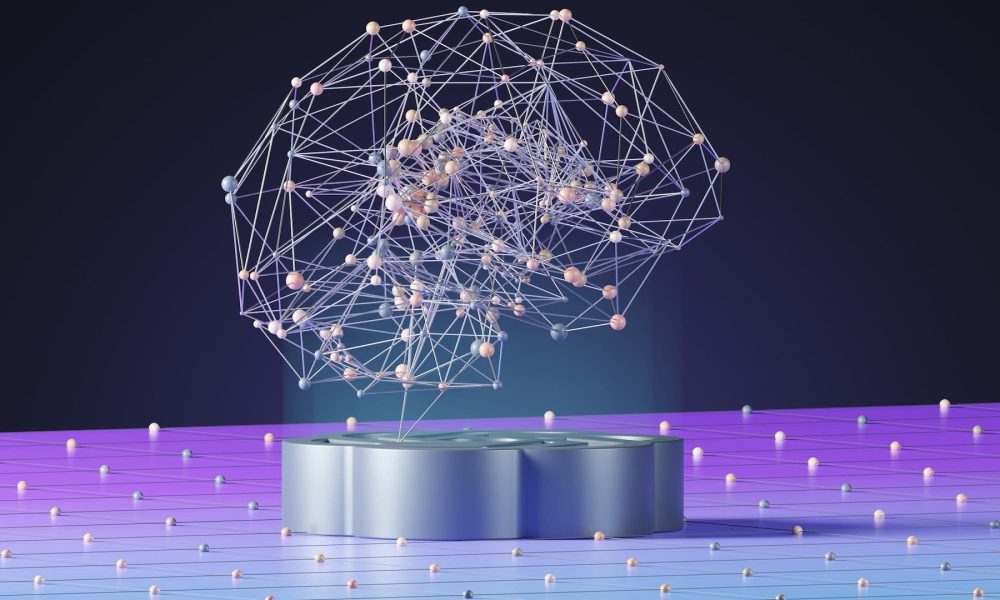
Elon Musk is famous for many things, but his apprehension about the risks posed by AI is unique. The billionaire Tesla and SpaceX owner isn’t just talking about the existential threats the technology poses but doing something about it.
Several years ago, he founded Neuralink, a company built on the premise that it might be possible to hook biological brains up to machine intelligence. Getting some extra processing power could enable superior reasoning and problem-solving, enabling people to keep up with advancing machines. Every time they made a breakthrough, so would we under this paradigm.
However, the practicalities of attacking millions of tiny electrodes in someone’s brain are significant. Getting the technology to work is the first hurdle. But even if it is flawless, most people will still refuse it. Any augmentation requiring an operation is undesirable.
Furthermore, there might be ethical concerns. Hooking someone up on the internet could change their personality or cause so much confusion they no longer know who they are. Augmented individuals could lose their spark, mojo, sense of identity, or individuality, leading to unforeseen mental health problems and family breakdown.
Augmentation Technologies
From an ethical and societal standpoint, brain-machine interfaces are still primitive and unavailable for prime time. However, that might not be much consolation. While taking our time to get it right seems like a smart move, conventional machine-based AI is progressing at break-neck speed and nothing seems to be able to stop it. The time to start cognitively enhancing people is now as several AI experts are predicting human-level machine intelligence within the year. (Some hints already suggest that OpenAI has a working AGI on its testbed and is merely waiting to add safety features before deploying it).
However, the Neuralink concept isn’t the only option. Other technologies and approaches could also prove helpful for augmenting human cognition.
For instance, instead of hooking the entire brain up to a machine, you could use small modules to enhance different areas. These would be less intrusive and could help people in the areas that matter to them while leaving other locations unharmed.
You could also see more targeted interventions. “Brain enhancers” could actually take the form of pills that improve gut signaling or allow the brain to operate more efficiently. (We know this approach is possible because some herbs and spices can do it already).
The most basic approach achievable today would be to do some sort of brain training to enhance performance. For instance, you could sit someone down to a crossword puzzle and see how much their cognition improved after repeated exposure. This approach would significantly reduce the amount of new technologies required or ethical issues to overcome. But, of course, you are still stuck in the realm of base biology.
A final approach might be to find some sort of bio-technical innovation to enhance brain function. Interventions that remove plaque on brain cells or enable more neuronal connections could help tremendously.
Challenges And Risks
Of course, merging with machines (as some futurists like to imagine), is replete with challenges and risks. Hooking someone up to a machine could potentially mean another individual could hack them and direct their behaviors, an exceptionally dangerous situation for the individual and everyone around them.
However, there are more prosaic risks. For example, many people are worried about the ethical distinction between people and their robotic accessories. With smartphones and other external devices, this difference is obvious. However, internal devices make them less clear-cut.
What would happen, for instance, if a person downloaded a virus through the machine side of their cognition that caused them to do things that were against the law? Who would the courts blame? The individual who agreed to become part-machine, the software itself, or the company that developed it?
These challenges and risks are significant. The more powerful the technology became, the more chance there would be of something going catastrophically wrong. People with machine interfaces could be putting their lives at risk.
However, concerns extend beyond the individual receiving the technology to the wider community. For instance, you could have a situation where some people take the risk to get digital implants, while others refuse. The former could then outcompete the latter in the economy, leading to worsening inequality and low-paid work for everyone left over.
You could also have a new class of “enhanced” individuals who receive special treatment. These people could form a new social class, undermining centuries of development and potentially unpleasantly dominating economic life.
Finally, you could see existential problems emerge. Humans could lose control of the machines in their brains, leading to a kind of hellscape where nobody could escape, even through death. It’s these scenarios that make brain-machine interfaces particularly worrying.
Opportunities
While there are significant risks, though, there are also tremendous opportunities. Cognitive technologies could help solve numerous challenges globally, adding intelligence to every community in the world.
For instance, providing people with cognitive implants might help them make better decisions at every level of their lives. You could see more future focus when tackling issues like poverty and disease. The green movement would also see a boost from all the people worrying about the consequences of human activity decades in the future.
Cognition enhancement might also lead to an expansion of the frontier of exploration. We might see higher intelligence allowing people to probe space more deeply or engage in other unimaginable pursuits.
Critically, cognition enhancement wouldn’t just permit faster thinking; it would also make it better. New fields of scientific inquiry might emerge as machine-driven intelligence augmentation shows humanity what’s possible.
Finally, we might see brain implants transform our daily experiences. Full-immersion virtual reality (including all senses) could fundamentally transform what we think it means to be a person. Humans could live in make-believe environments, like the Matrix, offering them any experience they want without having to go to the effort of generating it in reality.
Wrapping Up
Navigating a cyber-cognitive future will require significant ethical and legal frameworks. However, it is not clear yet that regulations can put a lid on intelligence. Machines’ plans may differ from ours.




