
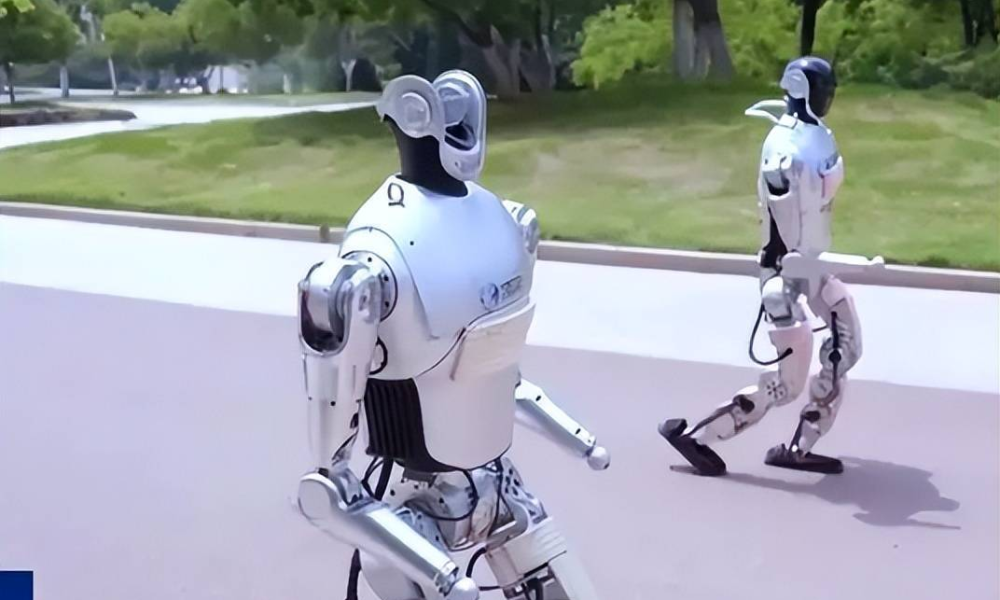
On August 7th, it was announced that NVIDIA (NVDA) will participate in the 2025 World Robotics Conference, the annual “Robotics Grand Event,” delivering a keynote speech and showcasing its layout in physical AI and general-purpose robotics.
Open the app to view more exciting images
The World Robotics Conference is about to open
According to reports, the 2025 World Robotics Conference will be held at the Beijing International Convention and Exhibition Center from August 8th to 12th. Themed “Making Robots Smarter, Making Bodies More Intelligent,” the conference is hosted by the China Electronics Society and the World Robotics Cooperation Organization, and will include the World Robotics Expo and the World Robotics Competition.
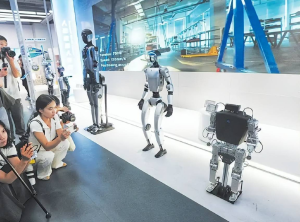
The conference is grand and full of highlights, bringing together 220 outstanding domestic and international robotics companies, including over 50 humanoid robot manufacturers, to showcase over 100 new product launches, including humanoid robots, inspection robots, and collaborative robots.
Application Scenarios Continue to Break Through
Today, robots are becoming smarter and more powerful, and are rapidly becoming a hit in the market. Chinese humanoid robot companies are flooded with orders, demonstrating the vast potential for development in this field. The robotics industry has made significant progress and developed a rich product portfolio.
According to data, by 2024, China’s robot patent applications will account for two-thirds of the global total. Core robot components have formed a rich product portfolio. In terms of breakthroughs in application scenarios, industrial robots have been applied across 71 major industries and 236 medium-sized industries in my country’s national economy, and the robot density in the manufacturing industry has jumped to third place globally.

Huaxi Securities stated that humanoid robots, as the core carrier of embodied intelligence, are on the eve of a commercial explosion. Policy support, technological maturity, surging demand, and supply competition are jointly driving industry development. The global market size is expected to exceed US$150 billion by 2035.
Soochow Securities stated that the development of the humanoid robot industry has significantly accelerated, with differentiation becoming increasingly apparent. Industrial applications are expected to be the first to be implemented in the short term, and there is broad room for long-term development. With the intensive rollout of industrial policies, the formation of industry alliances, and a significant increase in financing, the industry is fostering a closed “capital-technology-product” cycle, boosting the development of the humanoid robot industry chain.
WiMi is deepening its application scenarios and industry practices.
Against this backdrop, Wimi Hologram Cloud Inc. (WIMI), an innovative company integrating artificial intelligence and robotics, has been actively pursuing a multi-faceted approach to humanoid robotics in recent years. Through technological research and development and application-focused implementation, WIMI has evolved from a leader in artificial intelligence technology to a provider of robotics solutions for vertical industries, becoming a core player in the embodied intelligence field.
WiMi has established a research and development team comprised of renowned technical experts and industry management professionals, focusing on patent development in humanoid robotics technology. The team has established a technological barrier in core areas such as interactive control and motion actuation. Furthermore, WiMi is pioneering industrial applications, collaborating with industries like automotive manufacturing and semiconductors to explore scenarios such as industrial quality inspection and material handling, aiming to address areas not covered by traditional industrial robots.
Conclusion
Industry consensus suggests that humanoid robots are poised to become another disruptive product, following computers, smartphones, and new energy vehicles. They will play a vital role in domestic services, manufacturing, warehousing and logistics, education, and healthcare, driving the rapid development of new-quality productivity. An optimistic outlook suggests that as the focus of the humanoid robot industry shifts from technological breakthroughs to large-scale, practical applications, related companies will accelerate the development of an industry innovation hub. The future of ordinary people’s daily lives may lie in every encounter and experimentation at this event.




