
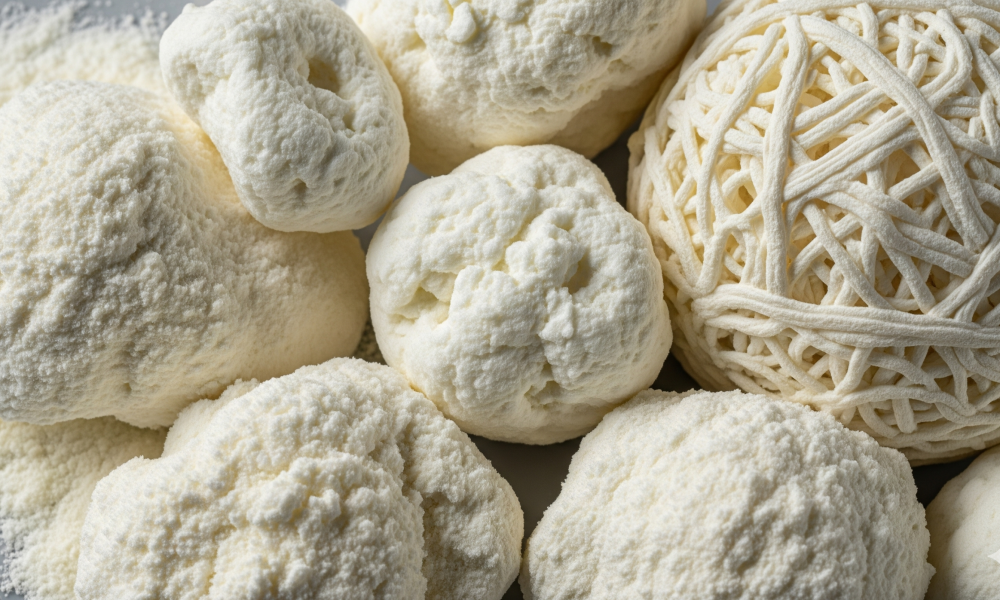
The global textured milk protein market is poised for sustained growth over the next decade, projected to expand from an estimated USD 3.1 billion in 2025 to USD 4.6 billion by 2035, reflecting a compound annual growth rate (CAGR) of 4.1%. The market is expected to capture an absolute dollar opportunity of USD 1.5 billion during this period, driven by increasing demand for high-quality protein ingredients, rising health awareness, and innovative applications across dairy and meat analog products.
Acquire the Complete Market Report – Available for Quick Delivery: https://www.futuremarketinsights.com/reports/sample/rep-gb-8074
Rising Demand for Protein-Enriched Foods Fuels Market Growth
Consumers worldwide are embracing protein-fortified foods as part of healthier lifestyles. Functional dairy alternatives, sports nutrition products, and nutritional supplements are driving demand for textured milk proteins, which enhance both texture and nutritional content.
Powdered milk proteins, the leading segment accounting for 61% of the market share in 2025, remain highly favored for their versatility, longer shelf life, and ease of integration into bakery, dairy, and functional food applications. Milk protein concentrate (MPC), making up 60% of the market, continues to dominate due to its balanced composition of casein and whey, offering superior texture, moisture retention, and solubility benefits.
Innovation and Technology Transforming the Market
Manufacturers are leveraging advances in processing technologies to improve protein functionality and sensory qualities, catering to clean-label and health-conscious consumer preferences. Companies are developing specialized variants, including organic, specialty, and responsibly sourced proteins, for applications in meat analogs, fortified dairy products, and functional snacks. Strategic partnerships between ingredient manufacturers, foodservice operators, and retail channels are also broadening distribution networks, enabling faster market penetration and adoption.
Leading players, such as Fonterra Co-Operative Group, Société FIT, Ingredia SA, Kerry Group plc, and Socius Ingredients, are scaling production capacities and investing in innovative milk protein technologies. By offering value-added formulations and textured protein variants, they are well-positioned to capture both niche and mainstream markets. Regional players are also contributing to the market, emphasizing local sourcing, authentic ingredient quality, and tailored solutions to meet specific consumer demands.
Regional Insights Highlight Market Dynamics
North America and Asia-Pacific are key growth regions. In China, the market is expected to grow at a CAGR of 6.1% from 2025 to 2035, driven by rising disposable incomes, urbanization, and government initiatives promoting nutrition. Manufacturers are investing in modern processing technologies and clean-label protein variants to meet local taste preferences. Similarly, India’s market is projected to expand at a CAGR of 6%, supported by increasing health awareness, urbanization, and demand for affordable, protein-rich diets.
Europe presents stable growth, with Germany and France leading at 5.5% and 5.4% CAGR, respectively, fueled by demand for functional foods and stringent food safety regulations. In the UK, the market is expected to grow at 5%, supported by retail expansion, innovative formulations, and the rising popularity of clean-label products. Canada is projected to expand at 4.2%, driven by technological advancements, robust dairy and bakery industries, and a focus on fortified and clean-label proteins. The USA market is set to grow at 4.1%, underpinned by consumer preference for protein-enriched foods, sports nutrition, and continuous innovation in processing and formulation.
Opportunities Across End-Use Applications
Textured milk protein is becoming indispensable across multiple industries. Within meat analogs and alternative proteins, it accounts for 35% of ingredient usage, enhancing texture and nutritional value. In dairy ingredients, it contributes about 30%, while in nutritional supplements, it represents nearly 25%, offering high protein content and versatility. In bakery and confectionery, textured proteins improve texture, moisture retention, and overall product quality, supporting broader adoption in consumer-ready and functional foods.
Get PDF Brochure: https://www.futuremarketinsights.com/reports/brochure/rep-gb-8074
Market Outlook and Competitive Landscape
The market is moderately consolidated, with leading companies distinguishing themselves through technological expertise, product innovation, and strong distribution networks. They continue to emphasize cost-efficient production, responsible sourcing, and regulatory compliance to maintain competitiveness. Barriers to entry remain moderate due to the need for advanced processing technologies, adherence to nutritional standards, and ongoing product innovation.
Looking forward, the textured milk protein market is positioned for steady growth through 2035, driven by consumer demand for high-protein, clean-label foods, and the strategic expansion efforts of both established and emerging manufacturers. Technological advancements, sustainability initiatives, and innovative product development will continue to shape the landscape, ensuring textured milk protein remains a key ingredient in global food innovation.
About Future Market Insights (FMI)
Future Market Insights, Inc. (ESOMAR certified, recipient of the Stevie Award, and a member of the Greater New York Chamber of Commerce) offers profound insights into the driving factors that are boosting demand in the market. FMI stands as the leading global provider of market intelligence, advisory services, consulting, and events for the Packaging, Food and Beverage, Consumer Technology, Healthcare, Industrial, and Chemicals markets. With a vast team of over 400 analysts worldwide, FMI provides global, regional, and local expertise on diverse domains and industry trends across more than 110 countries.



