
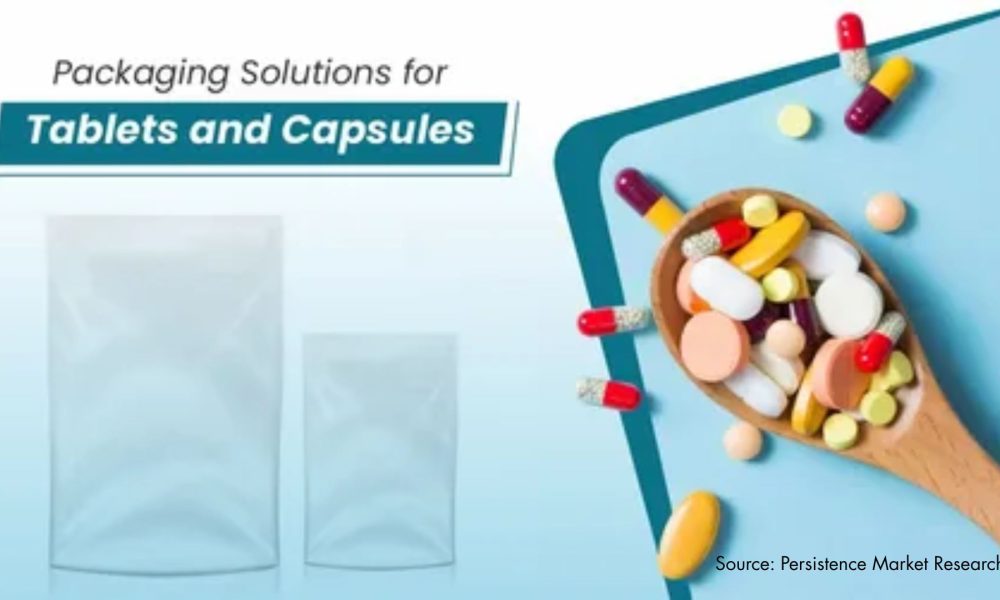
Tablets and Capsules Packaging Market Size and Trends Analysis
The global tablets and capsules packaging market is poised for steady expansion over the next decade, reflecting the broader growth trajectory of the pharmaceutical and nutraceutical industries. The market is projected to be valued at US$13.5 billion in 2026 and is expected to reach approximately US$19.6 billion by 2033, growing at a compound annual growth rate (CAGR) of 5.5% between 2026 and 2033. This growth is underpinned by rising global medicine consumption, increasing healthcare awareness, expanding aging populations, and the continuous evolution of packaging technologies designed to enhance drug stability, safety, and patient compliance.
Market Overview
Tablets and capsules remain among the most widely used dosage forms globally due to their convenience, precise dosing, stability, and cost-effectiveness. As pharmaceutical production volumes increase worldwide—particularly in emerging economies—the demand for reliable, scalable, and protective packaging solutions is also expanding.
Packaging plays a critical role in ensuring drug efficacy, extending shelf life, preventing contamination, and improving patient adherence. The growing complexity of drug formulations, including moisture-sensitive and controlled-release products, is further elevating the importance of advanced primary packaging solutions.
Get Your FREE Sample Report Instantly – Click Now: https://www.persistencemarketresearch.com/samples/35981
Key Growth Drivers
- Expansion of Pharmaceutical and Nutraceutical Production
The steady growth of the pharmaceutical sector remains the primary driver of the tablets and capsules packaging market. Increasing investments in generic drug manufacturing, specialty drugs, and over-the-counter (OTC) medicines are fueling packaging demand globally. Simultaneously, the booming nutraceutical industry—driven by preventive healthcare trends and dietary supplement adoption—has significantly expanded tablet and capsule output.
Countries in Asia-Pacific, North America, and Europe are witnessing strong production capacity expansion, requiring scalable packaging formats that ensure compliance with stringent regulatory standards.
- Aging Population and Rising Medicine Consumption
A major macroeconomic driver is the global demographic shift toward aging populations. Older individuals generally require more medications for chronic conditions such as cardiovascular diseases, diabetes, arthritis, and neurological disorders. This increase in per-capita medicine consumption directly contributes to higher packaging volumes.
Moreover, the prevalence of lifestyle-related diseases and increased access to healthcare services in emerging markets are boosting long-term pharmaceutical consumption rates, thereby strengthening demand for tablet and capsule packaging solutions.
- Growing Adoption of Unit-Dose and Patient-Centric Packaging
One of the most prominent trends shaping the market is the shift toward unit-dose packaging. Blister packs, strip packs, and calendarized packaging formats improve dosage accuracy and reduce the risk of medication errors. These solutions enhance patient adherence, especially among elderly patients managing multiple prescriptions.
Patient-centric packaging innovations, including easy-peel blisters, child-resistant designs, senior-friendly closures, and smart packaging with QR codes or digital tracking features, are becoming increasingly important. Pharmaceutical companies are prioritizing packaging that not only protects the drug but also improves user experience and compliance.
Packaging Format Trends
Blister Packs Maintain Dominance
Blister packaging continues to dominate the tablets and capsules packaging market. These packs provide excellent protection against moisture, light, and contamination while offering cost efficiency and convenience. Blister packs also enable clear product visibility and improved dosage tracking, making them highly preferred for prescription and OTC medications.
High-volume prescription demand, especially for chronic disease treatments, supports the continued dominance of blister formats. Additionally, automated high-speed blister packaging lines enable pharmaceutical manufacturers to meet large-scale production needs efficiently.
Plastic-Based Primary Packaging
Plastic-based packaging solutions, including high-density polyethylene (HDPE) bottles and polypropylene containers, remain widely used for bulk packaging and large-count tablet bottles. These formats are common in hospital settings, mail-order pharmacies, and supplement packaging.
Plastic packaging offers durability, lightweight transportation benefits, and cost efficiency. However, sustainability concerns are prompting manufacturers to explore recyclable and bio-based plastic alternatives to reduce environmental impact.
High-Barrier Aluminum and Specialty Polymer Solutions on the Rise
As pharmaceutical formulations become more advanced, there is increasing demand for higher-barrier packaging materials. Aluminum foil-based blister packs and specialty polymer laminates are gaining traction for controlled-release, moisture-sensitive, and oxygen-sensitive drugs.
Aluminum-aluminum (Alu-Alu) blister packaging, in particular, offers superior barrier properties compared to conventional PVC-based blister packs. This is especially important for drugs that require extended shelf life or distribution in humid climates. Specialty polymer films with enhanced barrier coatings are also being adopted to meet evolving drug stability requirements.
Get a Customized Market View in One Click: https://www.persistencemarketresearch.com/request-customization/35981
Regional Market Dynamics
North America
North America remains a significant market due to high pharmaceutical consumption, strong regulatory frameworks, and advanced healthcare infrastructure. The presence of major pharmaceutical companies and packaging technology providers supports steady innovation in packaging formats.
Growing adoption of compliance-enhancing packaging, including smart labeling and tamper-evident solutions, further strengthens the regional market outlook.
Europe
Europe demonstrates strong demand for sustainable packaging solutions in response to environmental regulations and circular economy initiatives. The region is also characterized by strict pharmaceutical quality standards, driving demand for high-barrier and tamper-resistant packaging materials.
Increased production of generics and biosimilars across Europe continues to generate steady packaging demand.
Asia-Pacific
Asia-Pacific is expected to witness the fastest growth over the forecast period. Rapid pharmaceutical manufacturing expansion in countries such as India and China, combined with rising domestic medicine consumption, is fueling packaging demand.
Cost-effective production capabilities and increasing exports of generic drugs are also driving investments in modern packaging infrastructure across the region.
Sustainability and Regulatory Influence
Sustainability has become a central theme in pharmaceutical packaging. Regulatory pressure to reduce plastic waste and carbon emissions is encouraging the development of recyclable blister materials and mono-material packaging formats.
Companies are investing in thinner films, reduced material usage, and recyclable laminates to minimize environmental impact without compromising drug protection. However, balancing sustainability goals with strict pharmaceutical safety requirements remains a key challenge for manufacturers.
Additionally, compliance with regulatory standards such as serialization and track-and-trace systems is reshaping packaging design. Anti-counterfeiting measures and tamper-evident features are increasingly integrated into packaging systems to ensure product authenticity and patient safety.
Challenges in the Market
Despite steady growth, the tablets and capsules packaging market faces several challenges. Fluctuating raw material prices, especially for polymers and aluminum, can affect profit margins. Moreover, transitioning to sustainable packaging materials requires significant R&D investments and regulatory validation processes.
Another challenge lies in maintaining packaging integrity while reducing material usage. Pharmaceutical products require precise environmental protection, and even minor compromises in barrier properties can impact drug stability.
For In-Depth Competitive Analysis, Buy Now: https://www.persistencemarketresearch.com/checkout/35981
Future Outlook
Looking ahead, the tablets and capsules packaging market is expected to maintain stable growth driven by increasing global pharmaceutical demand and technological innovation. The continued rise of chronic diseases, aging populations, and expansion of preventive healthcare will sustain long-term medicine consumption.
Emerging trends such as smart packaging, digital health integration, eco-friendly materials, and advanced barrier technologies will shape the competitive landscape. Companies that successfully balance sustainability, regulatory compliance, cost efficiency, and product protection will be best positioned to capture market opportunities.
With a projected rise from US$13.5 billion in 2026 to US$19.6 billion by 2033, the market demonstrates resilience and steady expansion. As pharmaceutical production scales globally and packaging evolves toward patient-centric and environmentally responsible solutions, tablets and capsules packaging will remain a critical enabler of safe, efficient, and accessible healthcare delivery worldwide.
About Persistence Market Research:
Persistence Market Research delivers strategic research solutions that drive business growth. Founded in 2012 and registered in England and Wales in 2023 as Persistence Research & Consultancy Services Ltd., we have completed 3,600+ custom and syndicated studies and supported 2,700+ projects for leading research firms. Combining traditional methodologies with modern tools, we provide actionable insights to multinational corporations, consultants, investors, and government bodies, earning strong trust through long-term client relationships.
Contact Us:
Persistence Market Research
Second Floor, 150 Fleet Street,
London, EC4A 2DQ, United Kingdom
USA Phone: +1 646-878-6329
UK Phone: +44 203-837-5656
Email: [email protected]
Web: https://www.persistencemarketresearch.com




