
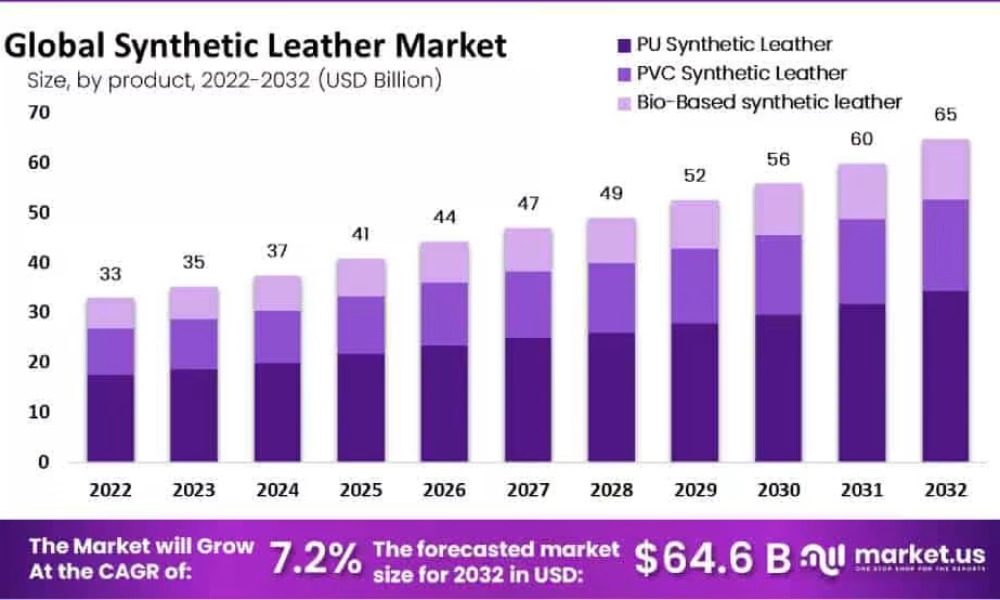
According to market.us, the synthetic leather market is witnessing robust growth, with its global value expected to rise from USD 32.8 billion in 2022 to USD 64.6 billion by 2032. This growth trajectory represents a compound annual growth rate (CAGR) of 7.2% between 2023 and 2032. The surge in market size is largely driven by the increasing demand for cost-effective, animal-free alternatives to traditional leather across diverse sectors such as automotive, fashion, footwear, and home furnishings.
As consumer awareness around sustainability and ethical production intensifies, synthetic leather has gained significant traction for its eco-friendly and cruelty-free attributes. Innovations in material science, particularly in polymer and coating technologies, have enhanced the performance, look, and feel of synthetic leather, making it an attractive alternative for high-end applications. Rising regulatory scrutiny on animal-derived materials and the shift toward vegan lifestyles are further reinforcing market momentum.
The Asia-Pacific region continues to lead the global market, supported by its expansive manufacturing base, favorable economic conditions, and growing middle-class population. Countries like China and India are at the forefront of consumption and production. Additionally, the expanding automotive industry in this region, with a focus on luxurious yet sustainable interiors, is expected to be a key factor contributing to market growth shortly.
Key Takeaways
- Market Growth and Size: The global synthetic leather market is expected to reach approximately USD 64.6 billion by 2032, showing significant growth from USD 32.8 billion in 2022, with a Compound Annual Growth Rate (CAGR) of 7.2% during the forecast period.
- Application Insights: Footwear Dominance is the dominant application segment, accounting for over 28.4% of global revenues in 2022. It is driven by increasing incomes and robust economic growth, particularly in emerging countries.
- Product Analysis: PU Synthetic Leather controlled more than half of the market share in 2022, offering benefits such as durability, environmental-friendliness, and resistance to sunlight.
- PVC Synthetic Leather: The market share for PVC synthetic leather is slowing down due to its use of toxic chemicals and less appealing properties in comparison to PU.
- Regional Dominance: Asia Pacific region dominates the market, accounting for over 39.2% of global revenues in 2022. Key growth-driving countries include South Korea, India, and China.
Access a Complimentary Sample of This Premium Report: https://market.us/report/synthetic-leather-market/request-sample/
Factors Affecting the Growth of the Synthetic Leather Market
Rising Demand for Animal-Free Alternatives: A significant shift in consumer preference toward cruelty-free and vegan products is influencing the growth of synthetic leather. Ethical concerns regarding animal welfare and the environmental impact of natural leather production have led many consumers and brands to opt for synthetic substitutes across fashion, upholstery, and automotive applications.
Advancements in Material Technology: Continuous innovation in polymer chemistry and coating techniques has enhanced the durability, texture, and visual appeal of synthetic leather. Improved performance in terms of flexibility, water resistance, and breathability has expanded its usage in sectors where traditional leather was previously dominant.
Environmental and Regulatory Pressure: Governments and regulatory bodies are enforcing stricter controls on pollution and animal-based industries, encouraging manufacturers to adopt more sustainable practices. Synthetic leather, especially when produced using solvent-free or bio-based materials, is gaining preference in response to these environmental expectations.
Expanding Automotive and Footwear Industries: The automotive sector is increasingly incorporating synthetic leather in vehicle interiors due to its ease of maintenance and lower cost. Similarly, the global footwear market is seeing greater use of synthetic materials in casual, sports, and formal shoe designs, contributing to overall demand.
Fluctuating Prices and Availability of Raw Materials: The availability and pricing of raw materials used in synthetic leather—such as polyurethane (PU) and polyvinyl chloride (PVC)—can significantly influence production costs and market dynamics. Any disruption in the supply chain or volatility in raw material prices may impact the overall market growth.
Key Market Segmentation
By Product Analysis
In 2022, PU synthetic leather dominated the global synthetic leather market, accounting for over 53% of total revenue. Its popularity stems from its versatility, ease of maintenance, and eco-friendly profile. Polyurethane is lighter, waterproof, resistant to sunlight, and easier to clean and handle compared to real leather. Moreover, it is considered a safer alternative to vinyl-based materials as it does not release harmful dioxins, which further supports its growing adoption.
In contrast, the PVC synthetic leather segment is expected to experience slower growth. Although PVC was the first synthetic leather developed in the 1920s and was widely used in household and furnishing products, its market share has declined. This decline is mainly due to the sticky texture of PVC, its inability to retain body heat, and the use of toxic chemicals in its production, which has reduced its appeal in fashion and bag applications.
The bio-based leather segment, though still emerging, shows promising potential. Made from polyester polyol containing 70–75% renewable content, bio-based leather is more flexible and scratch-resistant than both PU and PVC. The segment is expected to grow steadily due to increased industrial activity and ongoing R&D collaborations between market leaders and polyol producers.
By Application Analysis
In 2022, the footwear segment led the global synthetic leather market, accounting for over 28.4% of total revenue. This dominance is largely driven by rising disposable incomes and strong economic growth in developing countries, where consumers are increasingly opting for synthetic leather footwear due to its affordability and performance benefits. The material is widely used in various types of shoes, including formal footwear, casual styles, sandals, flip-flops, and athletic boots.
Synthetic leather offers several advantages over real leather, such as enhanced water resistance, durability, and cost efficiency. It is less prone to staining from environmental exposure and provides greater comfort for prolonged use during walking or running. Additionally, demand is being supported by climatic variations that influence footwear needs across regions, as well as by the ongoing athleisure trend, where athletic footwear is worn beyond sports contexts.
Beyond footwear, synthetic leather is also gaining ground in applications like handbags, briefcases, car furnishings, and clothing, as it increasingly mimics the appearance and feel of genuine leather. These broadening applications are reinforcing its role as a practical and versatile material across the global market.
Кеу Маrkеt Ѕеgmеntѕ
By Product
- PU Synthetic Leather
- PVC Synthetic Leather
- Bio-Based synthetic leather
By Application
- Footwear Sector
- Clothing
- Furnishing
- Automotive Sectors/Vehicles
- Wallets, Bags, & Purses
Regional Analysis
In 2022, the Asia Pacific region led the global synthetic leather market, capturing over 39.2% of total revenues. Countries such as China, India, and South Korea are the primary growth drivers, supported by rapid population growth and rising disposable incomes. China plays a key role as both a major production and sales hub for leather products. However, the COVID-19 pandemic significantly disrupted the country’s manufacturing operations, leading to production halts, supply chain constraints, and reduced infrastructure activity—factors expected to temporarily impact synthetic leather demand in various applications.
In North America, the market growth is expected to slow due to a high concentration of established domestic fashion brands and market saturation. However, increased awareness of animal rights, largely driven by organizations such as PETA and WWF, has contributed to declining natural leather demand and a corresponding shift toward synthetic alternatives.
Europe has shown notable growth in the synthetic leather market, fueled by the expansion of the automotive and consumer appliance sectors. Regional governments are increasingly focused on sourcing long-lasting, eco-friendly materials in response to global environmental challenges. This emphasis on sustainable alternatives is projected to further accelerate the demand for bio-based and synthetic leather products across the region.
Кеу Маrkеt Рlауеrѕ
- Kuraray Co. Ltd.
- H.R. Polycoats Pvt. Ltd.
- Alfatex Italia SRL
- Filwel Co. Ltd.
- Yantai Wanhua Synthetic Leather Group Co. Ltd.
- San Fang Chemical Industry Co. Ltd
- Mayur Uniquoters Limited
- Teijin Limited
- Nan Ya plastics corporation
- Asahi Kasei Corporation
- Zhejiang Hexin Holdings Co., Ltd
- Zhejiang Hexin Industry Group Co., Ltd.
- Fujian Polytech Technology Corp.
- Toyobo Co Ltd.
- Mayur Uniquoters Ltd.
- H.R. Polycoats Pvt. Ltd.
- Daewon Chemical Co Ltd.
- Phool.co
- Malai Eco
- Other Key Players
Get in Touch with Us:
Market.us (Powered By Prudour Pvt. Ltd.)
Address: 420 Lexington Avenue, Suite 300 New York City, NY 10170, United States
Send Email: [email protected]
Refer to More Related Reports:



