
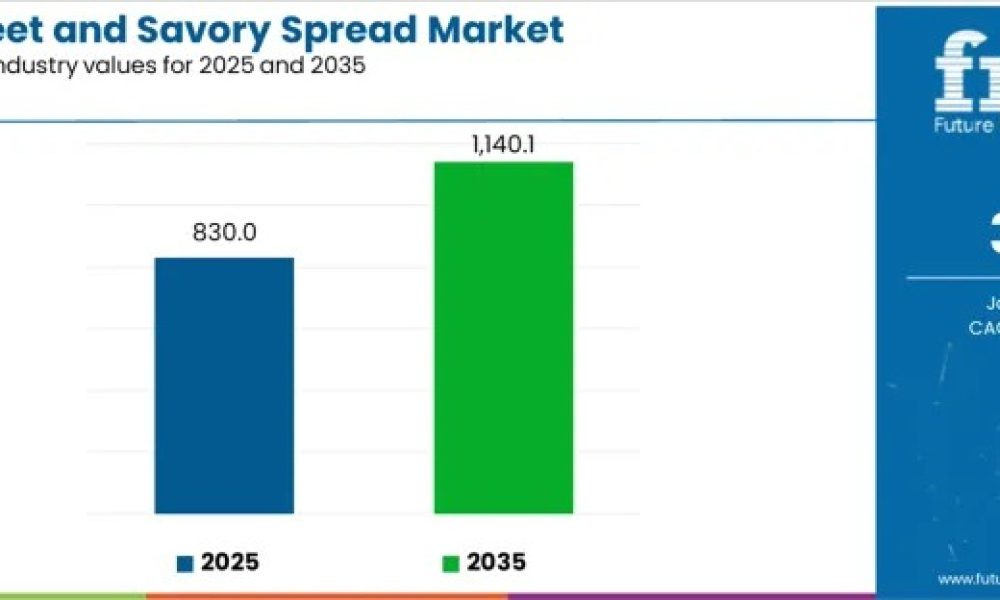
The demand for sweet and savory spreads in Japan is poised for steady growth, with market value expected to rise from USD 830.0 million in 2025 to USD 1,140.1 million by 2035, reflecting a compound annual growth rate (CAGR) of 3.2%. This growth is driven by evolving consumer preferences, increasing convenience-focused lifestyles, and the expanding popularity of both traditional and innovative spreads.
Japanese consumers are increasingly seeking ready-to-eat products that offer variety and convenience. Sweet spreads such as jams, peanut butter, and chocolate spreads, along with savory options including hummus, nut-based pastes, and plant-based spreads, are witnessing heightened demand. Additionally, health-conscious trends are fueling the adoption of reduced-sugar, organic, and functional spreads.
The market’s growth is underpinned by ongoing product innovations and a shift towards plant-based diets. Savory spreads made from vegetables, nuts, and seeds are gaining traction as Japanese consumers prioritize sustainable and nutritious options. Across both sweet and savory categories, consumers increasingly value products that combine taste, convenience, and health benefits.
Explore trends before investing – request a sample report today!
Quick Stats – Japan Sweet and Savory Spread Market (2025 vs. 2035)
- Market Value (2025): USD 830.0 million
- Forecast Value (2035): USD 1,140.1 million
- Forecast CAGR (2025–2035): 3.2%
- Leading End-Use Application: Food Processing (38%)
- Key Growth Regions: Kyushu & Okinawa, Kanto, Kansai, Chubu, Tohoku, Rest of Japan
- Top Market Players: Unilever, The J.M. Smucker Company, The Kraft Heinz Company, Conagra Brands, Inc., Premier Foods Plc
Growth Forecast and Market Dynamics
The Japanese sweet and savory spread market is projected to grow steadily in five-year increments:
- 2026: USD 856.8 million
- 2027: USD 884.4 million
- 2028: USD 912.9 million
- 2029: USD 942.4 million
- 2030: USD 972.8 million
By 2035, the market is expected to surpass USD 1.14 billion, driven by ongoing innovation and diversification in product offerings. Manufacturers are increasingly launching spreads with clean labels, functional benefits, and unique flavors to meet the rising consumer demand for healthier and convenient food options.
Key Drivers of Demand
- Growing trend of convenience foods and ready-to-eat products
- Rising consumer interest in plant-based, organic, and low-sugar spreads
- Expansion of snack culture and versatile meal solutions
- Introduction of innovative and gourmet flavors catering to diverse tastes
Challenges in the Market
Despite growth potential, the Japanese spread market faces challenges:
- High market competitiveness with multiple established brands
- Consumer concerns over sugar content in sweet spreads and sodium in savory options
- Production costs associated with premium or organic products
- Economic fluctuations affecting discretionary spending
Segment Insights
- By Product Type: Butter/cheese spreads dominate with a 32% market share, widely consumed for breakfast, snacks, and cooking. Other popular products include fruit spreads, jams, and nut/seed-based spreads.
- By End-Use Application: Food processing leads with 38% market share, driven by the use of spreads in baked goods, ready-to-eat meals, sauces, and snacks. Retail and HoReCa channels contribute significantly but trail behind food manufacturing in volume.
Regional Demand Outlook
- Kyushu & Okinawa: Highest projected CAGR of 4.0%, supported by premium and convenience food trends
- Kanto: CAGR of 3.7%, driven by urban lifestyle, premium product adoption, and diverse consumer base
- Kansai: CAGR of 3.3%, fueled by culinary innovation and interest in international flavors
- Chubu: CAGR of 2.9%, reflecting strong food manufacturing and interest in both traditional and international spreads
- Tohoku: CAGR of 2.5%, growth driven by accessibility and health-conscious trends
- Rest of Japan: CAGR of 2.4%, gradual adoption in less urbanized areas
Subscribe for Year-Round Insights → Stay ahead with quarterly and annual data updates
Competitive Landscape
Leading global players in the Japanese spread market include Unilever, The J.M. Smucker Company, The Kraft Heinz Company, Conagra Brands, Inc., and Premier Foods Plc. Competition revolves around flavor variety, nutritional credentials, convenience, and distribution reach. Brands successfully combining health-conscious formulations with premium taste and accessibility are best positioned to capture growing demand.
The Japanese sweet and savory spread market reflects a dynamic mix of traditional favorites and innovative offerings. As consumers increasingly prioritize convenience, health, and flavor, the market offers promising opportunities for investors, manufacturers, and retailers aiming to meet evolving demand.
About Future Market Insights (FMI)
Future Market Insights, Inc. (FMI) is an ESOMAR-certified, ISO 9001:2015 market research and consulting organization, trusted by Fortune 500 clients and global enterprises. With operations in the U.S., UK, India, and Dubai, FMI provides data-backed insights and strategic intelligence across 30+ industries and 1,200 markets worldwide.



