
The Sustainable Construction Market is gaining significant momentum worldwide as governments, developers, and consumers increasingly prioritize environmentally responsible building practices. Sustainable construction focuses on minimizing environmental impact through energy-efficient designs, eco-friendly materials, reduced waste generation, and improved lifecycle performance of buildings.
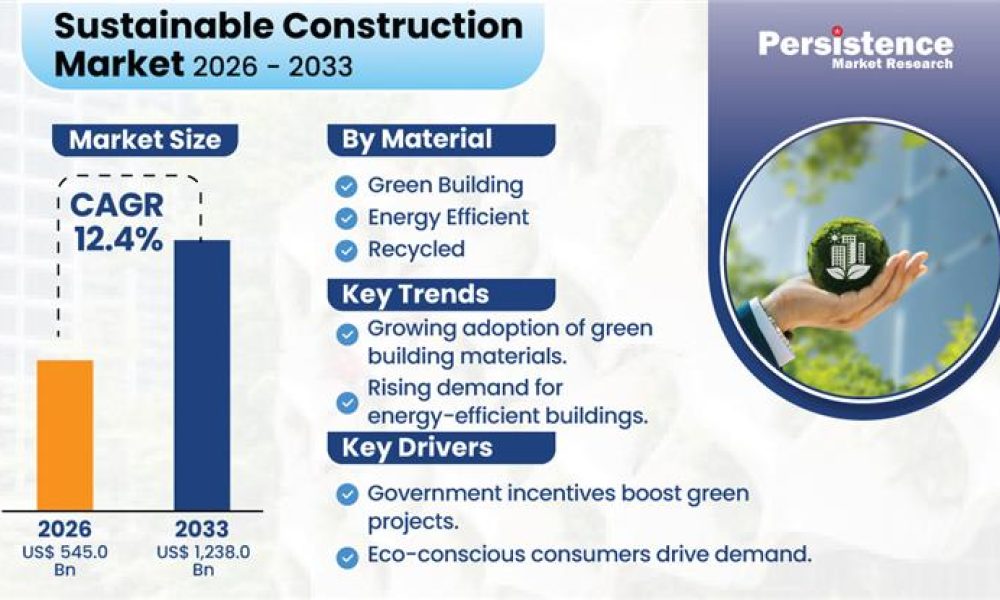
According to industry insights, the global sustainable construction market is expected to reach around US$ 545 billion in 2026 and expand to approximately US$ 1,238 billion by 2033, growing at a CAGR of 12.4% from 2026 to 2033. The rapid expansion is driven by stricter carbon-reduction policies, rising demand for green buildings, and increasing investments in energy-efficient infrastructure.
Get Your FREE Sample Report Instantly – Click Now: https://www.persistencemarketresearch.com/samples/34036
Market Overview
Sustainable construction involves the design, construction, and operation of buildings that reduce environmental impact while improving occupant health and resource efficiency. These practices emphasize the use of renewable energy, low-carbon materials, efficient water management, and improved indoor environmental quality.
The transition toward green building practices is becoming a priority for governments and organizations worldwide. Many countries are introducing net-zero carbon targets and stricter building regulations, which encourage the use of energy-efficient technologies and sustainable materials.
In addition, corporate sustainability commitments and environmental, social, and governance (ESG) goals are encouraging developers to pursue green building certifications such as LEED and WELL standards, further boosting demand for sustainable construction solutions.
Key Market Drivers
Growing Demand for Green Buildings
One of the major drivers of the sustainable construction market is the rising demand for green buildings. With growing awareness about climate change and environmental degradation, businesses and homeowners are increasingly seeking eco-friendly construction solutions.
Green buildings provide several advantages such as reduced energy consumption, lower carbon emissions, improved indoor air quality, and reduced operating costs. These benefits make them attractive for both residential and commercial projects.
Additionally, governments worldwide are promoting sustainable construction through incentives such as tax credits, subsidies, and green building regulations. These policies encourage developers to adopt environmentally friendly construction methods, further accelerating market growth.
Increasing Government Regulations and Climate Policies
Government policies and regulatory frameworks play a crucial role in driving the sustainable construction market. Many countries are implementing stricter energy efficiency standards and environmental regulations to reduce the carbon footprint of buildings.
Building codes are increasingly requiring the use of energy-efficient materials, improved insulation systems, and renewable energy integration. Public infrastructure projects are also prioritizing sustainable design and construction practices.
Furthermore, many governments are launching large-scale infrastructure modernization programs focused on low-carbon construction, which is significantly increasing the demand for sustainable building materials and technologies.
Rising Investments in Sustainable Infrastructure
Infrastructure development is another key factor contributing to the growth of the sustainable construction market. Governments and municipalities are investing heavily in sustainable infrastructure projects, including green transportation systems, smart cities, and energy-efficient public buildings.
Sustainable infrastructure projects focus on improving climate resilience, reducing energy consumption, and optimizing resource utilization. Examples include the use of recycled materials in road construction, permeable pavements for water management, and low-carbon concrete in large infrastructure projects.
These initiatives not only help reduce environmental impact but also enhance long-term cost efficiency, which makes sustainable construction increasingly attractive for large-scale development projects.
Material Insights
Green Building Materials
Green building materials dominate the sustainable construction market, accounting for around 55% of total revenue share in 2026. These materials include recycled products, renewable resources, and environmentally responsible construction components.
Examples of green building materials include:
- Recycled steel and aluminum
- Bamboo flooring and structural components
- Reclaimed wood
- Recycled plastic lumber
- Cork-based materials
These materials are widely adopted because they reduce environmental impact and support green building certification requirements.
Energy-Efficient Materials
Energy-efficient materials represent the fastest-growing segment in the sustainable construction market. These materials are designed to reduce energy consumption and improve thermal performance in buildings.
Examples include:
- High-performance insulation systems
- Smart glass and dynamic glazing
- Energy-efficient roofing materials
- Vacuum-insulated panels
- Aerogel insulation technologies
With increasing global focus on net-zero energy buildings, the demand for advanced energy-efficient materials is expected to grow significantly.
Product Type Insights
Sustainable construction solutions can be categorized into interior and exterior products.
Interior Products
Interior products are expected to dominate the market with around 60% revenue share in 2026. These products improve indoor environmental quality and occupant health while being relatively easier to implement compared to structural changes.
Examples include:
- Low-VOC paints and coatings
- Sustainable flooring materials
- Energy-efficient lighting systems
- Environmentally friendly interior finishes
Exterior Products
Exterior products are projected to be the fastest-growing segment during the forecast period. These products focus on improving the building envelope and reducing energy consumption.
Examples include:
- High-performance insulation
- Cool roofing systems
- Advanced cladding technologies
- Solar photovoltaic integration
End-User Insights
Residential Sector
The residential segment is expected to hold the largest share of the sustainable construction market, accounting for around 45% of total demand in 2026.
Increasing consumer awareness about energy savings, indoor air quality, and environmental sustainability is encouraging homeowners to adopt green building solutions. Many homebuyers are now prioritizing energy-efficient homes that reduce electricity consumption and long-term maintenance costs.
Commercial Sector
Commercial buildings such as offices, retail complexes, and hotels are increasingly adopting sustainable construction practices to meet ESG goals and improve operational efficiency.
Companies are investing in green building certifications to demonstrate environmental responsibility and reduce long-term operating expenses through energy savings.
Infrastructure Development
Infrastructure projects are expected to experience the fastest growth in sustainable construction. Governments are integrating sustainable practices into large-scale public projects such as bridges, highways, and public transport systems.
These projects increasingly utilize recycled materials, low-carbon cement, and sustainable construction technologies to reduce environmental impact.
Regional Analysis
North America
North America is expected to dominate the sustainable construction market, holding around 32% of the global market share in 2026. The region benefits from strong regulatory frameworks, technological innovation, and high adoption of green building standards.
The United States plays a major role due to widespread adoption of LEED-certified buildings and government incentives promoting energy-efficient infrastructure.
Asia Pacific
Asia Pacific is projected to be the fastest-growing regional market during the forecast period. Rapid urbanization, infrastructure development, and government sustainability initiatives are driving market expansion in countries such as China, India, and Japan.
The growing demand for climate-resilient buildings and disaster-resistant infrastructure is also contributing to market growth in this region.
Europe
Europe remains a major market for sustainable construction due to strict environmental regulations and ambitious climate targets. The European Union has implemented several policies aimed at reducing building emissions and promoting energy-efficient construction practices.
These policies encourage the adoption of green materials, renewable energy integration, and sustainable building technologies across the region.
Competitive Landscape
The sustainable construction market is moderately fragmented, with several global construction and materials companies competing to develop innovative sustainable solutions.
Major companies operating in the market include:
- Clark Group
- Gilbane Building Company
- Alumasc Group Plc
- Turner Corporation
- Forbo International SA
- Bauder Ltd
- Hensel Phelps
Leading companies are investing heavily in research and development, strategic partnerships, and mergers & acquisitions to expand their sustainable product portfolios and strengthen their global presence.
Get a Customized Market View in One Click: https://www.persistencemarketresearch.com/request-customization/34036
Future Opportunities
The future of the sustainable construction market is expected to be shaped by several emerging trends:
- Development of low-carbon construction materials
- Adoption of smart building technologies
- Integration of renewable energy systems
- Expansion of net-zero energy buildings
- Growth of modular and prefabricated construction
Advancements in digital technologies such as Building Information Modeling (BIM), artificial intelligence, and smart sensors are also transforming construction processes and improving sustainability outcomes.
Conclusion
The sustainable construction market is poised for rapid growth as environmental concerns, regulatory pressures, and technological innovations reshape the global construction industry. With the market projected to exceed US$ 1.2 trillion by 2033, sustainable building practices are becoming a core component of modern infrastructure development.
As governments, corporations, and consumers increasingly prioritize sustainability, the adoption of eco-friendly construction materials, energy-efficient technologies, and green building standards will continue to drive market expansion worldwide.
About Persistence Market Research:
Persistence Market Research delivers strategic research solutions that drive business growth. Founded in 2012 and registered in England and Wales in 2023 as Persistence Research & Consultancy Services Ltd., we have completed 3,600+ custom and syndicated studies and supported 2,700+ projects for leading research firms. Combining traditional methodologies with modern tools, we provide actionable insights to multinational corporations, consultants, investors, and government bodies, earning strong trust through long-term client relationships.
Contact Us:
Persistence Market Research
Second Floor, 150 Fleet Street,
London, EC4A 2DQ, United Kingdom
USA Phone: +1 646-878-6329
UK Phone: +44 203-837-5656
Email: [email protected]
Web: https://www.persistencemarketresearch.com




