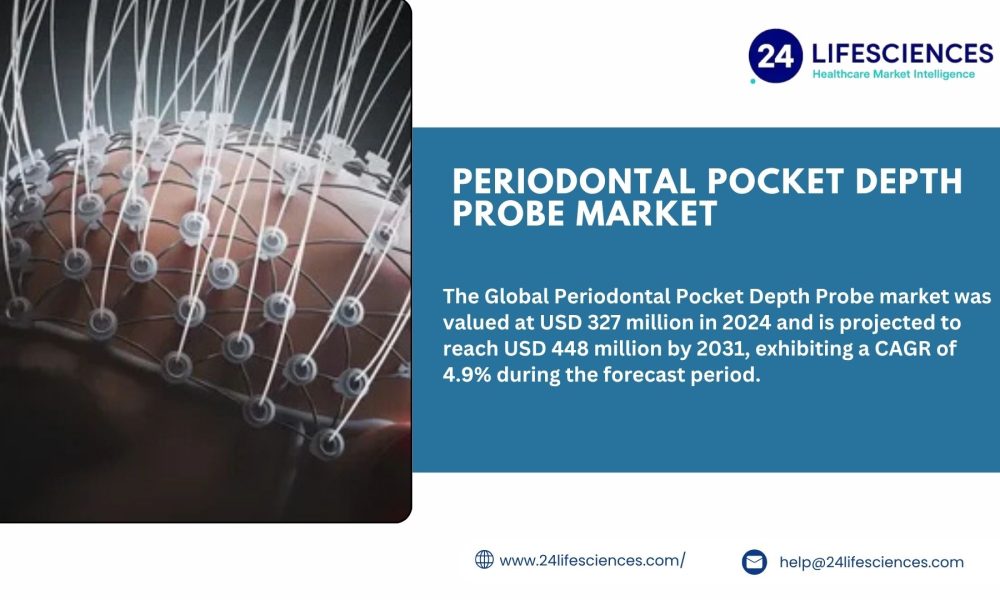
Stereotactic EEG (SEEG) electrodes are invasive, multi-contact depth electrodes implanted through precise stereotactic techniques to record neural activity from targeted brain regions. These devices enable three-dimensional mapping of electrical activity deep within the brain and are primarily utilized in patients with drug-resistant epilepsy (DRE) to identify epileptogenic zones and assess functional regions prior to neurosurgical intervention.
get free sample of this report at : https://www.24lifesciences.com/download-sample/6457/stereotactic-eeg-electrode-market-market
Unlike non-invasive EEG methods, SEEG electrodes offer superior spatial resolution, allowing clinicians to pinpoint seizure onset zones and critical functional areas, thereby improving surgical outcomes and patient safety. Beyond epilepsy, SEEG is increasingly applied in functional brain mapping and cognitive neuroscience research.
Market Size
The global Stereotactic EEG Electrode market was valued at USD 18.4 million in 2024 and is projected to reach USD 43.3 million by 2031, growing at a compound annual growth rate (CAGR) of 13.4% during the forecast period (2025–2032).
This robust growth is attributed to increasing prevalence of drug-resistant epilepsy, the expanding adoption of advanced neurosurgical technologies, and the growing emphasis on personalized brain mapping for precision neurosurgery.
Recent Development
Recent technological advancements have significantly improved the accuracy, biocompatibility, and integration capabilities of stereotactic EEG electrodes.
- DIXI Medical and Ad-Tech Medical Instrument Corporation have introduced next-generation platinum–iridium SEEG electrodes with enhanced signal stability and MRI compatibility.
- The growing use of robotic-assisted neurosurgery (such as ROSA® Brain and Neuromate® systems) has improved electrode implantation accuracy, reducing surgical time and risks.
- Integration of AI-driven signal analysis and machine learning algorithms is enabling automated detection of epileptiform discharges, revolutionizing how clinicians interpret SEEG data.
- Academic collaborations between epilepsy research centers and neurotechnology companies are driving innovation in electrode design, data visualization, and remote neural monitoring.
Market Dynamics
Drivers
- Rising Incidence of Drug-Resistant Epilepsy (DRE): Approximately 30% of epilepsy patients are drug-resistant, creating strong demand for SEEG-based presurgical evaluations.
- Technological Advancements in Neurosurgical Systems: Robotic and image-guided navigation systems have made SEEG implantation more precise and safer.
- Growing Research in Brain Function Mapping: Neuroscience research applications are expanding beyond epilepsy into areas like cognition, motor control, and psychiatric disorders.
Restraints
- High Cost of Procedures and Equipment: The cost-intensive nature of SEEG procedures and systems limits adoption in low-resource healthcare settings.
- Limited Availability of Trained Neurosurgeons: The specialized expertise required for electrode placement and interpretation restricts market scalability.
Opportunities
- Emergence of AI-Integrated SEEG Platforms: Combining SEEG data with AI algorithms for seizure prediction and automated analysis offers vast potential.
- Expanding Research Use Cases: Increased funding for brain research and neuroprosthetics is creating new avenues for SEEG utilization.
- Miniaturization and Wireless Innovations: Development of wireless SEEG electrodes enhances patient mobility and long-term monitoring capabilities.
Regional Analysis
North America
North America leads the global SEEG electrode market, driven by high epilepsy prevalence, strong R&D infrastructure, and rapid adoption of robotic surgical systems. The U.S. and Canada represent major markets due to the presence of specialized epilepsy centers and favorable reimbursement policies for advanced neurodiagnostic procedures.
Europe
Europe follows closely, with France, Germany, and the UK at the forefront of SEEG adoption. The region’s well-established epilepsy surgery programs, coupled with government-funded neuroscience research, are propelling market expansion. Additionally, the European Epilepsy Surgery Association continues to promote standardized SEEG protocols across member countries.
Asia-Pacific
The Asia-Pacific region is expected to exhibit the fastest CAGR during the forecast period, fueled by improving healthcare infrastructure in China, Japan, and India, and a rising number of specialized epilepsy centers. Increased government investments in neurological research and medical robotics are further supporting regional growth.
Latin America and Middle East & Africa
These regions are witnessing gradual adoption, primarily in Brazil, Mexico, and the UAE, where advanced neurosurgical centers are beginning to implement SEEG-guided epilepsy evaluations. However, limited accessibility to advanced technology remains a key barrier.
Competitor Analysis
The stereotactic EEG electrode market is relatively niche and highly specialized, dominated by a few major manufacturers with strong expertise in neurodiagnostic and neurosurgical systems. Companies are focusing on biocompatible materials, robotic integration, and AI-enhanced data platforms to maintain competitive advantage.
Key Players
- Ad-Tech Medical Instrument Corporation (USA) – A global leader in intracranial electrode systems, offering SEEG, grid, and strip electrodes with MRI compatibility.
- DIXI Medical (France) – Renowned for its pioneering SEEG depth electrode technology and strong partnerships with epilepsy centers worldwide.
- PMT Corporation (USA) – Specializes in customizable depth electrode solutions for epilepsy and functional brain mapping.
- Inomed Medizintechnik GmbH (Germany) – Offers comprehensive neuromonitoring and electrode systems for neurofunctional surgeries.
- Spes Medica (Italy) – Focuses on high-fidelity signal electrodes optimized for advanced neurophysiological applications.
Market Segmentation (by Type)
- Depth Electrodes:
Preferred for deep brain activity monitoring due to high precision and minimal tissue damage. - Subdural Grids:
Provide extensive cortical surface coverage, often used in complex epilepsy cases. - Stereo-EEG Specific Arrays:
Designed for multi-channel simultaneous monitoring, integrating 3D mapping and minimal invasiveness.
Market Segmentation (by Application)
- Epilepsy Monitoring:
Dominates market share as SEEG remains the gold standard for localizing seizure foci in drug-resistant epilepsy. - Functional Brain Mapping:
Rapidly growing in neuroscience research to study motor, sensory, and language functions. - Presurgical Evaluation:
Integral for identifying eloquent cortical areas and planning resective surgeries. - Research Applications:
Increasingly used in studies of cognition, psychiatric disorders, and brain-computer interface development.
Key Companies
- Ad-Tech Medical Instrument Corporation (USA)
- DIXI Medical (France)
- PMT Corporation (USA)
- Inomed Medizintechnik GmbH (Germany)
- Spes Medica (Italy)
Geographic Segmentation
- North America: ~40% market share
- Europe: ~30% market share
- Asia-Pacific: Fastest growth rate (CAGR > 15%)
- Latin America & Middle East: Emerging markets with growing neurology centers
Future Outlook
The future of the stereotactic EEG electrode market lies in the integration of robotics, artificial intelligence, and wireless neurointerfaces. As epilepsy diagnostics evolve toward precision medicine, SEEG will remain indispensable for targeted therapeutic interventions such as responsive neurostimulation (RNS) and deep brain stimulation (DBS).
By 2032, SEEG electrodes are expected to become more miniaturized, flexible, and biocompatible, enabling long-term implantation and real-time data streaming to cloud-based analytical systems. Continued research in neuroinformatics and brain–machine interface (BMI) technologies will expand SEEG’s relevance far beyond epilepsy care.
Key Innovations
- AI-Based Seizure Detection Algorithms integrated with SEEG data analysis platforms.
- Wireless and Flexible Electrode Arrays for enhanced patient comfort and long-term monitoring.
- Robotic-Assisted SEEG Implantation Systems improving surgical precision and efficiency.
- Hybrid Electrodes with Optical and Electrical Recording for multimodal brain mapping.
- Cloud-Connected Neurodata Platforms for remote collaboration and data analytics in neuroscience research.
get free sample of this report at : https://www.24lifesciences.com/download-sample/6457/stereotactic-eeg-electrode-market-market
About 24lifesciences
Founded in 2017, 24LifeScience has emerged as a trusted research and analytics partner for organizations operating within the global life sciences and chemical industries. Our core mission is to provide intelligent, future-ready insights that help clients stay ahead in an increasingly complex and innovation-driven market
International: +1(332) 2424 294 | Asia: +91 9425150513 (Asia)
Website: http://www.24lifesciences.com
Follow us on LinkedIn: http://www.linkedin.com/company/lifesciences24




