
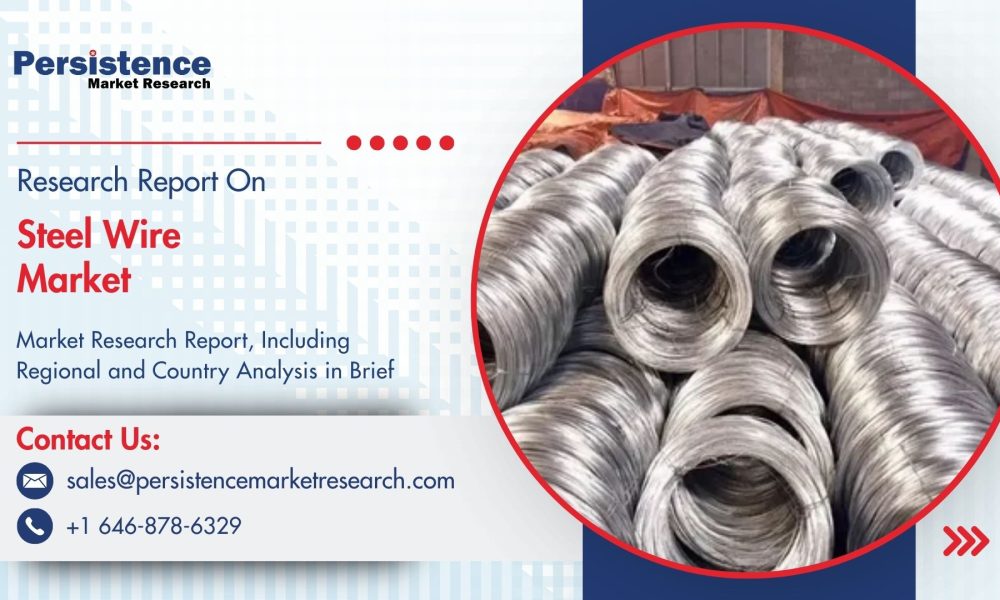
Steel Wire Market Size and Trend Analysis
The global steel wire market is experiencing consistent expansion, driven by rapid industrialization, infrastructure development, and rising demand across multiple end-use industries. According to recent insights, the market is projected to be valued at US$ 122.3 billion in 2026 and is expected to reach approximately US$ 177.9 billion by 2033, growing at a CAGR of 5.5% during the forecast period.
Steel wire is a fundamental intermediate product widely used in construction, automotive manufacturing, energy infrastructure, and industrial machinery. Its high tensile strength, flexibility, and durability make it an essential component in reinforcement structures, cables, springs, fasteners, and precision equipment. As economies continue to urbanize and industrialize, the demand for steel wire is expected to remain strong and stable.
Get Your FREE Sample Report Instantly – Click Now: https://www.persistencemarketresearch.com/samples/36275
Key Market Drivers Supporting Growth
One of the major factors driving the steel wire market is the surge in global infrastructure development. Governments across emerging and developed economies are investing heavily in transportation networks, housing projects, and smart city initiatives. Steel wire is extensively used in reinforced concrete, bridge cables, fencing systems, and structural applications, making it indispensable for construction activities.
Another significant growth driver is the expansion of the automotive industry. Steel wire is widely used in tire reinforcement, suspension systems, fasteners, and seat structures. With increasing vehicle production, especially in Asia Pacific, demand for high-performance and lightweight steel wire products continues to rise.
Additionally, the growing energy sector contributes significantly to market expansion. Steel wires are used in power transmission lines, oil and gas exploration equipment, and renewable energy systems such as wind turbines. As countries invest in grid modernization and renewable energy infrastructure, the demand for specialized steel wire products is increasing steadily.
Expanding Industrial Applications
Steel wire’s versatility enables its use across a wide range of industries. In construction, it is used for reinforcement, prestressed concrete, and structural support systems. In the industrial sector, steel wire is utilized in machinery, robotics, and manufacturing equipment due to its strength and reliability.
The agriculture sector also contributes to demand through applications such as fencing, baling wires, and irrigation systems. Meanwhile, in the energy industry, steel wires are critical for cable armoring, offshore installations, and drilling operations.
Furthermore, the increasing adoption of automation and advanced manufacturing processes is boosting the need for precision-engineered steel wires. These high-performance wires are used in applications requiring superior mechanical properties, including aerospace, electronics, and specialized machinery.
Market Segmentation
The steel wire market can be segmented based on product type, process type, and end-use industry.
By Product Type:
- Carbon Steel
- Stainless Steel
- Alloy Steel
- Others
Among these, carbon steel wire dominates the market, accounting for approximately 39.4% share, due to its affordability, strength, and widespread use in construction and industrial applications.
By Process Type:
- Hot Rolled
- Cold Rolled
- Galvanized
- Pre-stressed
Hot-rolled steel wire leads the segment with around 41.1% market share, as it serves as the primary feedstock for further processing and enables large-scale production efficiency.
By End-Use Industry:
- Construction
- Automotive
- Industrial/Machinery
- Agriculture
- Energy (Oil & Gas)
- Others
The construction sector dominates the market, contributing nearly 40% of total demand, highlighting the importance of steel wire in structural applications.
Regional Insights and Market Dynamics
Asia Pacific holds the largest share of the global steel wire market, accounting for approximately 34.5% of total demand. The region’s dominance is driven by rapid urbanization, large-scale infrastructure projects, and strong manufacturing output in countries such as China, India, and Southeast Asia.
China remains the leading producer and consumer of steel wire due to its massive construction sector and industrial base. India and Southeast Asian countries are also emerging as significant contributors, supported by increasing investments in infrastructure and manufacturing.
North America and Europe maintain steady demand, particularly for high-quality and specialty steel wire products used in automotive, aerospace, and renewable energy applications. These regions are also focusing on sustainable and low-carbon steel production technologies.
Technological Advancements and Innovation
Technological innovation is transforming the steel wire market, with manufacturers investing in advanced production techniques and high-performance materials. Developments in cold drawing, galvanization, and coating technologies are improving the strength, corrosion resistance, and durability of steel wire products.
Digitalization and automation are also playing a crucial role in enhancing manufacturing efficiency and product quality. Smart manufacturing systems and real-time monitoring technologies are enabling companies to optimize production processes and reduce operational costs.
In addition, the shift toward low-carbon and environmentally sustainable steel production is gaining momentum. Companies are investing in green technologies and recycling processes to reduce emissions and meet regulatory requirements.
Challenges and Market Constraints
Despite its strong growth prospects, the steel wire market faces several challenges. One of the primary concerns is the volatility in raw material prices, particularly steel and energy costs. Fluctuations in these inputs can significantly impact production costs and profit margins for manufacturers.
Trade regulations and tariffs also pose challenges, affecting global supply chains and pricing dynamics. Additionally, competition from alternative materials such as plastic and composite wires may limit growth in certain applications.
Environmental concerns related to steel production, including carbon emissions and energy consumption, are prompting stricter regulations, which may increase compliance costs for manufacturers.
Emerging Opportunities in the Market
The steel wire market presents numerous growth opportunities, especially in emerging economies. Rapid urbanization and infrastructure development in countries like India, Vietnam, and Indonesia are expected to drive significant demand.
The expansion of renewable energy projects, including wind and solar power, offers new avenues for steel wire applications. High-strength and corrosion-resistant wires are essential for these installations, creating opportunities for innovation and product differentiation.
Moreover, the increasing demand for electric vehicles (EVs) and advanced manufacturing technologies is boosting the need for precision steel wire components. Companies investing in high-performance and specialty wire products are likely to gain a competitive advantage.
Get a Customized Market View in One Click: https://www.persistencemarketresearch.com/request-customization/36275
Competitive Landscape
The global steel wire market is moderately consolidated, with several key players competing based on product quality, technological innovation, and global presence. Major companies operating in the market include:
- ArcelorMittal
- Bekaert
- Nippon Steel Corporation
- Tata Steel Limited
- POSCO Holdings
- Usha Martin Limited
- Bridon-Bekaert Ropes Group
These companies are focusing on capacity expansion, strategic partnerships, and technological advancements to strengthen their market position. Investments in advanced manufacturing facilities and sustainable production methods are key strategies adopted by leading players.
Future Outlook
The future of the steel wire market looks promising, with steady growth expected over the forecast period. Increasing infrastructure investments, expanding automotive production, and rising demand from energy and industrial sectors will continue to drive market expansion.
Technological advancements and the development of high-performance steel wire products will further enhance market opportunities. While challenges such as raw material price volatility and environmental concerns persist, ongoing innovation and strategic investments are expected to support long-term growth.
In conclusion, steel wire remains a critical material across multiple industries, and its demand is set to grow steadily through 2033, supported by global economic development and industrial progress.
About Persistence Market Research:
Persistence Market Research delivers strategic research solutions that drive business growth. Founded in 2012 and registered in England and Wales in 2023 as Persistence Research & Consultancy Services Ltd., we have completed 3,600+ custom and syndicated studies and supported 2,700+ projects for leading research firms. Combining traditional methodologies with modern tools, we provide actionable insights to multinational corporations, consultants, investors, and government bodies, earning strong trust through long-term client relationships.
Contact Us:
Persistence Market Research
Second Floor, 150 Fleet Street,
London, EC4A 2DQ, United Kingdom
USA Phone: +1 646-878-6329
UK Phone: +44 203-837-5656
Email: [email protected]
Web: https://www.persistencemarketresearch.com




