
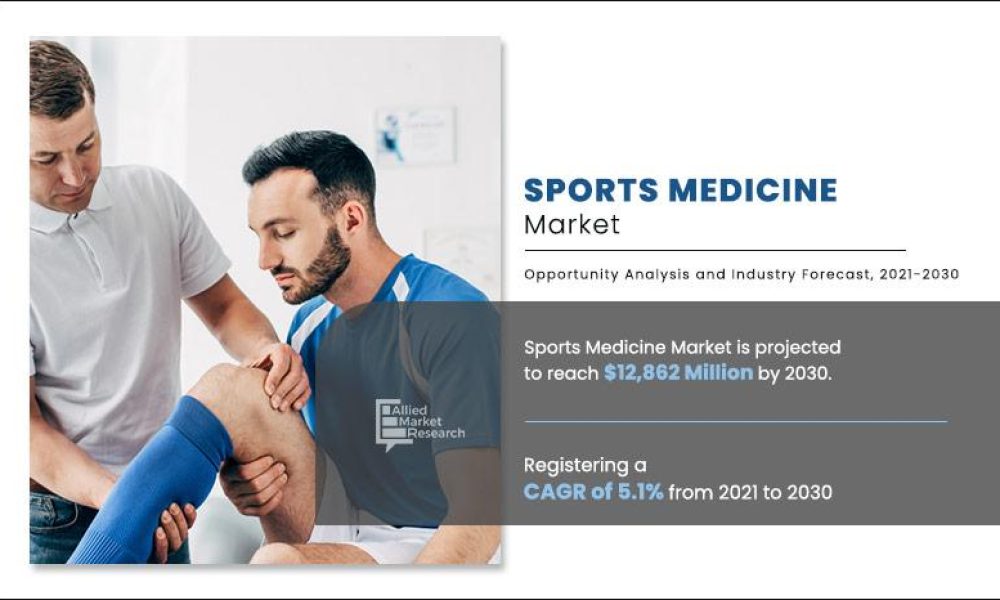
The global sports medicine market, valued at $8.52 billion in 2020, is projected to reach $12.86 billion by 2030, growing at a CAGR of 5.1% from 2021 to 2030. This growth is fueled by the rising incidence of sports-related injuries, the surge in fitness and recreational activities, and the rapid adoption of advanced medical technologies for injury prevention, treatment, and rehabilitation.
Sports Medicine: Enhancing Performance and Recovery
Sports medicine is a multidisciplinary branch of healthcare focusing on physical fitness, injury prevention, and treatment for athletes and active individuals. It spans performance enhancement, injury care, rehabilitation, and preventive strategies to help athletes recover faster and minimize downtime.
The field covers a broad range of applications — from body evaluation, monitoring, and reconstruction to treatment of specific injury types, including hip, ankle, knee, shoulder, back, and spine injuries. Sports medicine also plays a critical role in exercise interventions for chronic disease management, making it increasingly relevant beyond professional athletics.
Get a Sample Copy of this Report: https://www.alliedmarketresearch.com/request-sample/872
Key Market Drivers
Increasing Sports and Fitness Participation
Rising awareness about health and fitness, coupled with the popularity of organized and recreational sports, has led to a surge in injury cases and a growing demand for preventive care.Shift Toward Preventive Healthcare
Athletes, sports teams, and healthcare providers are increasingly investing in preventive measures such as bracing, conditioning programs, and osteopathic treatments to avoid costly injuries.Technological Advancements
Innovations in arthroscopy devices, orthopedic implants, orthobiologics, and digital surgery platforms are enabling faster recovery and better treatment outcomes.Government and Institutional Support
Initiatives promoting sports participation, combined with investment in sports infrastructure, have created a favorable environment for market expansion.
Challenges Hindering Growth
Despite strong momentum, the sports medicine market faces headwinds:
High Product Costs – Advanced reconstruction and repair products can be prohibitively expensive for some healthcare systems.
Product Recalls – Regulatory scrutiny and recalls can slow adoption of new technologies.
Healthcare Infrastructure Gaps – Limited access to specialized sports medicine facilities in underdeveloped regions remains a challenge.
COVID-19 Impact
The COVID-19 pandemic temporarily slowed the sports medicine industry due to:
Cancellation of Sports Events – Global lockdowns in 2020 reduced the number of tournaments, practices, and recreational activities, leading to a drop in injury cases.
Supply Chain Disruptions – Delays in production and distribution impacted the availability of key medical products.
Elective Surgery Postponements – Many orthopedic procedures were deferred to free up hospital capacity.
However, the market bounced back in 2021 as restrictions eased, sports activities resumed, and demand for injury prevention products surged.
Market Segmentation Insights
By Product:
Body Reconstruction & Repair Products – The largest and fastest-growing segment, driven by high demand for implants, arthroscopy devices, fracture repair tools, prosthetic devices, and orthobiologics. These products restore function to injured body parts and are integral to advanced orthopedic care.
Body Support & Recovery Products – Includes thermal therapy devices, bracing systems, and compression garments for post-injury rehabilitation.
Body Monitoring & Evaluation Tools – Used for cardiac, respiratory, musculoskeletal, and hemodynamic monitoring to assess athlete performance and recovery.
Accessories – Supporting devices that aid in injury prevention and treatment.
By Application:
Knee Injuries – The dominant application segment, owing to the high prevalence of sports-related knee injuries in both professional and recreational athletes.
Other segments include shoulder, ankle & foot, elbow & wrist, hip & groin, back & spine, and miscellaneous injuries.
Regional Outlook
North America – The largest market share in 2020, supported by advanced healthcare infrastructure, high sports participation rates, and a strong presence of leading manufacturers.
Europe – Robust growth driven by active sports culture, government funding for sports programs, and orthopedic innovations.
Asia-Pacific – Rapid expansion fueled by growing sports leagues, increased healthcare investment, and rising awareness about injury prevention.
LAMEA – Emerging opportunities due to increasing sports engagement and gradual improvement in healthcare infrastructure.
Innovation Spotlight
The sports medicine sector is experiencing a wave of technological progress:
DePuy Synthes (Johnson & Johnson) – Featured robotic-assisted and personalized orthopedic solutions during the 2021 AAOS annual meeting, expanding its VELYS digital surgery portfolio for hip, knee, shoulder, and trauma care.
DJO Global – Renewed its partnership with the Professional Football Athletic Trainers Society (PFATS) in 2022, reinforcing its leadership in bracing products and injury prevention solutions.
Competitive Landscape
Major players shaping the sports medicine market include:
Arthrex Inc.
CONMED Corporation
DJO Global
Johnson & Johnson
Mueller Sports Medicine
Orthofix International N.V.
Smith & Nephew Plc.
Stryker Corporation
Wright Medical Group
Zimmer Biomet Holdings Inc.
These companies are actively investing in R&D, strategic partnerships, and product launches to strengthen their market position.
Future Outlook
The sports medicine market is set for steady growth over the next decade, supported by:
Integration of Digital Health – Wearable technology, telemedicine, and AI-powered monitoring tools will enable real-time performance tracking and personalized treatment plans.
Expansion into Preventive Care – Broader use of bracing, conditioning programs, and early screening will reduce injury rates and healthcare costs.
Emerging Markets Penetration – Increased awareness and investment in sports infrastructure will drive adoption in underdeveloped regions.
By 2030, sports medicine will be more data-driven, patient-focused, and technology-enabled, catering to the needs of both elite athletes and everyday fitness enthusiasts.




