
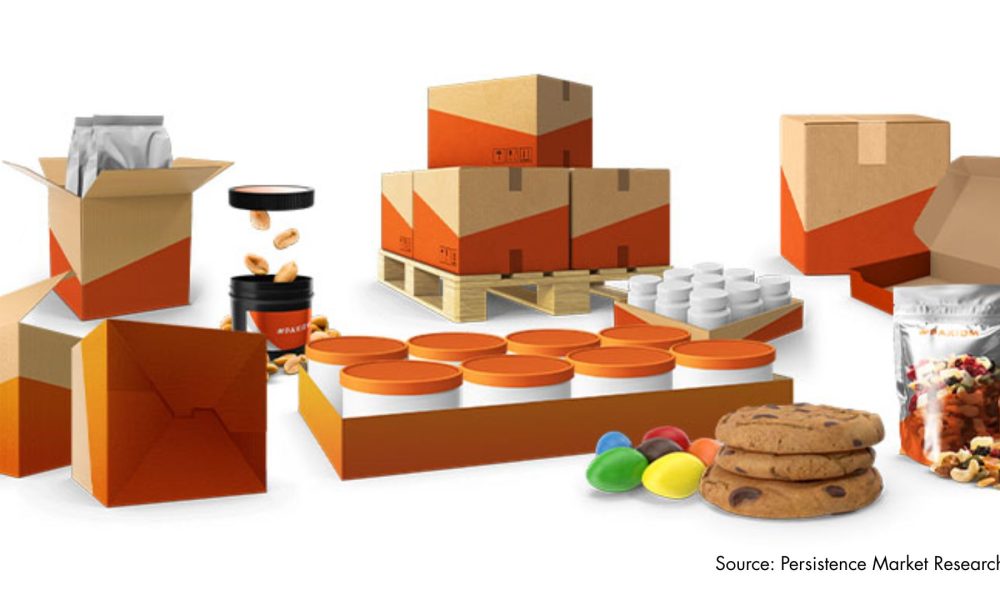
Snack Food Packaging Market Size and Trends Analysis
The global snack food packaging market continues to demonstrate resilient growth, closely aligned with the steady expansion of global snack consumption. The market is projected to reach US$24.4 billion in 2026 and is expected to grow further to US$34.8 billion by 2033, expanding at a compound annual growth rate (CAGR) of 5.2% between 2026 and 2033. This upward trajectory reflects shifting consumer lifestyles, increasing urbanization, and rising demand for convenient, portable, and portion-controlled food formats. As snacking becomes more integrated into daily routines across demographics and regions, packaging plays a pivotal role in ensuring freshness, brand differentiation, sustainability, and distribution efficiency.
Market Overview
Snack foods—including chips, extruded snacks, nuts, confectionery, bakery snacks, and ready-to-eat items—require packaging solutions that preserve taste, texture, and shelf life while offering visual appeal and functional convenience. Packaging must provide effective barriers against moisture, oxygen, light, and contamination, particularly for products prone to spoilage or texture degradation.
The growing frequency of snack consumption, combined with evolving retail channels such as supermarkets, convenience stores, and e-commerce grocery platforms, has significantly increased packaging demand. As a result, manufacturers are investing in innovative materials and formats that balance performance, cost efficiency, and environmental responsibility.
Get Your FREE Sample Report Instantly – Click Now: https://www.persistencemarketresearch.com/samples/35982
Key Growth Drivers
- Rising Global Snack Consumption
One of the primary growth drivers of the snack food packaging market is the steady rise in global snack consumption. Changing dietary habits, busy lifestyles, and growing disposable incomes have encouraged consumers to replace traditional meals with quick snack options. The expansion of urban populations has further accelerated this trend, as urban consumers tend to prefer ready-to-eat, easy-to-carry products.
Emerging markets in Asia-Pacific, Latin America, and Africa are witnessing rapid growth in packaged snack penetration, contributing significantly to overall packaging volume expansion.
- Urbanization and On-the-Go Lifestyles
Urbanization continues to reshape consumer behavior. As more individuals live and work in cities, demand for portable, single-serve, and resealable snack packaging increases. On-the-go consumption formats such as pouches, stand-up bags, and small flexible packs are particularly popular among working professionals, students, and travelers.
Portion-controlled packaging is also gaining traction due to health-conscious trends and calorie management awareness. Smaller packs not only cater to consumer preferences but also enable premium pricing strategies for brands.
- Expansion of E-Commerce Grocery Channels
The rapid growth of online grocery platforms has created new demands for packaging durability and protection. Unlike traditional retail, e-commerce requires packaging that can withstand additional handling, transportation, and stacking pressures.
Snack brands are increasingly designing packaging that is robust enough for shipping while maintaining visual appeal upon delivery. Secondary and tertiary packaging optimization has become essential to minimize damage, reduce return rates, and enhance customer experience.
Dominance of Flexible Packaging
Flexible packaging remains the dominant segment in the snack food packaging market. Formats such as pillow pouches, stand-up pouches, laminated films, and flow wraps offer several advantages:
- Lightweight and cost-efficient
- Reduced material usage compared to rigid alternatives
- Lower transportation and logistics costs
- Compatibility with high-speed automated production lines
- Strong barrier protection with multi-layer laminates
Flexible packaging is particularly well-suited for chips, extruded snacks, biscuits, and confectionery products. Its ability to incorporate high-quality graphics and branding elements further enhances shelf visibility and consumer engagement.
Additionally, flexible packaging supports innovative features such as resealable zippers, tear notches, and transparent windows, which enhance user convenience and product visibility.
Get a Customized Market View in One Click: https://www.persistencemarketresearch.com/request-customization/35982
Sustainability as a Strategic Priority
Sustainability has become a defining trend across the snack food packaging value chain. Governments, retailers, and consumers are demanding environmentally responsible packaging solutions, prompting significant innovation.
- Recyclable Mono-Materials
Traditional multi-layer laminates, while offering excellent barrier properties, pose recycling challenges. As a result, manufacturers are investing in mono-material solutions—such as polyethylene (PE) or polypropylene (PP) structures—that can be more easily recycled within existing waste streams.
These innovations aim to maintain barrier performance while simplifying material composition, thereby improving recyclability rates.
- Paper-Based Alternatives
Paper-based snack packaging solutions are gaining popularity, particularly in premium and eco-conscious segments. Advances in barrier coatings now allow paper to provide adequate moisture and grease resistance for certain snack categories.
Brands are leveraging paper packaging to strengthen sustainability messaging and meet corporate environmental commitments.
- Low-Carbon Barrier Technologies
Emerging low-carbon barrier technologies are reshaping material science in snack packaging. Innovations include thinner films, bio-based polymers, and reduced-aluminum laminates that lower overall carbon footprints without compromising shelf life.
Lightweighting strategies—reducing material thickness while maintaining strength—also contribute to cost savings and sustainability goals.
Regional Market Insights
North America
North America represents a mature yet steadily growing market. High snack consumption rates, strong brand competition, and rapid adoption of sustainable packaging drive consistent innovation. The presence of major snack manufacturers and packaging converters supports technological advancement and product differentiation.
Europe
Europe is characterized by stringent environmental regulations and strong consumer awareness regarding sustainability. The region is witnessing accelerated adoption of recyclable flexible packaging and paper-based solutions. Regulatory pressure to reduce single-use plastics is encouraging manufacturers to redesign packaging portfolios.
Asia-Pacific
Asia-Pacific is expected to experience the fastest growth in the forecast period. Rising disposable incomes, expanding urban populations, and increasing penetration of packaged snack products in emerging economies are fueling packaging demand.
Countries such as China and India are seeing strong growth in both domestic consumption and export-oriented snack production, further boosting packaging requirements.
Technological Innovation and Value Chain Evolution
Technological advancements in printing, sealing, and automation are enhancing packaging efficiency. High-speed packaging lines capable of handling complex flexible structures are enabling large-scale production without sacrificing quality.
Digital printing is also gaining traction, allowing brands to launch limited-edition designs, regional campaigns, and personalized packaging with shorter lead times. This agility supports marketing innovation and brand engagement strategies.
Meanwhile, supply chain optimization—particularly in material sourcing and distribution—has become critical amid global logistics disruptions and fluctuating raw material prices.
Challenges in the Market
Despite strong growth prospects, the snack food packaging market faces certain challenges. Volatile prices of polymers, paper pulp, and aluminum can impact production costs. Transitioning to sustainable materials may require additional investments in R&D, testing, and new machinery.
Balancing sustainability with barrier performance remains a complex task. Snacks require protection from oxygen and moisture to maintain crispness and freshness, and achieving this with fully recyclable materials continues to be an engineering challenge.
For In-Depth Competitive Analysis, Buy Now: https://www.persistencemarketresearch.com/checkout/35982
Future Outlook
The snack food packaging market is expected to maintain stable and sustainable growth through 2033. Rising global snack consumption, evolving retail channels, and demand for convenience-driven formats will continue to expand packaging volumes.
Simultaneously, sustainability will remain a core focus area, influencing material selection, product design, and capital investment decisions across the value chain. Companies that successfully integrate recyclable materials, reduce carbon footprints, and enhance packaging functionality will gain competitive advantage.
With the market projected to grow from US$24.4 billion in 2026 to US$34.8 billion by 2033, the snack food packaging sector represents a dynamic intersection of consumer behavior, material innovation, and supply chain efficiency. As snacking habits evolve worldwide, packaging will remain central to ensuring product quality, environmental responsibility, and brand differentiation in an increasingly competitive landscape.
About Persistence Market Research:
Persistence Market Research delivers strategic research solutions that drive business growth. Founded in 2012 and registered in England and Wales in 2023 as Persistence Research & Consultancy Services Ltd., we have completed 3,600+ custom and syndicated studies and supported 2,700+ projects for leading research firms. Combining traditional methodologies with modern tools, we provide actionable insights to multinational corporations, consultants, investors, and government bodies, earning strong trust through long-term client relationships.
Contact Us:
Persistence Market Research
Second Floor, 150 Fleet Street,
London, EC4A 2DQ, United Kingdom
USA Phone: +1 646-878-6329
UK Phone: +44 203-837-5656
Email: [email protected]
Web: https://www.persistencemarketresearch.com




