
Market Overview
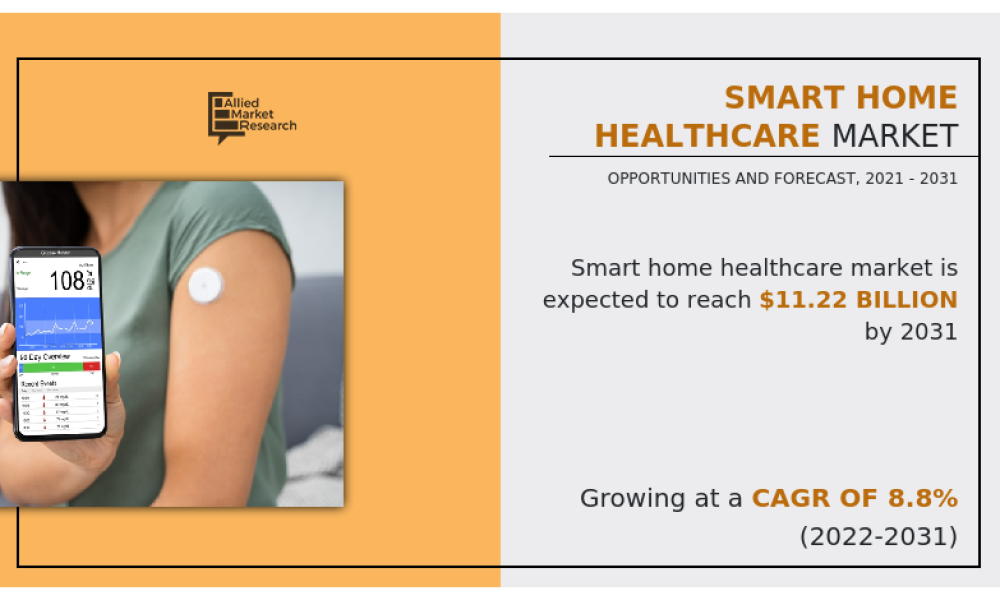
The global smart home healthcare market is experiencing rapid expansion, valued at $4.81 billion in 2021 and projected to reach $11.22 billion by 2031, growing at a CAGR of 8.8% from 2022 to 2031. This growth is driven by the increasing adoption of IoT-enabled medical devices, remote patient monitoring, and AI-driven healthcare solutions for elderly care, chronic disease management, and post-operative recovery.
Key Market Drivers
✔ Aging population – Rising demand for remote elderly care & fall detection systems
✔ Increasing chronic diseases – Diabetes, cardiovascular conditions requiring continuous monitoring
✔ IoT & AI integration – Smart wearables, real-time health tracking, predictive analytics
✔ Post-COVID healthcare shift – Preference for home-based care over hospital visits
✔ Government initiatives – Support for telemedicine and digital health infrastructure
Market Challenges
Data privacy & security risks – Vulnerabilities in connected health devices
High costs of advanced monitoring systems – Limited adoption in developing regions
Regulatory hurdles – Compliance with medical device standards
Market Segmentation
By Product Type
Smart Glucose Monitoring Systems (Largest segment in 2021)
Smart Cardiac Monitoring Systems (Fastest-growing, CAGR 9.4%)
Medical Alert Systems (Emergency response for seniors)
Fall Detection & Prevention Devices
By Technology
Wireless (Dominant, $4.49B in 2021) – Bluetooth, Wi-Fi, 5G-enabled devices
Wired (Declining due to mobility limitations)
By Application
Health Status Monitoring (Largest segment, $4.56B in 2021)
Fall Prevention & Detection (Critical for elderly care)
By Region
North America (Market leader, advanced healthcare IT infrastructure)
Europe (Strong regulatory support for digital health)
Asia-Pacific (Fastest-growing, rising geriatric population & medical tourism)
LAMEA (Emerging adoption in UAE, South Africa)
Impact of COVID-19
The pandemic accelerated smart home healthcare adoption due to:
✔ Hospital overcrowding – Shift to remote patient monitoring
✔ Lockdowns – Increased use of glucose & cardiac monitors at home
✔ Telemedicine boom – Integration with smart diagnostic devices
Competitive Landscape
Key players are focusing on AI-powered diagnostics, wearable tech, and partnerships:
Abbott Laboratories (Continuous glucose monitoring)
Dexcom, Inc. (Real-time diabetes management)
Medtronic (Remote cardiac monitoring)
Medical Guardian LLC (Emergency alert systems)
VitalConnect (Wireless biosensors for hospitals & homes)
Recent Developments
2023: Roche launched next-gen AI-based glucose monitors
2022: Dexcom partnered with Amazon Alexa for voice-controlled health tracking
2021: Medtronic introduced remote pacemaker monitoring systems
Future Growth Opportunities
AI-driven predictive healthcare – Early disease detection
5G-enabled smart devices – Faster, more reliable data transmission
Expansion in emerging markets – India, China, Brazil
Wearable ECG & blood pressure monitors – Preventative care
Conclusion
The smart home healthcare market is set for strong growth, fueled by IoT, aging populations, and chronic disease prevalence. North America leads, but Asia-Pacific will see the fastest expansion due to improving healthcare access.
For investors and healthcare providers, key opportunities lie in:
✔ Remote patient monitoring systems
✔ AI-powered diagnostic wearables
✔ Fall detection tech for elderly care
Key Takeaways (Bullet Points)
✔ Market Size: $4.81B (2021) → $11.22B (2031) | CAGR 8.8%
✔ Top Drivers: Aging population, chronic diseases, IoT healthcare solutions
✔ Leading Segment: Smart Glucose Monitoring Systems
✔ Fastest-Growing Segment: Smart Cardiac Monitoring (9.4% CAGR)
✔ Post-COVID Impact: Surge in remote health monitoring adoption
✔ Future Trends: AI diagnostics, 5G wearables, expansion in Asia




