
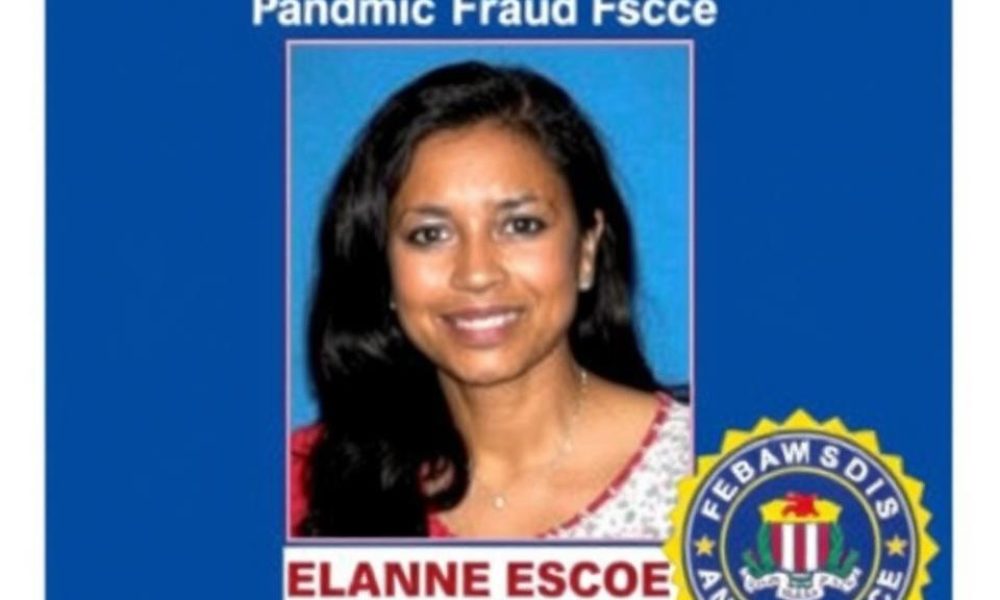
Federal prosecutors allege that Elaine Angene Escoe and five co-defendants used numerous companies, including VMG Worldwide LLC and Lavixx Solutions LLC, to submit fraudulent pandemic relief applications, receive government disbursements, transfer proceeds, and conceal the financial structure that supported the alleged conspiracy.
WASHINGTON, DC, July 11, 2026 — Federal prosecutors allege that Elaine Angene Escoe and five co-defendants constructed an interconnected network of South Florida companies that gave their pandemic relief applications an appearance of commercial legitimacy while providing numerous accounts through which approximately $34.1 million in allegedly fraudulent government assistance could be received, transferred, withdrawn, and distributed.
The Corporate Structure Behind the Alleged Pandemic Fraud
The federal indictment describing the companies controlled by Escoe and her alleged co-conspirators identifies VMG Worldwide LLC, Lavixx Solutions LLC, RBA Global LLC, Luxx Lashes by Lay LLC, and additional entities that prosecutors contend were connected to participants in the wider pandemic relief fraud conspiracy.
Although the phrase “shell company” often describes an entity with legal registration but little meaningful commercial activity, the public indictment should be interpreted carefully, as prosecutors identify ownership and control relationships without necessarily alleging that every named company was completely fictitious, dormant, or incapable of conducting any legitimate business.
The central allegation is that companies controlled by Escoe and her co-defendants were used to submit applications containing false employee counts, fabricated payroll expenses, misleading business revenues, altered bank statements, and inaccurate tax information, thereby making the applicants appear qualified for emergency assistance they were not entitled to receive.
Between May 2020 and November 2021, federal authorities allege the defendants submitted more than ninety applications targeting the Paycheck Protection Program, Economic Injury Disaster Loan program, Restaurant Revitalization Fund, and Shuttered Venue Operators Grant program through a collection of companies operating across Miami-Dade, Broward, and Palm Beach counties.
VMG Worldwide Appears in the Federal Indictment
Federal prosecutors identify VMG Worldwide LLC as one of the companies allegedly owned or controlled by a charged participant, placing the business within the corporate network that investigators examined as they reconstructed applications, bank accounts, transfers, ownership records, and communications associated with the alleged fraud.
The significance of VMG Worldwide does not arise merely from its corporate name; investigators would examine whether its claimed employees, payroll expenses, revenue history, business activities, and pandemic losses match tax filings, banking records, state registrations, payroll processor data, and other independently verifiable information.
A legally registered limited liability company can have formation documents, a tax identification number, a bank account, and a commercial address while still presenting materially false financial information, meaning that formal incorporation alone does not establish that every representation made in a federal relief application was truthful.
For prosecutors, the relevant question would therefore concern whether VMG Worldwide was accurately presented to government programs, whether its applications contained authentic supporting records, and whether any relief funds entering its accounts were used for authorized business purposes rather than distributed among alleged conspiracy participants.
Lavixx Solutions and the Wider Business Network
Lavixx Solutions LLC also appears within the indictment’s description of companies connected to the defendants, giving investigators another entity through which they could compare corporate ownership, application details, banking activity, payroll claims, revenue representations, and subsequent financial movements involving federal relief proceeds.
Companies with broad names such as “solutions,” “worldwide,” “global,” or “services” can operate entirely legitimate businesses, but those flexible descriptions may also allow applicants to present changing commercial narratives when applying through programs designed for employers, restaurants, venues, contractors, or other pandemic-affected enterprises.
Federal authorities must therefore establish more than an entity’s generic name or recent registration, because criminal fraud allegations depend upon proving that defendants knowingly submitted materially false information, participated in an unlawful agreement, and used electronic communications or financial transactions to advance the alleged scheme.
The indictment’s corporate list becomes significant when viewed alongside repeated application patterns, shared contacts, related owners, similar documents, overlapping addresses, connected bank accounts, and transfers among participants that may collectively reveal a coordinated operation extending beyond any single business submission.
Why Multiple Companies Can Magnify a Relief Fraud Scheme
A network containing numerous entities can magnify an alleged government fraud because each company may submit separate applications, maintain different bank accounts, claim distinct employees, report individual revenues, and present itself as an independent applicant suffering its own pandemic-related economic injuries.
When agencies evaluate each company separately, they may initially lack a complete view of the relationships among owners, managers, preparers, addresses, telephone numbers, email accounts, financial institutions, and supporting documents, which can cause coordinated applications to appear unrelated during high-volume emergency processing.
Prosecutors allege the Escoe group exploited several assistance programs rather than relying on a single application channel, meaning the corporate network could be used to pursue payroll loans, restaurant assistance, venue grants, and disaster-related funding under different eligibility standards and documentary requirements.
The resulting application volume allegedly produced approximately $29.1 million in wrongful PPP disbursements, approximately $3.8 million through the Shuttered Venue Operators Grant program, and approximately $1.2 million from the Restaurant Revitalization Fund, creating a combined alleged loss of roughly $34.1 million.
Paper Legitimacy Versus Economic Reality
Corporate registration can create paper legitimacy because state records confirm that an entity legally exists, yet those filings generally do not verify whether the business employs the workers claimed, generates the revenues reported, maintains the payroll obligations represented, or operates within the industry described on a relief application.
Investigators examining VMG Worldwide, Lavixx Solutions, and the other companies would compare stated business activity against bank deposits, merchant transactions, vendor payments, customer receipts, employment records, commercial leases, utility usage, insurance coverage, social media history, websites, and testimony from people familiar with actual operations.
When a company reports substantial payroll but shows little evidence of regular wage payments, or claims major revenues unsupported by ordinary customer deposits, prosecutors may argue the discrepancy demonstrates deliberate fabrication rather than a harmless accounting mistake or misunderstanding of emergency program rules.
The alleged deception becomes especially powerful when similar inconsistencies recur across dozens of applications linked by common participants, because coordinated patterns can support a conspiracy theory more effectively than a single isolated document containing questionable figures.
Fabricated Tax Documents and Bank Statements
According to the Miami Herald’s reporting, examining the indictment and Escoe’s addition to the FBI’s Most Wanted Fraudsters list, prosecutors allege applications contained falsified employee numbers, payroll expenses, business revenues, fabricated tax documents, and altered bank statements designed to support eligibility claims.
Tax forms and bank statements carry persuasive weight because lenders and government reviewers commonly rely upon those records as evidence that a company operated before the pandemic, employed workers, received revenue, paid expenses, and experienced the financial harm described within an assistance application.
When those documents are fabricated or altered, the deception can extend beyond a single false number, as the records may create an entirely misleading commercial history, allowing a recently formed or minimally active company to resemble an established employer facing genuine economic disruption.
Federal investigators can identify inconsistencies by obtaining records directly from banks, tax authorities, payroll processors, and state agencies, then comparing authentic information against the versions uploaded or transmitted during the application process.
Bank Accounts Turned Companies Into Financial Channels
Once government money entered the companies’ accounts, the entities allegedly became financial channels through which proceeds could be transferred among defendants, sent to other controlled businesses, withdrawn as cash, converted into checks, or spent on purposes unrelated to maintaining legitimate payrolls and operations.
Federal authorities allege Escoe and her co-defendants directed payments to one another and to companies they controlled, a pattern investigators would analyze using account statements, wire records, check images, deposit histories, electronic communications, and transaction timing following federal disbursements.
A transfer between two companies is not automatically suspicious because legitimate businesses routinely pay vendors, contractors, owners, and affiliates, but prosecutors may challenge transactions lacking credible invoices, contracts, services, or commercial explanations when they closely follow allegedly fraudulent government payments.
The corporate network, therefore, matters not only because companies allegedly applied for assistance, but also because their accounts may have allowed participants to separate funds from the original recipient, complicate the financial trail, and create layers between the government disbursement and ultimate expenditure.
Blank Checks and Large Cash Withdrawals
The FBI alleges that participants withdrew substantial amounts of cash and used blank, signed checks to conceal the origin and nature of relief proceeds, adding a money-laundering dimension to the allegations surrounding the underlying wire-fraud conspiracy.
Blank checks can allow someone other than the account holder to complete the payee, amount, and date after receiving the account holder’s signature, potentially reducing transparency about who directed a payment and why money moved from one company or individual to another.
Large cash withdrawals can similarly limit the electronic trail available after currency leaves a bank, although investigators may still use surveillance recordings, withdrawal slips, teller testimony, communications, and subsequent cash purchases to reconstruct how the money was handled.
These alleged practices explain why prosecutors charged concealment and transactional money laundering offenses alongside wire fraud counts, because the case addresses not only whether false applications generated money but also how participants allegedly transferred, distributed, and disguised proceeds afterward.
Emergency Programs Were Built for Real Businesses
The companies allegedly used within the Escoe network applied to programs created for genuine employers, restaurants, entertainment venues, and small businesses confronting payroll deadlines, commercial rents, insurance costs, reduced customer traffic, and prolonged uncertainty during the COVID-19 economic emergency.
Legitimate applicants often depended upon emergency money to avoid dismissing workers, defaulting on leases, abandoning equipment, closing restaurants, canceling performances, or permanently dissolving businesses that had operated successfully before government restrictions and changes in public behavior.
When allegedly false companies or businesses materially misrepresented secured assistance, the harm extended beyond financial losses because every fraudulent submission consumed lenders’ attention, agency resources, verification capacity, and funding that could have supported authentic businesses facing immediate collapse.
Widespread abuse also influenced later government policy by encouraging stricter controls, slower approvals, stronger data matching, and heavier documentary requirements that may burden honest applicants during future hurricanes, recessions, public health emergencies, or other national disasters.
How Investigators Unravel a Corporate Network
Investigators typically unravel a multi-company fraud network by constructing ownership charts, identifying authorized account signers, comparing application preparers, tracing telephone numbers, matching internet addresses, examining registered agents, and reviewing transactions among entities that publicly appeared unrelated.
Digital evidence can reveal who created documents, accessed application portals, transmitted records, communicated with lenders, controlled email accounts, and directed financial movements, allowing prosecutors to connect corporate activity to identifiable individuals rather than treating each company as an independent actor.
Forensic accountants can then overlay bank activity with application dates and government disbursements to show whether incoming relief funds were followed by legitimate payroll expenses or by transfers, cash withdrawals, personal purchases, and payments among alleged conspiracy participants.
The more than ninety applications attributed to the Escoe group would generate an extensive documentary record, including certifications, uploaded files, banking data, tax information, communications, lender notes, and government processing records preserved long after the original emergency ended.
Every Co-Defendant Has Faced a Resolution
The FBI states that all five defendants charged alongside Escoe have either pleaded guilty or been found guilty at trial, leaving her as the only charged participant whose case remains unresolved because she allegedly failed to appear in federal court.
Those outcomes do not legally establish Escoe’s guilt, since she retains the presumption of innocence and prosecutors must prove her individual participation beyond a reasonable doubt, regardless of admissions or verdicts involving other participants.
However, resolved cases can generate substantial evidence through trial exhibits, plea agreements, sentencing memoranda, cooperating witness interviews, bank records, corporate files, and testimony explaining how companies and applications were allegedly controlled.
If Escoe is arrested, prosecutors may therefore have a well-developed evidentiary foundation showing relationships among VMG Worldwide, Lavixx Solutions, other applicant companies, financial accounts, relief applications, and transactions allegedly connected to the conspiracy.
Escoe’s Disappearance Left the Corporate Case Unfinished
A federal arrest warrant was issued for Escoe on May 22, 2025, and authorities say she was last seen in Palm Beach County on June 3, only two days before a scheduled court appearance she allegedly failed to attend.
The FBI subsequently added her to its Most Wanted Fraudsters list and offered up to $150,000 for information leading to her arrest and conviction, while publishing her aliases, physical description, Jamaican birthplace, and identifying tattoos.
Her disappearance transformed corporate and financial evidence into potential tools for tracking a fugitive because company contacts, former employees, accountants, bankers, landlords, business associates, and service providers may possess information about communications, financial access, property, or travel after June 2025.
Even dormant companies can preserve valuable evidence through registered addresses, bank records, annual filings, email accounts, tax returns, and professional relationships that can connect a fugitive to people or resources used after formal charges were filed.
Compliance Lessons for Corporate Service Providers
Accountants, incorporation agents, payroll companies, lenders, tax preparers, and business consultants should treat networks of recently formed entities with shared owners, addresses, records, and unexplained payroll claims as requiring careful verification rather than routine processing.
Professionals should confirm beneficial ownership, genuine operating activity, historical revenue, actual employees, source documents, and banking consistency before assisting clients with government applications, particularly when multiple related companies seek large awards through overlapping programs.
A corporate service provider who knowingly creates false records, alters supporting documents, or helps conceal ownership can face personal legal exposure, while professionals encountering suspicious requests should preserve records and seek appropriate compliance or legal guidance.
The Escoe allegations demonstrate why the existence of an LLC cannot substitute for proof of economic substance: government assistance depends on truthful commercial activity rather than on the mere possession of formation documents and a bank account.
Lawful Corporate Planning Versus Concealment
International companies, holding structures, trusts, and cross-border accounts can serve lawful commercial and privacy objectives when ownership is accurately disclosed, taxes are properly reported, funds are documented, and transactions possess legitimate economic purposes.
In professional advisory work, Amicus International Consulting emphasizes that lawful corporate and international planning must remain supported by verifiable documentation, transparent compliance, and structures that do not obstruct courts, regulators, creditors, or criminal investigators.
Professional second citizenship and international relocation planning cannot lawfully be combined with shell companies, fraudulent applications, hidden proceeds, fictitious payrolls, false identities, or efforts to place defendants beyond the reach of legitimate judicial proceedings.
The legal distinction is straightforward because a properly structured company documents real ownership, authentic transactions, and lawful purpose, while an allegedly fraudulent network uses corporate form to misrepresent activity, capture money, obscure transfers, or frustrate accountability.
Final Analysis
VMG Worldwide and Lavixx Solutions represent two named components of a much broader corporate network that federal prosecutors allege helped Elaine Angene Escoe and her co-defendants pursue emergency assistance through more than ninety fraudulent applications.
The public indictment does not necessarily establish that every company was entirely fictitious, but it alleges that businesses controlled by the defendants were connected to false employee counts, fabricated payroll expenses, misleading revenues, altered financial records, and wrongful government disbursements.
Escoe remains charged and presumed innocent, yet the guilty pleas or convictions involving all five co-defendants mean the government has already tested significant portions of its corporate and financial evidence through completed federal proceedings.
For taxpayers and legitimate business owners, the enduring lesson is that a company name, registration certificate, and bank account can create an appearance of legitimacy, but only authentic employees, truthful revenues, documented operations, and transparent financial records establish whether the enterprise behind the paperwork is real.




