
Market Overview
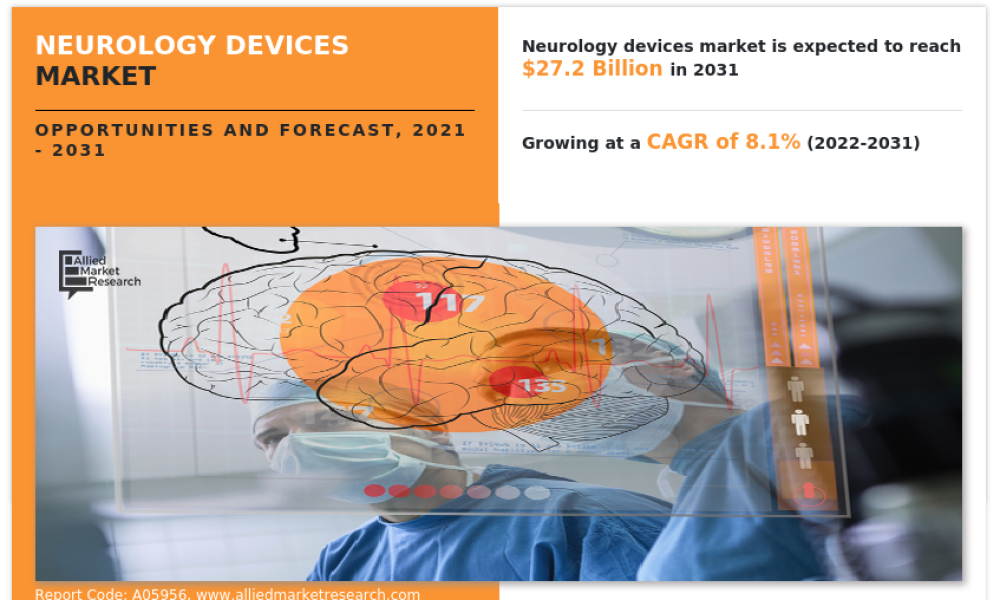
The global neurology devices market is experiencing robust growth, valued at $12.6 billion in 2021 and projected to reach $27.2 billion by 2031, expanding at a CAGR of 8.1% from 2022 to 2031. Neurology devices are critical for diagnosing, treating, and monitoring disorders of the brain, spinal cord, and peripheral nerves, including conditions like Alzheimer’s, Parkinson’s, epilepsy, and stroke.
Key Market Drivers
✔ Rising geriatric population – Increased susceptibility to neurological disorders
✔ Growing prevalence of neurological conditions – Parkinson’s, epilepsy, Alzheimer’s
✔ Advancements in minimally invasive neurosurgery – Faster recovery, reduced complications
✔ Government initiatives supporting neurological research – NIH, NINDS funding
✔ Technological innovations – AI-assisted diagnostics, neurostimulation devices
Market Challenges
High cost of neurology devices – MRI machines, deep brain stimulators
Shortage of skilled neurosurgeons – Especially in developing nations
Stringent regulatory approvals – Delays in product launches
Market Segmentation
By Product Type
Interventional Neurology Devices (Largest market share in 2021)
Neurostimulation Devices (Fastest-growing segment)
Neurosurgery Devices (Microsurgical tools, stereotactic systems)
Cerebrospinal Fluid (CSF) Management Devices
By Condition
Stroke (Leading segment)
Epilepsy & Seizures
Hydrocephalus
Brain & Spinal Tumors
By End User
Hospitals (Dominant segment, advanced infrastructure)
Ambulatory Surgery Centers (ASCs) (Fastest-growing)
Specialty Neurology Clinics
By Region
North America (Largest market, advanced healthcare, key players)
Europe (Strong government support for neurology research)
Asia-Pacific (Fastest-growing, rising medical tourism, investments)
LAMEA (Emerging opportunities in Brazil, Saudi Arabia)
Impact of COVID-19
The pandemic initially disrupted neurology device adoption due to:
Postponed elective neurosurgical procedures
Resource reallocation to COVID-19 care
Supply chain disruptions
However, the market is rebounding strongly, driven by:
Resumption of deferred neurosurgeries
Increased adoption of neurostimulation for chronic pain & epilepsy
Growth in tele-neurology for remote diagnostics
Competitive Landscape
Key players are expanding through product launches, approvals, and acquisitions:
Medtronic plc (Leader in deep brain stimulation)
Boston Scientific Corporation (Innovations in spinal cord stimulation)
Stryker Corporation (Advanced neurosurgical tools)
Abbott Laboratories (Neurostimulation & diagnostics)
Johnson & Johnson (Neurosurgery & stroke care)
Recent Developments
April 2022: FDA approved Boston Scientific’s Vercise Neural Navigator software
June 2021: Medtronic received FDA approval for Vanta recharge-free neurostimulator
February 2023: LivaNova launched SenTiva DUO for drug-resistant epilepsy
Future Growth Opportunities
AI & machine learning for precision neurology diagnostics
Expansion of neuromodulation therapies (Parkinson’s, chronic pain)
Growth in emerging markets (India, China, Brazil)
Wearable neurology devices for real-time monitoring
Conclusion
The neurology devices market is set for significant expansion, fueled by rising neurological disorders, aging populations, and technological advancements. Neurostimulation and minimally invasive neurosurgery will drive growth, with North America leading and Asia-Pacific emerging as a high-growth region.
For investors, healthcare providers, and device manufacturers, this market presents lucrative opportunities, especially in AI-driven diagnostics, neurostimulation, and outpatient neurology care.
Key Takeaways (Bullet Points)
✔ Market Size: $12.6B (2021) → $27.2B (2031) | CAGR 8.1%
✔ Top Drivers: Aging population, rising neurological disorders, minimally invasive tech
✔ Leading Segment: Interventional Neurology Devices
✔ Fastest-Growing Segment: Neurostimulation Devices
✔ Post-COVID Recovery: Rescheduled surgeries & tele-neurology adoption
✔ Future Trends: AI diagnostics, wearable neurotech, ASC expansion




