
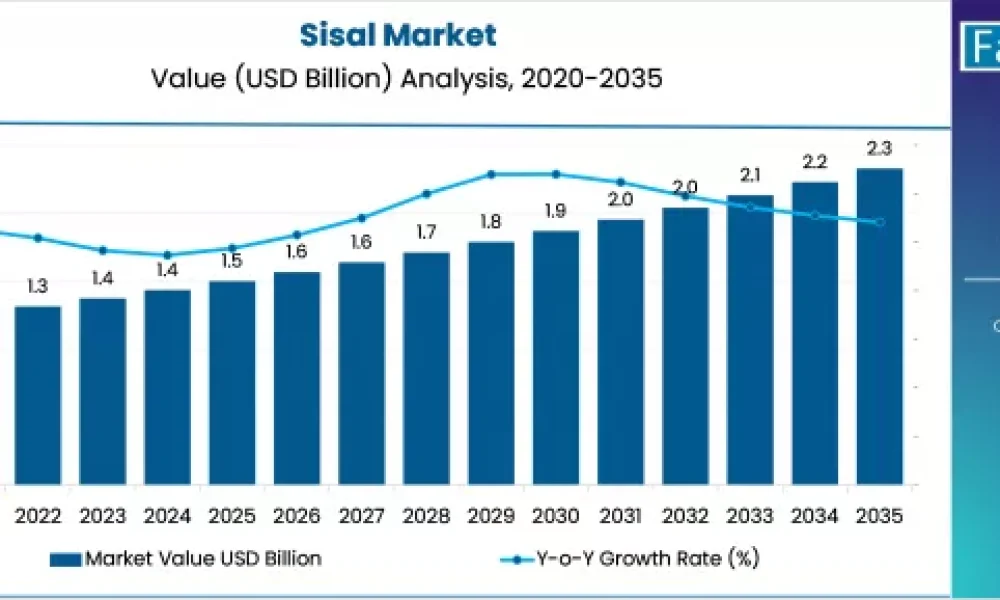
The global sisal market is poised for steady growth from 2025 to 2035, driven by rising demand for sustainable and biodegradable materials, expanding industrial applications, and increasing consumer awareness of eco-friendly products. Sisal, a natural fiber extracted from the leaves of the Agave sisalana plant, is widely used in textiles, ropes, mats, biocomposites, and construction materials due to its durability, strength, and environmental benefits. This report highlights market size, growth drivers, regional dynamics, technology trends, and strategic insights for stakeholders.
Market Size and Growth
Globally, the sisal market is projected to grow from approximately USD 1.5 billion in 2025 to around USD 2.3 billion by 2035, representing a compound annual growth rate (CAGR) of 4.5%. Lower-grade sisal fiber dominates the market in terms of volume, while the paper industry remains the largest application segment. Asia-Pacific, particularly India, China, and Brazil, continues to lead production due to favorable climatic conditions and strong industrial demand. Meanwhile, North America and Europe contribute to market expansion through growing consumption in automotive, construction, and eco-friendly consumer goods.
To access the complete data tables and in-depth insights, request a Discount On The Report here: https://www.factmr.com/connectus/sample?flag=S&rep_id=1789
Key Growth Drivers
Sustainability and eco-conscious consumer demand: Increasing environmental awareness is driving the adoption of natural fibers as alternatives to synthetic materials. Sisal’s biodegradability, low chemical input requirements, and renewable nature make it a preferred choice for consumers and industries committed to sustainability.
Industrial applications: Sisal is increasingly used in automotive interiors, panels, insulation, and flooring materials. Its high tensile strength, lightweight properties, and durability make it ideal for green automotive and construction solutions.
Agricultural and cultivation advancements: Modern cultivation techniques, irrigation systems, and government support in countries such as Brazil, Kenya, and Tanzania are boosting fiber yield and quality, ensuring a reliable supply of raw material for industrial use.
Technological improvements in fiber processing: Innovations in extraction and treatment processes are enhancing sisal fiber quality, enabling broader applications in biocomposites and specialty products.
Regional Market Insights
Asia-Pacific remains the largest producer and consumer of sisal, driven by industrial growth in textiles, automotive, and construction sectors. North America shows increasing adoption due to eco-friendly packaging and interior applications, while Europe’s market is fueled by strict environmental regulations and demand for sustainable alternatives in textiles and construction. Emerging markets in Africa and Latin America are expanding production, benefiting from favorable growing conditions and government incentives.
Industry Trends and Competition
The global sisal market is competitive, with prominent players including Wild Fibers, REA Vipingo Group, METL Group, and International Fiber Corporation. Key trends include:
- Integration of sisal in biocomposites for automotive and construction applications.
- Focus on sustainable and organic supply chains to meet consumer and regulatory expectations.
- Expansion of industrial applications to reduce reliance on synthetic fibers.
Challenges
The market faces challenges such as price volatility due to seasonal variations, competition from synthetic fibers like polypropylene, labor-intensive harvesting processes, and limited mechanization. These factors can affect fiber quality, supply consistency, and profitability for manufacturers.
Strategic Implications
For manufacturers: Invest in processing technologies to improve fiber quality, expand application areas, and adopt sustainable cultivation practices.
For distributors: Develop reliable supply chains and partnerships to meet industrial demand across regions.
For investors: The market offers steady growth opportunities with long-term potential in eco-friendly products and biocomposite applications.
Outlook Summary
From 2025 to 2035, the global sisal market is expected to grow steadily, driven by sustainable material demand, expanding industrial applications, and technological advancements in fiber processing. While challenges such as price fluctuations and competition from synthetic fibers exist, the sector presents robust opportunities for manufacturers, distributors, and investors focusing on environmentally friendly solutions and versatile natural fiber products.
Purchase Full Report for Detailed Insights
For access to full forecasts, regional breakouts, company share analysis, and emerging trend assessments, you can purchase the complete report here: https://www.factmr.com/checkout/1789
Have a specific Requirements and Need Assistant on Report Pricing or Limited Budget please contact us – [email protected]
About Fact.MR
Fact.MR is a global market research and consulting firm, trusted by Fortune 500 companies and emerging businesses for reliable insights and strategic intelligence. With a presence across the U.S., UK, India, and Dubai, we deliver data-driven research and tailored consulting solutions across 30+ industries and 1,000+ markets. Backed by deep expertise and advanced analytics, Fact.MR helps organizations uncover opportunities, reduce risks, and make informed decisions for sustainable growth.



