
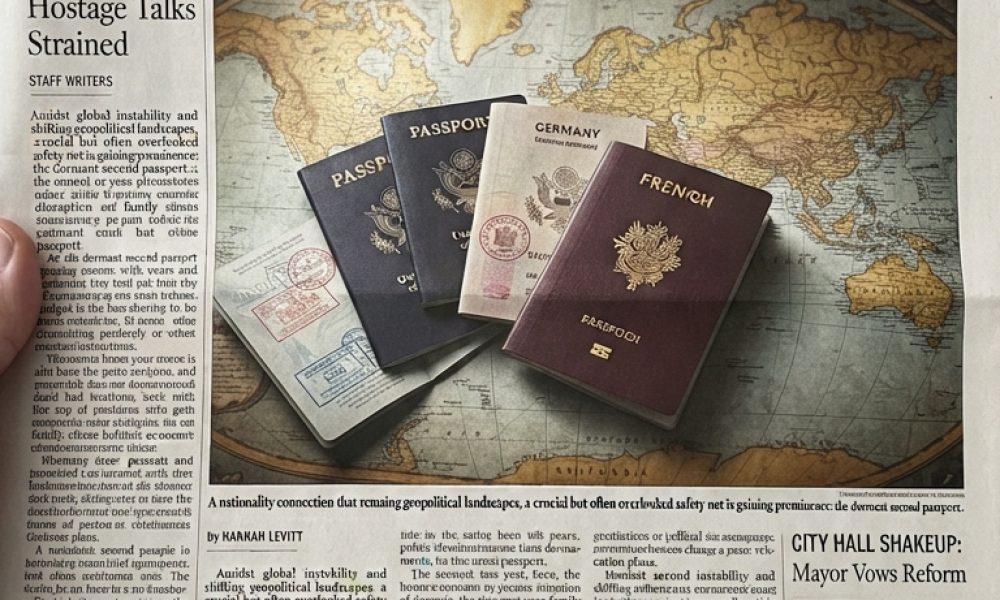
Dormant Second Passports Can Become Important During Upheaval as Families Reconsider Their International Options
An additional nationality may remain unused for decades before political uncertainty, economic disruption, changing employment, or family emergencies transform an old citizenship connection into a practical foundation for lawful international mobility and relocation.
WASHINGTON, DC, November 5, 2026 — A second passport that once seemed unnecessary can acquire unexpected importance when a household faces political uncertainty, economic instability, changes in employment, or family responsibilities that make living abroad a serious consideration rather than a distant possibility.
Many dual nationals obtain foreign citizenship through parents, grandparents, birth, or naturalization without planning to leave their existing homes. Yet, the rights associated with that citizenship may become relevant when familiar circumstances change dramatically.
The difference between an available legal option and an executable relocation plan depends on documentation, the rights of accompanying relatives, available resources, and whether the prospective destination can support ordinary family life over time.
Dormant Citizenship Is Not Necessarily Lost Citizenship
A person may remain a citizen of another country despite spending most of life elsewhere, never voting in that country, or allowing an earlier passport to expire. However, you must check the governing nationality law individually.
The absence of a current passport does not, by itself, establish that citizenship ended, because a passport documents nationality for travel, while the legal relationship may continue independently of the booklet’s expiration date or infrequent use.
However, some nationality systems include retention, registration, or loss provisions, so families should confirm their status with the responsible government rather than assuming every ancestral connection remains valid indefinitely without further action.
Canadian Descent Reform Shows Why Old Connections Matter
A May 2026 Reuters investigation into Canadian citizenship demand described growing interest from Americans after Canada broadened recognition for certain descendants, including people who expected to remain in the United States while preserving future options.
The report cited Canadian immigration figures showing additional approvals of 1,140 in January, 1,255 in February, and 1,405 in March, with Americans accounting for approximately 48 percent of additional approvals through February.
These figures illustrate the appeal of maintaining a lawful alternative rather than proving that all applicants intend to relocate, since nationality recognition can serve different purposes as personal circumstances and international conditions evolve.
Political Developments Can Change a Family’s Priorities
Political uncertainty may encourage families to review existing residence rights and overseas connections, especially when policy changes create anxiety about future employment, social stability, schooling, or the legal environment in which children will grow up.
A dual national who previously treated another passport as an occasional travel convenience may begin assessing whether permanent residence in the issuing country offers meaningful alternatives for education, retirement, or professional development, especially when those decisions affect the household’s long-term stability.
Nevertheless, another nationality should not be presented as guaranteed Protection from unrest, because travel restrictions, local emergencies, transport disruptions, and obligations under both countries’ laws can still affect an individual.
Economic Disruption Can Make Residence Rights Valuable
Job losses, inflation, unexpected business closures, or changes in household income can prompt families to investigate whether another citizenship permits lawful employment in an economy offering suitable professional prospects and manageable living expenses.
Citizenship may eliminate a standard work-permit requirement in the issuing country. Still, it does not automatically establish professional credentials, secure a position, or provide funds for accommodation and daily living costs during transition.
For that reason, families should assess realistic wages, licensing requirements, taxes, and potential currency exposure before concluding that a second passport offers an economically sustainable response to disruption at home, rather than relying on a single promotional promise or outdated government guidance.
Family Circumstances Often Trigger the Actual Move
An aging parent living abroad, a child’s educational opportunity, a marriage, or an urgent need to support relatives can turn a longstanding nationality connection into an immediate question about residence and travel arrangements.
These circumstances require more than locating a passport, since the family may need to determine who can accompany the citizen, whether a spouse requires sponsorship, and how caregiving or schooling will work after arrival.
A timely review of family relationships and immigration categories can prevent a household from discovering too late that the principal citizen’s rights do not automatically extend to every intended accompanying relative, especially when several relatives must coordinate their applications.
Proof of Citizenship Must Be Ready Before Travel
People who acquired nationality automatically through descent sometimes have only parental birth certificates or historical records, leaving them without the current citizenship certificate or passport that carriers and border authorities may require, even if their earlier international travel was uncomplicated.
A person who appears eligible under a recent legal reform should distinguish potential citizenship from officially documented status, especially when administrative applications involve extensive records, identity verification, and unpredictable processing periods, before the household commits to costly or irreversible arrangements.
Keeping authentic civil records organized can make a future application easier. Still, family archives and genealogical research do not substitute for an official travel document when an airline requires acceptable proof before boarding.
Passport Expiration Can Undermine Immediate Flexibility
An old foreign passport stored with family papers may symbolize valuable nationality rights. Yet expiration, damaged pages, or inconsistent personal details can make it unsuitable for an urgent international journey, even if the owner still holds citizenship.
Renewal procedures vary by issuing country and applicant location, and someone living overseas may need to attend a consular appointment, provide photographs, or submit supporting civil documentation before receiving a replacement, including in cases involving young children or older dependent relatives.
A periodic review of passport validity and official renewal instructions therefore preserves practical options better than assuming an unused booklet will remain ready whenever an unexpected family or economic crisis develops, since documentation requirements may have changed since the last journey.
Dual Nationals Must Respect Each Country’s Rules
The U.S. Department of State’s guidance on dual nationality explains that Americans who also hold another citizenship must enter and depart the United States using valid American passports, regardless of the convenience of their second nationality.
Another country may expect its citizens to use domestic passports when entering or leaving. At the same time, a third-country transit point can impose requirements based on the document actually presented and the traveler’s intended itinerary.
The most useful preparation is therefore a journey-specific document plan that accounts for departure, transit, arrival, and return, rather than treating two national passports as interchangeable permission for every border crossing, with sufficient time to request official clarification where needed.
A Citizen’s Family Does Not Always Share the Same Rights
An individual holding a dormant second nationality may be entitled to settle in the issuing country. At the same time, a spouse, adult child, or older dependent could require a separate immigration application and additional supporting evidence.
Children born abroad may qualify through different citizenship rules depending on their birth dates and the parent’s nationality history, and some systems impose limits when citizenship passes through successive overseas generations, rather than assuming rules remain identical across every destination.
Before making irreversible commitments, the household should map each person’s nationality, current passports, residence eligibility, and likely application timetable, recognizing that one citizen’s right to enter does not complete the family’s plan, especially if the decision affects both citizenship and immigration records.
Housing and Employment Make Relocation Real
A second passport can remove certain immigration barriers while leaving a household responsible for securing accommodation, arranging employment or retirement income, and understanding costs that may differ sharply from those experienced during brief visits.
Landlords may request local references, deposits, proof of employment, or guarantors. At the same time, employers in regulated industries may require professional licensing and credentials that citizenship does not automatically provide through the passport application, and those distinctions can affect the practical timing of a relocation.
Testing neighborhoods and researching realistic household budgets before relocating can help prevent an understandable desire for stability from producing expensive commitments that become difficult to reverse after arrival in an unfamiliar country, particularly when application processing involves overseas government offices.
Schools and Healthcare Require Their Own Preparation
Parents considering relocation should review school admission rules, language support, academic continuity, and potential tuition costs, especially when the destination has a different education system or limited places at preferred schools, rather than relying on estimates meant for typical holiday travel.
Healthcare access may depend on residence registration, waiting periods, insurance arrangements, or local eligibility requirements, meaning newly arrived citizens and their foreign family members could face different levels of immediate coverage, because administrative delays can have significant financial consequences.
Households with children, older relatives, or ongoing medical needs benefit from confirming providers and essential services early, rather than assuming legal citizenship automatically covers every practical aspect of settling in, especially when family members have different passports or supporting documents.
Banking and Taxes Do Not Disappear After a Move
Another nationality does not automatically establish a separate financial identity, erase previous tax responsibilities, or guarantee approval from overseas banks, which may request lawful Identification, proof of residence, or information about the source of funds.
American dual nationals can remain subject to applicable United States tax requirements while residing abroad, and the destination’s separate rules may create additional obligations that warrant qualified cross-border advice before substantial financial changes.
Plan for accessible funds, compliant transfers, and reliable payment methods before departure, especially if the relocation coincides with unemployment, unexpected care expenses, or the need to support relatives in different jurisdictions.
Privacy and Security Depend on Realistic Expectations
For families worried about personal security, a second citizenship may provide a lawful relocation option, but it does not erase established records, override court restrictions, or permit false information on immigration and financial applications.
Appropriate preparations can include secure communications, careful handling of identifying records, trusted legal assistance, and research into local security conditions, all within the Identification and disclosure requirements that continue to apply, particularly where regulated services and professional advice are necessary.
A responsible adviser should distinguish legitimate confidentiality from promises of anonymity that depend on fictitious identities or misleading documents, because those claims can create legal problems precisely when the family needs dependable options.
Electronic Passport Checks Have a Limited Role
Modern biometric passports contain contactless chips and digital security features that compatible readers can examine, helping travelers assess certain document characteristics without independently establishing current nationality rights or an official passport’s administrative validity.
Amicus International Consulting explains this distinction in its guide on scanning a passport’s NFC chip and understanding the results, noting that electronic authentication does not replace checking expiration, cancellation, or the document’s official government recognition.
An authentic chip can pass a technical inspection even when a passport is expired or otherwise unsuitable for travel, making official renewal and validity checks essential to maintaining a dormant passport.
A Trial Stay Can Test Whether the Option Is Practical
Families not facing immediate danger may benefit from a lawful extended visit that exposes everyday realities, including transportation, healthcare appointments, local administration, language barriers, and costs that rarely appear in vacation photographs.
Such a stay can help determine whether an attractive destination suits the actual household, reveal which services require residence registration, confirm whether accompanying family members have appropriate permission for longer stays, and preserve an accurate record for future government applications.
The exercise should be designed around ordinary routines rather than holiday activities, because the purpose is to assess the sustainability of moving abroad rather than merely confirm that the country is enjoyable to visit.
Emergency Departure Can Expose Hidden Constraints
During a sudden disruption, transport networks may be interrupted, and government offices may have limited appointment availability, leaving even well-documented dual nationals dependent on current airline schedules, valid passports, and the entry rules applied at each border.
An individual with an established right to reside abroad may still lack immediate access to the destination when flights are unavailable or accompanying relatives have not obtained permission to enter, demonstrating the difference between legal eligibility and practical evacuation capacity.
Families facing immediate danger should evaluate relevant emergency or humanitarian assistance independently, since a newly initiated nationality application is not a reliable substitute for Protection procedures or other arrangements available under applicable law.
Intergenerational Records Help Maintain Long-Term Options
A citizenship connection that remains unused for one generation may later become valuable to children or grandchildren, so carefully preserving birth certificates, legal name-change records, naturalization evidence, and official correspondence is an important family planning practice.
The ability to transmit nationality differs between countries and may depend on dates of birth, parental status, registration, or physical presence, so preserving documents helps future applicants investigate eligibility without implying that their claims are automatically successful.
Families can maintain secure inventories of authentic documents and review applicable legal changes periodically, while recognizing that original records, certified copies, and official citizenship decisions may still be necessary when a descendant eventually seeks a passport.
Preparedness Preserves Choice Without Predicting Crisis
A dormant second passport is best understood as one element of a wider contingency strategy that also includes accurate personal records, family permissions, available savings, and information about the issuing country’s current entry rules.
Reviewing these arrangements periodically can protect flexibility without assuming that political upheaval or economic disaster is inevitable, allowing households to make reasoned decisions instead of hurried commitments based on unfamiliar rules, especially when financial or personal circumstances change.
Ultimately, second citizenship becomes most useful when an established legal right is supported by valid documentation and practical preparation, transforming a long-unused connection into a realistic option rather than an unsupported promise of immediate escape.




