
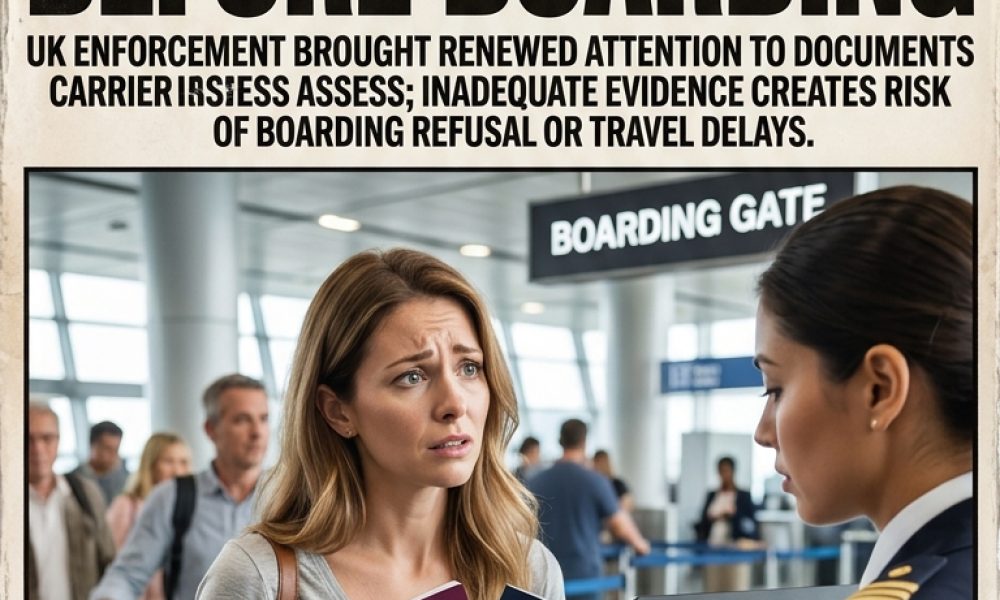
Since February 2026, stricter carrier checks have exposed documentation problems for British citizens traveling on another nationality’s passport, making valid proof of citizenship or right of abode essential to avoiding boarding refusals and delays.
WASHINGTON, DC, November 5, 2026 — British dual nationals traveling to the United Kingdom face closer scrutiny of their documents following February’s electronic travel authorization enforcement, particularly when they normally use an American, Canadian, Australian, or other foreign passport.
Although British citizenship establishes a right of abode, airlines and other transport companies must verify appropriate travel documentation before boarding, creating a practical distinction between possessing nationality and presenting evidence acceptable to the carrier.
The change affects business trips, family emergencies, school holidays, and return journeys, because someone who previously traveled without showing a British passport may now face additional checks or even refusal of boarding.
February 25 Marked a Change in Carrier Enforcement
On February 25, 2026, the United Kingdom began strictly enforcing digital permission-to-travel checks for qualifying foreign visitors, ending a transitional period during which some passengers could board without obtaining an electronic travel authorization in advance.
A Reuters report on Britain’s enforcement of travel permits described how carriers would check for an ETA, eVisa, or other accepted evidence before departure, affecting visitors from numerous visa-exempt nationalities.
This enforcement did not create a new requirement for British citizens to acquire visitor permission. Still, it made pre-departure evidence of their existing citizenship more important for those accustomed to carrying only a foreign passport.
British Citizens Cannot Apply for a Visitor ETA.
The electronic travel authorization is intended principally for qualifying visitors who do not hold British or Irish citizenship, so a British dual national is ineligible even when the other passport belongs to an ETA-eligible country.
A British-American passenger cannot resolve missing British documentation by applying as an American visitor, because the individual’s British citizenship remains relevant regardless of the nationality shown on the passport used during booking.
Travelers should identify their actual nationality status before arranging permission, rather than assuming a digital visitor approval available to friends or family members can automatically be obtained by someone who is also British.
A Right to Enter Still Requires Acceptable Evidence
British citizens generally have the right of abode, allowing them to enter and live in the country without ordinary immigration restrictions. However, they must stillpresentt that entitlement with recognized proof when traveling.
A person born in Britain or having acquired citizenship through descent may retain that status even without a current British passport. Yet, a carrier cannot necessarily verify nationality from an explanation or family records alone.
This difference between legal rights and document checks explains why genuine British citizens can face departure difficulties even when they have no intention of entering the United Kingdom as foreign visitors or seeking temporary permission.
Three Main Documentary Routes Are Recognized
Current British guidance identifies a valid British passport, a valid Irish passport, or another valid passport linked to a certificate of entitlement demonstrating right of abode as standard documentary routes for affected dual nationals.
The appropriate route depends on which nationalities an individual actually holds and whether a certificate of entitlement is already available, because an unrelated foreign passport does not automatically identify its holder as British.
Passengers should examine the documentation accepted by government authorities and their operating carrier before booking, particularly when the journey involves several airlines or substantial costs that would be difficult to recover after a refusal.
Expired British Passports Are a Discretionary Exception
Temporary guidance allows a carrier to consider an expired British passport issued in 1989 or later when it is presented alongside a valid passport from an ETA-eligible nationality and the biographical particulars match.
That accommodation belongs to the carrier’s discretion rather than the passenger’s enforceable boarding entitlement, and a traveler cannot compel acceptance merely by producing an old British booklet that appears genuine or contains accurate identifying information.
Anyone considering this arrangement should confirm the carrier’s current approach well in advance and keep realistic alternatives, since an employee’s preliminary response may not answer every question that arises during check-in or final document verification.
Changes of Name May Complicate Passport Comparison
The expired-passport accommodation requires closely matching personal details, making it potentially unsuitable where marriage, divorce, adoption, or a lawful name change has left the British and foreign passports displaying materially different biographical information.
Supporting legal documents may explain why the same person appears under different names. Still, travelers should not assume the carrier must disregard the matching-details requirement simply because a marriage certificate or court order exists.
Renewing the British passport or obtaining recognized right-of-abode documentation may offer a more predictable alternative for passengers whose identity records have changed, especially where departure dates cannot accommodate last-minute uncertainty at an airport.
Certificates of Entitlement Now Use Digital Records
Since February 26, 2026, newly approved certificates of entitlement have generally been issued digitally rather than as stickers attached to foreign passports, allowing qualifying holders to link evidence of right of abode to another valid passport.
A certificate confirms an existing legal entitlement rather than creating British citizenship, and applicants must establish their eligibility through the appropriate official procedures before relying on the record for travel or other domestic purposes.
The current application charge is substantial, and certificate holders must keep their immigration account information accurate, especially after renewing a foreign passport or changing identifying details that appear in automated carrier checks.
A Valid British Passport Remains a Straightforward Option
For many affected passengers, renewing or obtaining a British passport provides the clearest evidence of citizenship and avoids depending on discretionary carrier accommodations. However, applicants must consider government processing and delivery requirements before departure.
Overseas applicants may need current photographs, supporting records, and additional identity checks, and an upcoming trip can create problems if a previous passport has expired, or the new document has not arrived.
A sensible approach is to check passport validity well before purchasing nonrefundable tickets and to follow official instructions for applications made from abroad, rather than assuming domestic renewal procedures or advertised processing targets always apply.
Irish Citizenship Creates a Distinct Documentation Position
British-Irish dual nationals may use a valid Irish passport as recognized documentation for traveling to the United Kingdom, reflecting the separate status of Irish citizens rather than a general exemption available to every European passport holder.
A British-French or British-German national should therefore not assume that an ordinary European Union passport establishes the same proof of British status, even where previous journeys were completed without comparable checks or delays.
The important comparison is between the specific nationalities held and the documents British authorities recognize, not between general passport rankings or historical travel arrangements that may have changed since the electronic authorization system was introduced.
Certain EU Settlement Scheme Cases Differ
British citizens who acquired nationality after settling under the EU Settlement Scheme may have particular alternative documentation arrangements, including circumstances involving a valid foreign passport or qualifying national identity card linked to earlier digital immigration records.
Those provisions are not a universal exception for every British-European dual national, because the relevant individual’s history under the scheme and the accuracy of their digital account information can determine whether carriers can verify the record.
People considering this route should review current Home Office guidance before travel and update linked documents as needed, rather than assuming any previous residence or an unconnected identity card is sufficient for boarding.
American Dual Nationals Must Plan for Both Countries
The U.S. Department of State’s official dual nationality guidance states that American citizens, including those with another nationality, must enter and depart the United States using valid American passports rather than presenting foreign passports as substitute American entry documents.
A British-American traveler may therefore need an American passport for the United States portion of the itinerary and an accepted British citizenship document for the journey to Britain, even when both nationalities have been held for decades.
Keeping both documents current and presenting the appropriate evidence at each stage helps prevent confusion over citizenship, airline records, and destination permissions that cannot be resolved simply by selecting whichever passport seems more convenient.
Children Need Their Own Documents and Status Checks
Children can have citizenship without having passports, particularly where nationality passed automatically through qualifying family relationships. However, their parents must still provide acceptable documentation before arranging international travel under the strengthened carrier procedures.
A child who holds only an American or Canadian passport may not qualify for an ETA if the child is also British, creating the same proof-of-status problem adults face when using foreign documents.
Families should review every child’s nationality, passport validity, parental consent arrangements, and any required citizenship evidence independently, because one parent’s accepted British passport cannot substitute for another household member’s missing travel authorization or proof.
Border Officers and Airlines Perform Different Checks
The carrier’s document check occurs before departure. At the same time, Border Force officers may examine nationality, identity, and admissibility upon arrival, so a genuine citizen may still face difficulty before reaching the British border.
Government statements recognize that people arriving without standard evidence may face additional questions, but the possibility of later inspection does not guarantee that an operator will allow the individual to board an earlier flight.
Travelers should distinguish the right of abode from operational decisions made by carriers, especially when an itinerary includes connecting flights, separate tickets, or a need to reach Britain for a time-sensitive family event.
Passport Chips Cannot Resolve Every Documentation Issue.
Modern biometric passports include electronic identity information and cryptographic features that compatible readers can inspec. Still, a successful technical check does not establish current British citizenship, prove right of abode, or override an expired passport’s travel limitations.
Amicus International Consulting discusses this distinction in its guide to scanning a passport’s NFC chip and understanding the results, explaining why electronic authentication must be separated from government decisions concerning legal status and travel-document validity.
Even a genuine British passport with readable electronic data may be expired or otherwise unsuitable for the standard boarding route, so passengers should rely on current official instructions rather than smartphone indicators when assessing travel readiness.
Emergencies Make Early Renewal More Important
A bereavement, urgent medical situation, or unexpected employment obligation may require international travel before a normal passport application can be completed, making long-expired documents especially problematic for citizens living outside the United Kingdom.
Official emergency travel documents may be available to some people who previously held British passports, but eligibility, issuance time, and acceptance for a particular route must be established rather than assumed under stressful circumstances.
Keeping passports current or an appropriate certificate in place well in advance reduces reliance on exceptional arrangements, and families should also plan for the different documentation needs of children or relatives traveling together in an emergency.
Costs and Processing Decisions Deserve Early Attention
A British dual national comparing options should weigh the cost of an ordinary passport against the certificate of entitlement’s published application fee, recognizing that each route involves different eligibility rules and evidence requirements.
The certificate currently costs £589 and provides a digital record of an existing right of abode. Still, it is not a visa, does not create citizenship, and cannot ordinarily be held alongside a valid British passport.
Families who travel frequently may prefer whichever authorized form of evidence fits their circumstances. Still, they should decide before an urgent journey because appointments, identity checks, and delivery cannot always be accelerated on demand.
Digital Records Must Match the Documents Presented
As British immigration administration has moved toward electronic accounts, accurate passport numbers, names, and personal details have become especially important for the automated checks carriers use to verify permissions before departure.
A person who replaces a foreign passport associated with a digital certificate should follow the official account-update procedure, ensuring that the current document rather than an expired number is linked to the recognized record.
These checks are administrative, not a new citizenship test. Yet, outdated account information can still create avoidable disruption when a passenger reaches an airport with otherwise valid passports and expects immediate clearance.
A Pre-departure Review Should Cover the Pre-departure Itinerary
Before buying tickets, British dual nationals should confirm their current nationalities, check passport expiration dates, verify accepted evidence of British status, and check whether transit countries or connecting carriers impose additional documentary requirements.
Passengers relying on digital right-of-abode evidence should confirm that the correct foreign passport is properly linked to their account. At the same time, those considering an expired British booklet should recognize that carrier discretion remains uncertain.
Families can also review name consistency, children’s documents, and arrangements for returning to their country of residence, so they don’t overlook requirements that apply elsewhere along the itinerary.
Reliable Boarding Depends on Proof, Not Assumptions
The February 2026 enforcement changes highlight how British citizenship and the documents international transport providers accept can become separate practical questions, particularly for dual nationals who have historically traveled on foreign passports.
An expired British passport or incomplete digital record may be strong evidence of nationality but does not guarantee a carrier will accept the passenger, making preparation more reliable than assurances based on past travel experience.
Ultimately, British dual nationals face passport checks before boarding because carriers must verify documentation that supports lawful citizenship, and reliable travel planning requires understanding this distinction before reaching the departure counter.




