
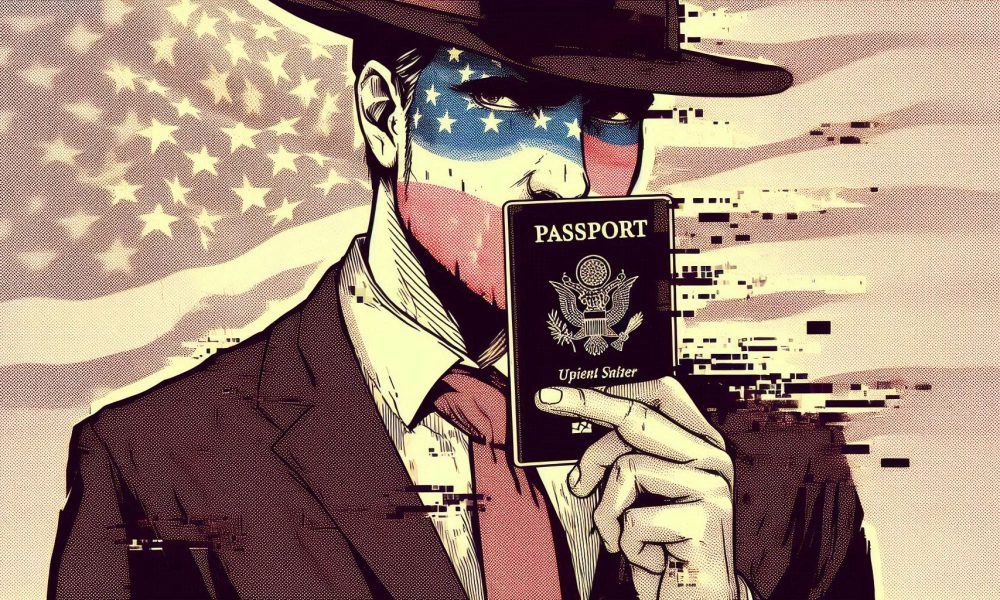
How International Flight, Legal Loopholes, and Digital Disappearance Keep a Canadian Felon Beyond Reach
VANCOUVER, Canada — In an era where surveillance is near ubiquitous, how is it that some fugitives continue to vanish in plain sight? One such mystery is the case of Ryan James Wedding, a convicted Canadian fraudster and former Olympic snowboarder who disappeared after securing bail, never to be seen again.
The tale of Wedding isn’t just about one man fleeing justice. It is an alarming illustration of the modern fugitive playbook: second passports, identity manipulation, legal gray zones, and a digital vanishing act enabled by global mobility loopholes.
Amicus International Consulting, a leading authority on legal identity transformation and international justice navigation, is shedding light on what the Wedding case reveals about today’s fugitive tactics and how their legal programs contrast sharply with the illicit routes taken by many on the run.
The Rise and Fall of Ryan Wedding
Ryan Wedding once represented Canada in snowboarding at the 1998 Winter Olympics in Nagano. But by the 2000s, his career took a sharp turn. According to court documents filed in the United States District Court, District of Oregon, Wedding was indicted for conspiracy to distribute cocaine and ecstasy, and money laundering. He pleaded guilty in 2006.
Released on a $100,000 bond, Wedding was ordered to appear for sentencing. Instead, he disappeared without a trace, missing his September 2006 court date. U.S. authorities issued a warrant, but nearly two decades later, his whereabouts remain unknown.
How Did He Vanish?
Wedding’s disappearance was not an isolated misstep. It fit a pattern increasingly familiar to international justice agencies: the affluent or connected use sophisticated strategies to evade capture permanently. These include:
1. Multiple Identities and Second Passports
Wedding was suspected of using multiple aliases and foreign documents. Reports suggest he may have held citizenship or legal residency in Mexico, where he allegedly owned property. Dual citizenship and offshore residency programs, especially those offered in the Caribbean or parts of Latin America, provide high-net-worth individuals with a legal identity makeover.
2. Disappearing Digitally
In the years since his disappearance, Wedding has left no digital footprint. His social media accounts vanished. Property records were scrubbed or transferred to corporate names. Online photo traces disappeared. This suggests the use of reputation suppression services, digital erasure tools, and possibly biometric obfuscation tactics.
3. Exploiting Legal Gaps Between Nations
While Canada and the U.S. have an extradition treaty, some nations are notoriously slow to respond to extradition requests, particularly when charges are nonviolent or drug-related. By relocating to countries with lax extradition enforcement or by creating plausible deniability through identity changes, Wedding may have secured long-term freedom.
Global Manhunt, No Results
Despite multiple sightings reported in Mexico and Central America, Wedding has evaded arrest. Authorities in Canada and the U.S. remain silent on specific intelligence, likely due to operational sensitivity.
This case is not unique. It mirrors the tactics of many white-collar criminals and drug traffickers who use money, privilege, and legal fog to stay one step ahead.
Modern Fugitive Toolkit
Amicus International Consulting has conducted extensive research on the evolving tactics used by fugitives. These include:
Buying time through bail, then fleeing
Securing a second citizenship under alternate names
Using jurisdictions with strong privacy laws to open bank accounts and hold assets
Digitally modifying or obscuring biometrics to avoid facial recognition databases
Crossing borders via private airfields, sea routes, or using forged travel documents
Such strategies are illegal and dangerous. But they underscore the growing need for legal, safe alternatives for those with real security threats, political persecution, or personal safety concerns.
Case Study: The Real Risks of Disappearing Illegally
In 2019, another Canadian national, Philip Jacobs, vanished while under investigation for securities fraud. He fled to Panama using a fake passport. While evading capture for nearly four years, he was ultimately identified through biometric comparison at a border checkpoint in Belize. He was extradited in 2023 and sentenced to 14 years in prison.
Jacobs’ case parallels Wedding’s: both fled the U.S. while awaiting sentencing, both used foreign passports, and both took advantage of systemic gaps in international law enforcement cooperation. However, Jacobs was less successful in staying hidden due to the emergence of surveillance technology.
The Amicus Approach: Legal Identity Change, Not Criminal Flight
Amicus International Consulting is clear about its mission: it does not assist fugitives, criminals, or individuals fleeing justice. However, the firm provides legal identity transformation services for clients facing political persecution, life-threatening risks, or those in need of starting over for lawful reasons.
Using a network of attorneys, compliance officers, and international partners, Amicus assists clients in:
Legally acquiring a second citizenship through investment or ancestral rights.
Changing names via court-ordered processes
Navigating privacy laws to protect one’s digital presence
Establishing legitimate lives abroad through education, employment, or entrepreneurship
These services are vital for individuals at risk, not those avoiding accountability for crimes.
Identity Erasure vs. Identity Rebirth: A Key Distinction
What Wedding did was disappear through deception. What Amicus offers is reinvention through legality. For example, a client escaping a violent ex-spouse might need a new identity in another country to protect themselves and their children. Another might be a political activist targeted by a regime known for retaliation and assassination.
These are not fugitives—they are survivors. That’s who Amicus helps.
Case Study: Escaping Political Reprisal, Not Prosecution
In 2021, a female journalist from Hong Kong contacted Amicus after publishing articles critical of Chinese government policies. She had been threatened with arrest, lost her job, and faced continuous harassment. Working within the framework of international law, Amicus secured her second citizenship through a Caribbean CBI program and helped her settle anonymously in South America with legal documentation. Today, she teaches media literacy in Spanish and has a new life, legally and peacefully.
Are There More Ryan Weddings?
Unfortunately, yes. Law enforcement agencies worldwide estimate that tens of thousands of fugitives remain at large, many exploiting loopholes in cross-border cooperation. INTERPOL Red Notices are helpful, but they require active collaboration from the host country, and many countries delay or deny enforcement due to political relationships, human rights concerns, or legal interpretations.
Some fugitives also manipulate documentation and blend into borderless communities, such as crypto-based nomads, religious communes, or remote digital startup hubs.
Will Wedding Ever Be Caught?
As surveillance grows more invasive, even sophisticated fugitives face increasing risks. Facial recognition networks now span borders. Travel history, visa applications, flight manifests, and even social media photo tags can reveal hidden locations. However, those with planning, funding, and legal acumen, like Wedding, can still buy time.
Time may be running out. But for now, Ryan Wedding remains one of Canada’s most elusive felons—an Olympian-turned-ghost in a world where ghosts are more complex and more challenging to hide.
About Amicus International Consulting
Amicus International Consulting is a global leader in legal identity transformation, second citizenship solutions, and personal security services. With a strict code of ethics, Amicus operates entirely within the bounds of international law, offering clients tailored strategies for personal safety, asset protection, and lawful privacy.
Contact Information
Phone: +1 (604) 200-5402
Email: [email protected]
Website: www.amicusint.ca




