
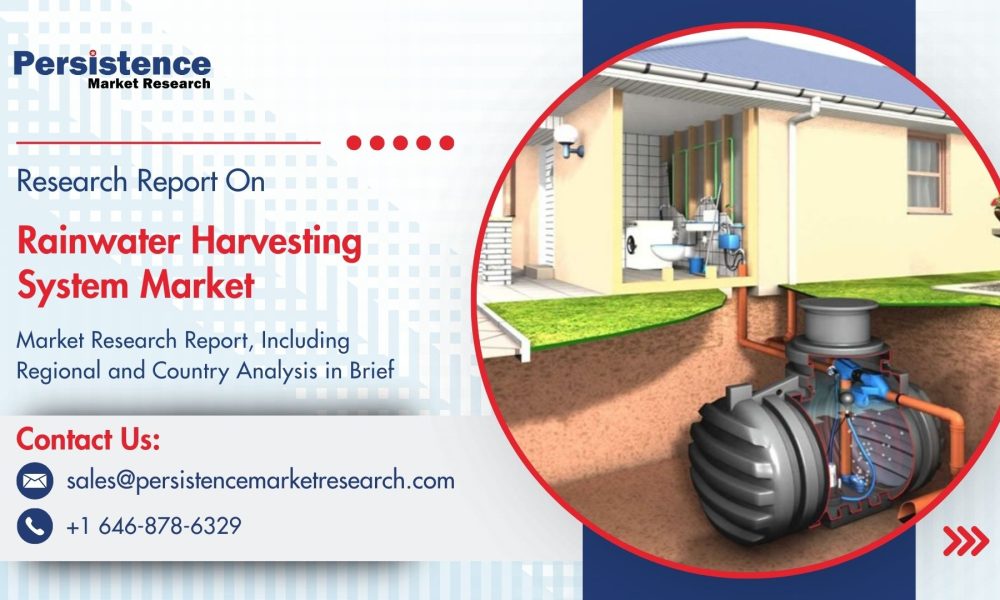
The Rainwater Harvesting System market is gaining significant traction worldwide as concerns over water scarcity, urbanization, and climate change continue to intensify. Rainwater harvesting—collecting and storing rainwater for reuse—has emerged as a viable and sustainable solution to address the growing global demand for freshwater. The adoption of rainwater harvesting systems is accelerating across residential, commercial, industrial, and agricultural sectors as communities and governments prioritize efficient water resource management.
According to the latest study by Persistence Market Research, the global Rainwater Harvesting System market is projected to generate US$ 2,078.4 Mn in 2025 and reach US$ 3,381.4 Mn by 2032, expanding at a CAGR of 7.2% during the forecast period. In 2025, the market is expected to remain fragmented due to the presence of numerous component and system suppliers operating in different regions. The rising awareness of sustainable water management practices, government incentives, and technological advancements in water collection and filtration systems are key factors driving market growth.
Get a Sample PDF Brochure of the Report (Use Corporate Email ID for a Quick Response): https://www.persistencemarketresearch.com/samples/28396
Growing Importance of Sustainable Water Management
The world is facing mounting pressure on freshwater resources due to rapid urbanization, industrialization, and population growth. In many regions, water scarcity has become a critical challenge, prompting governments and organizations to adopt alternative water management strategies. Rainwater harvesting offers an efficient, cost-effective, and eco-friendly solution that reduces dependence on conventional water supply systems.
By capturing and storing rainwater from rooftops, landscapes, and other surfaces, these systems provide a supplementary water source for domestic use, irrigation, and industrial processes. Moreover, rainwater harvesting contributes to groundwater recharge, mitigates flooding, and helps manage stormwater runoff—making it an essential element in sustainable urban infrastructure planning.
As climate change exacerbates rainfall variability, the ability to harvest and store rainwater is increasingly viewed as a resilient adaptation strategy. Countries across Europe, Asia-Pacific, and North America are implementing policies and incentives to promote rainwater harvesting systems in both urban and rural areas.
Technological Advancements Boosting System Efficiency
Technological innovation plays a pivotal role in enhancing the efficiency and reliability of rainwater harvesting systems. Modern systems incorporate advanced filtration, purification, and storage technologies that ensure the collected water meets safety and quality standards for various applications.
Innovations such as automated monitoring systems, smart sensors, and IoT-enabled water management solutions allow users to track water levels, flow rates, and filtration performance in real time. These features optimize water usage, reduce maintenance requirements, and enhance system longevity.
Additionally, manufacturers are introducing modular and scalable designs that cater to different end-use sectors, from small-scale residential units to large commercial complexes. The integration of rainwater harvesting with green building designs and smart city infrastructure further supports its growing adoption, especially in regions committed to sustainability and climate resilience.
Regulatory Support and Policy Initiatives
Government initiatives are a major catalyst for the global rainwater harvesting system market. Many countries have implemented policies that mandate or incentivize the installation of rainwater harvesting systems in new buildings and public infrastructure projects.
For example, the European Union’s Water Framework Directive encourages sustainable water use and pollution prevention, promoting rainwater harvesting as part of integrated water management strategies. Similarly, in India, states such as Tamil Nadu, Karnataka, and Rajasthan have made rooftop rainwater harvesting mandatory for residential and commercial properties.
In North America, the U.S. Green Building Council’s LEED certification system rewards buildings that incorporate water-efficient designs, including rainwater harvesting. Such initiatives are driving increased investment and public awareness, leading to broader market penetration across both developed and developing economies.
Expanding Applications Across End-Use Sectors
The rainwater harvesting system market serves a diverse range of industries and sectors. In residential settings, systems are primarily used for landscape irrigation, toilet flushing, and washing applications. The growing adoption of sustainable housing practices and eco-friendly architecture is fueling residential demand.
In the commercial and industrial sectors, rainwater harvesting systems are installed in factories, office buildings, warehouses, and shopping complexes to reduce water bills and ensure continuity of operations, especially in water-stressed regions. Industries such as food and beverages, pharmaceuticals, and textiles are integrating these systems into their sustainability initiatives to minimize water consumption and comply with environmental regulations.
The agriculture sector is also a significant contributor to market growth. Farmers are increasingly adopting rainwater harvesting systems to enhance irrigation efficiency, maintain soil moisture levels, and reduce dependence on unpredictable rainfall patterns. As drought conditions become more frequent, rainwater harvesting provides an essential buffer against water scarcity in farming communities.
Regional Market Insights
Europe
Europe represents one of the most mature markets for rainwater harvesting systems. Countries like Germany, the United Kingdom, and France have established strong regulatory frameworks promoting water conservation. Government-backed programs, coupled with a high degree of environmental awareness, have spurred the adoption of advanced rainwater collection technologies in both residential and commercial sectors.
North America
In North America, the United States and Canada are witnessing rising adoption of rainwater harvesting systems driven by sustainable construction trends and growing concerns over water shortages. Increasing focus on green infrastructure, especially in urban areas, has boosted the implementation of rainwater collection and management systems in cities and municipalities.
Asia-Pacific
The Asia-Pacific region is expected to exhibit the fastest growth during the forecast period. Rapid urbanization, population growth, and water scarcity issues in countries such as India, China, and Australia are fueling market expansion. Governments in these countries are offering financial incentives and public awareness campaigns to promote rainwater harvesting as a critical part of sustainable water management.
Latin America and Middle East & Africa
Emerging economies in Latin America and the Middle East & Africa (MEA) are increasingly recognizing the potential of rainwater harvesting in mitigating water shortages. Countries such as Brazil, South Africa, and the UAE are investing in large-scale rainwater collection systems to support agriculture, urban development, and industrial projects.
For Customized Insights on Segments, Regions, or Competitors, Request Personalized Purchase Options: https://www.persistencemarketresearch.com/request-customization/28396
Challenges Hindering Market Growth
Despite its promising outlook, the rainwater harvesting system market faces several challenges. High initial installation costs and maintenance requirements remain barriers for widespread adoption, particularly in developing regions. In some areas, lack of awareness and technical expertise also limits implementation.
Moreover, inconsistent rainfall patterns and inadequate infrastructure in certain regions may restrict system efficiency and reliability. To overcome these challenges, stakeholders are focusing on public education, cost reduction through local manufacturing, and technological innovation to make systems more accessible and user-friendly.
Company Insights
The global rainwater harvesting system market is highly fragmented, with numerous players offering components, installation, and maintenance services tailored to regional needs. Leading companies are focusing on developing customized, scalable, and energy-efficient systems to meet diverse end-user requirements. Key players operating in the market include:
✦ Kingspan Group Plc
✦ WISY AG
✦ Graf Group
✦ Watts Water Technologies, Inc.
✦ Rain Harvesting Pty Ltd.
✦ Innovative Water Solutions LLC
✦ D&D Ecotech Services
✦ Dewey Waters Ltd.
✦ Water Field Technologies Pvt. Ltd.
✦ Klaro GmbH
These companies are expanding their presence through mergers, acquisitions, and partnerships with regional distributors. Many are also investing in R&D to develop automated filtration systems, smart monitoring tools, and eco-friendly storage solutions that cater to both urban and rural markets.
Future Outlook
Looking ahead, the global rainwater harvesting system market is expected to continue its robust expansion, driven by increasing awareness of water conservation, climate resilience, and sustainable urban development. As governments, businesses, and individuals prioritize environmental stewardship, rainwater harvesting will play an essential role in achieving global sustainability goals.
Emerging technologies such as AI-powered monitoring systems, smart storage tanks, and integrated water recycling networks will further enhance efficiency and adoption rates. The incorporation of rainwater harvesting into smart city initiatives and green building certifications will also create significant opportunities for manufacturers and service providers.
In conclusion, the rainwater harvesting system market, projected to reach US$ 3,381.4 Mn by 2032, represents a critical step toward sustainable water resource management. Through continued innovation, policy support, and collaboration among stakeholders, rainwater harvesting will not only address water scarcity but also contribute to the development of a more resilient and sustainable global water ecosystem.
Explore the Latest Trending Research Reports:
About Persistence Market Research:
At Persistence Market Research, we specialize in creating research studies that serve as strategic tools for driving business growth. Established as a proprietary firm in 2012, we have evolved into a registered company in England and Wales in 2023 under the name Persistence Research & Consultancy Services Ltd. With a solid foundation, we have completed over 3600 custom and syndicate market research projects, and delivered more than 2700 projects for other leading market research companies’ clients.
Our approach combines traditional market research methods with modern tools to offer comprehensive research solutions. With a decade of experience, we pride ourselves on deriving actionable insights from data to help businesses stay ahead of the competition. Our client base spans multinational corporations, leading consulting firms, investment funds, and government departments. A significant portion of our sales comes from repeat clients, a testament to the value and trust we’ve built over the years.
Contact Us:
Persistence Market Research
G04 Golden Mile House, Clayponds Lane
Brentford, London, TW8 0GU UK
USA Phone: +1 646-878-6329
UK Phone: +44 203-837-5656
Email: [email protected]
Web: https://www.persistencemarketresearch.com




