
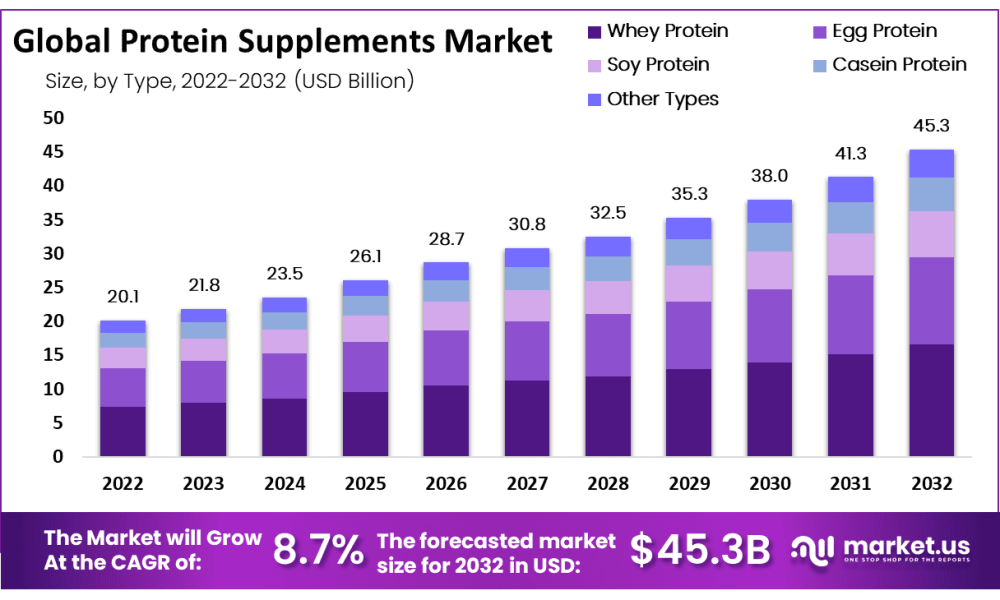
According to market.us, the Global Protein Supplement Market size is projected to reach approximately USD 45.3 billion by 2032, rising from USD 20.1 billion in 2022, with a compound annual growth rate (CAGR) of 8.70% between 2023 and 2032.
The upward trajectory of this market is largely influenced by growing health awareness, evolving dietary patterns, and a marked shift toward functional food consumption. As consumers increasingly embrace fitness-driven lifestyles and plant-forward diets, the appeal of protein supplements is expanding beyond traditional gym-goers and athletes to include a wider demographic interested in wellness, weight management, and nutritional balance.
Product innovation is also playing a key role in market expansion. A variety of convenient formats—ranging from plant-based protein powders and fortified snacks to on-the-go protein beverages—are catering to a broader spectrum of consumers. Additionally, the aging population’s focus on muscle maintenance, coupled with the rise in dietary sensitivities and preferences, is reinforcing demand.
Key Takeaways
- Market Growth and Size: The Protein Supplement Market is expected to reach approximately USD 45.3 billion by 2032, experiencing a CAGR of 8.70% from its 2022 value of USD 20.1 billion. This substantial growth is attributed to the increasing demand for protein supplements.
- Type Analysis: Among protein types, whey protein holds a significant market share. Whey protein, known for its branched amino acids, is popular among athletes and bodybuilders.
- Source Analysis: In 2022, animal-based protein supplements generated the most revenue, with whey and casein being the most consumed animal-based proteins.
- Form Analysis: In 2022, protein powder dominated the market with a 55% share. Protein powders are versatile and support muscle building and overall health.
- Distribution Channel Analysis: Online retailers accounted for over 43% of the revenue in 2022. Supermarkets and hypermarkets are also expected to see growth in the market.
- Regional Analysis: North America leads in the global market for protein supplements, driven by the increasing number of health-conscious consumers. The health and fitness industry in the United States is expected to expand further.
Access a Complimentary Sample of This Premium Report: https://market.us/report/protein-supplement-market/request-sample/
Factors Affecting the Growth of the Protein Supplement Market
Rising Health and Wellness Awareness: A growing number of individuals are prioritizing personal health, fitness, and preventive care. This awareness has led to increased interest in balanced diets and nutritional supplementation, with protein products gaining popularity for their role in muscle support, metabolism, and overall wellness.
Shift Toward Active and Fitness-Oriented Lifestyles: The global increase in gym memberships, home workouts, and participation in sports and recreational fitness is significantly boosting demand for protein supplements. Consumers are integrating these products into their routines to enhance performance, support recovery, and maintain lean muscle mass.
Expanding Demand for Plant-Based Nutrition: Rising veganism, lactose intolerance, and concerns over animal-derived ingredients are driving the popularity of plant-based protein sources such as pea, soy, and rice. Manufacturers are responding with cleaner-label, allergen-friendly alternatives, broadening market reach.
Urbanization and Busy Lifestyles: The fast-paced nature of urban life has led consumers to seek convenient, ready-to-consume nutritional options. Protein supplements in formats like shakes, bars, and powders serve as quick meal or snack replacements, aligning well with on-the-go habits.
Growing Online and Retail Accessibility: The expansion of e-commerce platforms and organized retail has made protein supplements more visible and accessible. In addition, endorsements from fitness influencers and the availability of customized subscription models have made it easier for consumers to explore and adopt protein products regularly.
Key Market Segmentation
By Type Analysis
The growth of the protein supplement market by type is driven by various sources, including whey, casein, soy, egg, and others such as pea, wheat, canola, gelatin, rice, and collagen. Among these, whey protein holds the largest market share due to its high concentration of branched-chain amino acids and its rapid absorption. Derived from the liquid byproduct of curdled milk, whey protein is widely favored in the fitness and sports community.
It primarily exists in two forms: whey protein concentrate and whey protein isolate. The rising use of whey protein by athletes and bodybuilders for muscle and body development continues to fuel demand. Additionally, the market is experiencing strong growth due to increasing interest in sports nutrition and the appeal of clean-label, value-added ingredients.
By Source Analysis
In 2022, animal-based protein supplements accounted for the highest revenue in the global market. This segment includes proteins sourced from meat and dairy, such as whey, casein, egg, chicken, and beef. These proteins are classified as complete due to their inclusion of all essential amino acids. Among them, whey and casein were the most widely consumed animal-based proteins during the year.
Whey protein—available in forms like isolate, concentrate, and hydrolysate—offers high digestibility and a rich amino acid profile. Although hydrolyzed whey protein is more costly, some manufacturers incorporate it in limited quantities to enhance the nutritional value of their products while keeping costs manageable.
By Form Analysis
In 2022, protein powder accounted for 55.0% of the total market revenue, making it the dominant product form in the protein supplement industry. These powders are derived from various sources such as whey, egg, soy, casein, and others. In addition to high protein content, they are often fortified with essential micronutrients, including vitamins, minerals, greens, fibers, grains, and healthy fats.
Protein powders support muscle development, body toning, hormone and enzyme production, tissue repair, and weight management, contributing to their widespread use across fitness and health-conscious consumer groups.
By Distribution Channel Analysis
In 2022, online retailers dominated the distribution landscape for protein supplements, capturing over 43% of total revenue. This dominance was supported by increasing internet usage, faster delivery times, greater convenience, and attractive discounts. Meanwhile, supermarkets and hypermarkets are expected to grow at a CAGR of 8.5% during the forecast period, driven by competitive pricing and expanding store networks in both developed and emerging markets.
Plant-based protein supplements are projected to register the highest CAGR over the forecast period, fueled by rising demand from vegans, vegetarians, and individuals with allergies to dairy, eggs, or meat. These supplements are derived from sources such as soy, wheat, rice, potato, hemp, canola, oat, and almond.
In 2022, soy and wheat emerged as the leading plant protein sources, with soy gaining traction due to its complete amino acid profile. Additionally, its content of arginine, glutamine, and BCAAs supports muscle recovery and efficient absorption, contributing to the growing consumer preference and anticipated rise in demand moving forward.
Key Market Segments
Type
- Whey Protein
- Egg Protein
- Soy Protein
- Casein
- Other Proteins
Source
- Plant-Based
- Animal Based
Form
- Ready to Drink
- Protein Powder
- Protein Bar
- Other Forms
Distribution Channel
- Online
- Specialist Sports Store
- Other Distribution Channels
Regional Analysis
The regional analysis of the protein supplement market covers North America, Europe, Asia-Pacific, and the Middle East & Africa (MEA). North America holds the largest share of the global market, primarily driven by a growing population of health-conscious consumers across developed countries. In the United States, the health and fitness sector is experiencing robust growth and is projected to expand steadily throughout the forecast period.
Currently, around 20% of U.S. adults are members of fitness clubs, and this number is expected to increase further. This rising participation in fitness-related activities is fueling greater demand for health-focused products, including protein supplements, as consumers increasingly seek nutritional support for active and wellness-oriented lifestyles.
Market Key Players
- Amway Corporation
- Glanbia PLC
- MusclePharm Corporation
- Abbott Laboratories
- CytoSport Inc.
- Lovate Health Sciences International Inc.
- Kerry Group PLC
- Reliance Vitamin Company Inc.
- Orgain Inc.
- True Nutrition
- NOW Foods
- Other Key Players
Get in Touch with Us:
Market.us (Powered By Prudour Pvt. Ltd.)
Address: 420 Lexington Avenue, Suite 300 New York City, NY 10170, United States
Send Email: [email protected]
Refer to More Related Reports:



