
Protein Drink Market Overview :
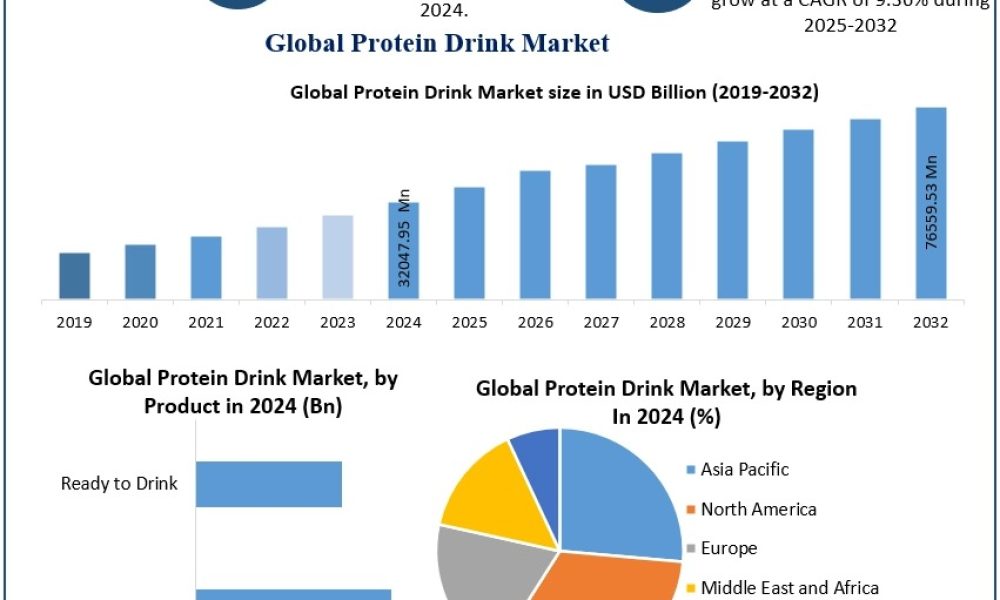
Protein Drink Market size was valued at approximately USD 32.05 billion in 2024 and is poised to expand at a strong CAGR of 9.36%, reaching nearly USD 76.56 billion by 2032. This growth trajectory is propelled by increasing consumer focus on health and wellness, rapid urbanization, rising demand for convenient nutrition options, and growing popularity of both animal-based and plant-based protein drinks.
Key Highlights & Insights
Market Size & Growth: From USD 32.05 billion in 2024 to USD 76.56 billion in 2032, growing at a CAGR of 9.36%.
Dominating Region: North America and Europe are the primary markets globally, driven by rising demand for natural, organic, and additive-free protein beverages, especially in the sports nutrition and functional food segments.
Leading Segment: Protein powder remains the dominant product type, widely used by athletes, fitness enthusiasts, and health-conscious consumers. Ready-to-drink (RTD) protein beverages hold the second-largest share, favored for on-the-go nutrition.
Key Driver: Increasing awareness about protein’s role in muscle growth, weight management, immunity, and overall health facilitates the transition of protein drinks from niche sports supplements to mainstream daily nutrition.
Recent Developments
Companies are innovating with diverse protein sources, including whey, casein, soy, pea, and rice, tapping into both animal- and plant-based consumer segments.
The expanding use of protein drinks in bakery and confectionery products enhances market penetration.
Major players such as Glanbia PLC, Abbott, CytoSport Inc., Nestlé, and Quest Nutrition have strengthened their footprint through product innovation, expanding flavors, and enhanced distribution in retail and e-commerce channels.
Online retail channels are gaining increasing significance, driven by the rise in digital adoption, convenience, and personalized nutrition.
Market Dynamics
Growth Drivers:
Busy lifestyles and increasing health consciousness foster demand for convenient, high-protein nutritional supplements.
Expanding use of protein drinks beyond athletes to general consumers for energy, immunity, recovery, and weight management.
Innovations in flavors and formulation broaden consumer appeal, including sugar-free, organic, and allergen-friendly options.
Rising vegan and vegetarian populations support growth in plant-based protein drinks.
Restraints:
Excessive protein consumption potential health risks necessitate consumer education and balanced marketing.
Price sensitivity and competition from alternative protein sources may limit growth in some demographics.
Regional Analysis
North America: Leads globally due to strong consumer awareness, high sports nutrition adoption, and extensive retail infrastructure.
Europe: Significant player driven by health trends and premium product launches.
Asia Pacific: Rapidly growing region fueled by urbanization, lifestyle changes, and rising disposable income.
South America, Middle East & Africa: Emerging markets with expanding nutrition awareness and retail availability.
Product Segmentation
By Product: Protein powders (dominant), ready-to-drink beverages, protein bars.
By Protein Source: Animal-based (whey, milk, casein), and plant-based (soy, rice, pea).
By Distribution Channel: Retail stores, online platforms, direct-to-consumer.
Key Trends
Increasing popularity of plant-based and sustainable protein sources.
Growth of ready-to-drink protein beverages for convenient on-the-go consumption.
Expansion of personalized nutrition and targeted formulations (e.g., for seniors, weight management).
Enhanced focus on clean-label, sugar-free, and organic protein drink options.
Quote
The protein drink market is evolving rapidly from a niche supplement category into an essential component of everyday nutrition worldwide. North America’s leadership and Europe’s health-conscious consumers pave the way for innovation, while emerging markets offer huge growth potential driven by rising urbanization and lifestyle shifts.
Driven by health and convenience imperatives, continuous product innovation, and expanding global consumer base, the protein drink market is set to achieve remarkable growth—fueling healthier lifestyles and enhanced nutrition accessibility across the globe through 2032




