
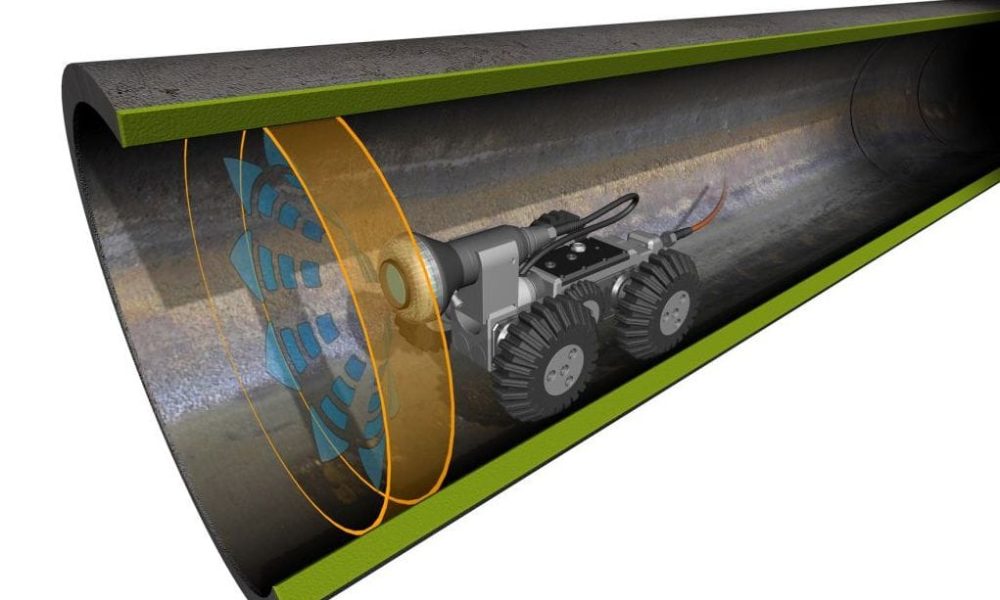
The pipe inspection robots market is experiencing significant growth and innovation as industries seek efficient and reliable solutions for inspecting and maintaining critical infrastructure such as pipelines. With advancements in robotics, sensor technology, and artificial intelligence, pipe inspection robots play a crucial role in ensuring the integrity, safety, and reliability of pipelines across various sectors. This overview will explore key points, trends, and recent developments within the pipe inspection robots market. In the realm of infrastructure maintenance, the pipe inspection robots market stands out as a beacon of innovation and efficiency.According to MarketDigits, the pipe inspection robot market is projected to reach a value of US$ 3 billion by the end of 2023. The global demand for pipe inspection robots is expected to grow at a compound annual growth rate (CAGR) of 15.8%, reaching US$ 13 billion by 2030.
Driven by the need to ensure pipeline integrity, prevent leaks, and comply with stringent regulations, the demand for pipe inspection robots is on the rise. These robots are equipped with cutting-edge sensors, cameras, and navigation systems, allowing them to navigate through complex pipe networks, detect defects, and collect valuable data with precision and accuracy. Key drivers fueling the growth of the pipe inspection robots market include aging pipeline infrastructure, increasing environmental concerns, and the desire for cost-effective and non-destructive inspection techniques. By leveraging robotics technology, companies can minimize the need for manual inspections, reduce downtime, and mitigate risks associated with human error and safety hazards. Furthermore, advancements in artificial intelligence and data analytics enable pipe inspection robots to analyze inspection data in real-time, providing actionable insights for predictive maintenance and decision-making.
Download a sample copy of Report:
https://www.marketdigits.com/request/sample/648
Who are the Key Manufacturers and Suppliers of Inspection Robot?
Notable manufacturers of pipe inspection robots include:
- General Electric
- Xylem Inc.
- Maxon
- Tongren Tuofeng (Beijing) Technology Co., Ltd
- Mini-Cam Ltd
- RedZone Robotics
- Envirosight LLC
- Eddyfi Technologies
- Wuhan Easy-Sight Technology Co., Ltd
- Super Droid Robots, Inc.
- IPS Robot
- Bominwell Robotics
- IPEK International Gmbh
- IBAK Helmut Hunger GmbH and Co. KG
The provided list includes key players in the market involved in the production of inspection robots. They contribute to the industry with their expertise and innovative solutions.
The report is a comprehensive compilation of firsthand information, qualitative and quantitative assessments by industry analysts, inputs from industry experts and participants across the value chain. It offers an in-depth analysis of market trends, macroeconomic indicators, governing factors, and market attractiveness for different segments. Furthermore, the report assesses the qualitative impact of various market factors on market segments and geographies.
Key Points:
- Market Growth: The pipe inspection robots market is witnessing robust growth driven by increasing investments in infrastructure maintenance, stringent regulatory requirements, and the need to minimize downtime and operational disruptions. Pipe inspection robots offer advantages such as remote operation, high-resolution imaging, and real-time data analysis, enabling efficient and accurate inspection of pipelines in challenging environments.
- Technological Advancements: Advances in robotics, sensor technology, and data analytics are driving innovation in pipe inspection robots, enhancing their capabilities, performance, and versatility. Modern pipe inspection robots are equipped with advanced sensors, cameras, LiDAR (Light Detection and Ranging), ultrasonic testing, and magnetic crawlers, enabling comprehensive inspection of pipeline integrity, corrosion, defects, and leaks.
- Application Diversity: Pipe inspection robots find applications across various industries, including oil and gas, water and wastewater, utilities, petrochemicals, and manufacturing. They are used for inspecting pipelines of different materials, sizes, and configurations, including underground, underwater, and above-ground pipelines, as well as confined spaces, hazardous environments, and inaccessible areas where human inspection is challenging or unsafe.
- Market Segmentation: The pipe inspection robots market is segmented based on robot type, inspection method, application, and geographic region. Robot types include remotely operated vehicles (ROVs), autonomous robots, tethered robots, and modular inspection systems, each offering unique capabilities and functionalities tailored to specific inspection requirements and environmental conditions.
- Regulatory Compliance: Regulatory compliance and industry standards drive demand for pipe inspection robots, as operators and asset owners are required to adhere to safety, environmental, and integrity regulations governing pipeline inspection and maintenance. Compliance with standards such as API 570, ASME B31, NACE SP0102, and PHMSA regulations ensures the reliability, integrity, and safety of pipelines and infrastructure assets.
The growth of the pipe inspection robot market can be attributed to several factors:
- The petrochemical industry’s reliance on pipelines for transportation drives the need for pipe inspection robots.
- Routine maintenance and inspection of pipelines are crucial to prevent contamination and ensure the integrity of oil and gas transportation.
- The deployment of pipe inspection robots can lead to significant cost savings and accurate findings, contributing to positive cash flow over time.
- Manual inspection of pipes is time-consuming, labor-intensive, and costly, making pipe inspection robots an attractive alternative.
- One of the key drivers of the market is the ability of these robots to operate in challenging and hostile environments. Pipe inspection robots are particularly useful in complex pipeline applications where manned operations are impractical. Additionally, the market growth is supported by concerns over the availability of skilled workers.
Enquiry before buying:
https://www.marketdigits.com/request/enquiry-before-buying/648
Key Segments
By Type:
- Wheel In-pipe Inspection Robot
- Tracked In-pipe Inspection Robot
- Aerial Drones
By Application:
- Welding pipe Robot
- Remote Inspection Robot
- Scanning System Robot
- Thickness measuring Robot
- Others
By End-use:
- Oil & Gas
- Sewer Management
- Water utilities
- Industrial plants
- Civic Infrastructure
By Region:
- North America
- US & Canada
- Latin America
- Brazil, Mexico, Others
- Europe
- Germany, Italy, France, U.K., Spain, BENELUX, Russia
- South Asia Pacific
- India, ASEAN, Australia and New Zealand (ANZ)
- East Asia
- China, Japan, South Korea
- Middle East and Africa
- GCC Countries, Turkey, North Africa, South Africa
Key Trends:
- Integration of Robotics and AI: The integration of robotics with artificial intelligence (AI) and machine learning enables intelligent, autonomous operation of pipe inspection robots. AI algorithms analyze sensor data, detect anomalies, predict maintenance needs, and generate actionable insights to optimize inspection processes, prioritize maintenance activities, and prevent pipeline failures, enhancing efficiency and reliability.
- Advancements in Sensor Technology: Advances in sensor technology, including miniaturization, multi-modal sensing, and wireless communication, enhance the capabilities and performance of pipe inspection robots. Sensors such as 3D cameras, thermal imaging, gas sensors, and laser-based measurement systems enable comprehensive assessment of pipeline condition, corrosion, wall thickness, and structural integrity, providing valuable data for asset management and decision-making.
- Remote Operation and Telepresence: Remote operation capabilities enable operators to control pipe inspection robots from a safe distance, reducing exposure to hazardous environments and minimizing downtime for maintenance activities. Telepresence technologies, including virtual reality (VR) and augmented reality (AR), provide operators with immersive visualization and real-time feedback, enhancing situational awareness and decision support during pipeline inspections.
- Digitalization and Data Analytics: Digitalization of pipeline inspection data and integration with asset management systems enable data-driven decision-making and predictive maintenance strategies. Data analytics tools analyze historical inspection data, identify trends, and forecast maintenance needs, enabling proactive asset management, risk mitigation, and optimization of maintenance schedules and resources.
Recent Industry Developments:
- Advancements in Autonomous Inspection Systems: Companies are developing autonomous pipe inspection systems equipped with AI algorithms, navigation sensors, and obstacle detection capabilities to enable unmanned operation in complex environments. Autonomous robots traverse pipelines, detect anomalies, and perform inspection tasks with minimal human intervention, improving efficiency, safety, and reliability of pipeline inspections.
- Miniaturization and Modular Design: Pipe inspection robots are becoming increasingly compact, lightweight, and modular, enabling deployment in confined spaces, narrow pipelines, and challenging environments. Miniaturized robots equipped with interchangeable modules and sensors offer flexibility, adaptability, and scalability for various inspection applications, reducing costs and improving accessibility for asset owners and operators.
- Integration with Digital Twin Technologies: Pipe inspection robots are integrated with digital twin technologies to create virtual replicas of pipelines, enabling real-time monitoring, simulation, and predictive maintenance. Digital twins combine sensor data, simulation models, and historical performance data to provide a digital representation of pipeline assets, facilitating condition assessment, risk analysis, and decision support for asset management and maintenance planning.
- Partnerships and Collaborations: Collaboration between robotics manufacturers, technology providers, pipeline operators, and inspection service companies drives innovation and market expansion in the pipe inspection robots market. Partnerships facilitate technology transfer, knowledge sharing, and co-development of integrated solutions that address industry challenges, meet customer requirements, and drive adoption of robotic inspection technologies.
Get this report at a discount:
https://www.marketdigits.com/request/discount/648
In summary, the pipe inspection robots market is poised for continued growth and innovation, driven by technological advancements, regulatory compliance, and the need for efficient, reliable pipeline inspection and maintenance solutions. With a focus on robotics, AI, sensor technology, and data analytics, pipe inspection robots play a vital role in ensuring the integrity, safety, and sustainability of critical infrastructure assets across industries.
1248 CarMia Way Richmond,
VA 23235, United States.
Phone: +1 510-730-3200
Email: [email protected]
Website: https://www.marketdigits.com