
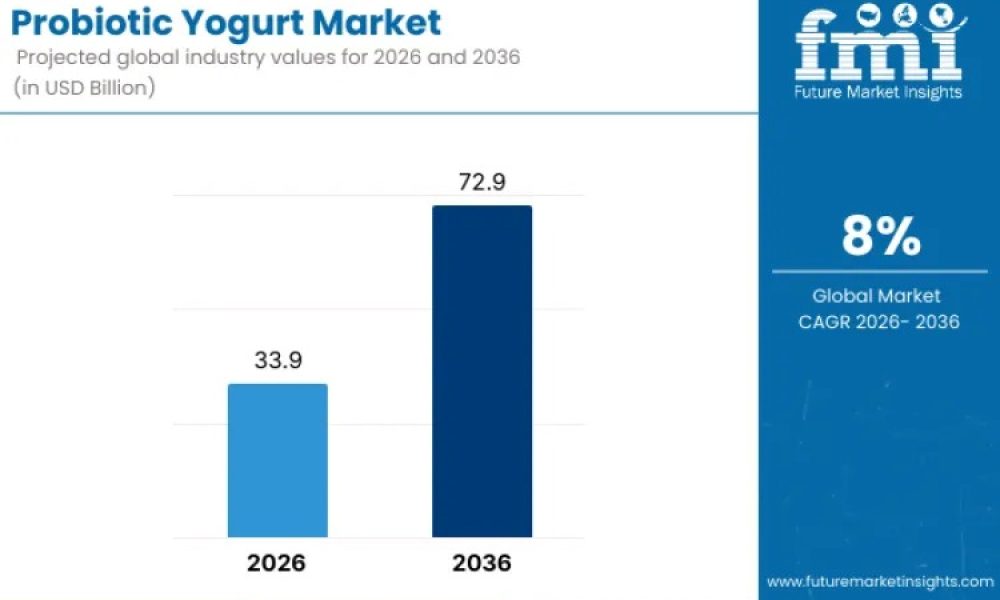
The global probiotic yogurt market is entering a decade of sustained, data-backed expansion as consumers increasingly prioritize digestive wellness, immunity support, and functional nutrition in everyday diets. Valued at USD 33.9 billion in 2026, the market is projected to more than double to USD 72.9 billion by 2036, advancing at a compound annual growth rate (CAGR) of 8%. This growth reflects a structural shift in food consumption, where yogurt is no longer viewed as a basic dairy product but as a clinically positioned wellness solution.
Explore trends before investing – request a sample report today!
Probiotic yogurt has become one of the most widely adopted functional foods due to its ability to support gut microbiome balance, enhance nutrient absorption, and strengthen immune response. Rising scientific validation of probiotic strains, combined with clearer labeling and consumer education, is accelerating adoption across age groups and income levels.
Functional Foods Gain Ground Across Mature and Emerging Markets
Developed markets such as North America and Europe continue to anchor global revenues, supported by high consumer awareness, advanced retail infrastructure, and strong brand presence. North America remains the leading region in 2026, driven by routine probiotic consumption among health-conscious millennials and aging populations seeking preventive nutrition.
At the same time, Asia Pacific is expected to emerge as the leading region by 2036, fueled by rapid urbanization, rising disposable incomes, and a long-standing cultural acceptance of fermented foods. Countries across East and Southeast Asia are integrating probiotic yogurt into daily diets as part of broader wellness routines, pushing volumes and innovation simultaneously.
Product Innovation Redefines Category Growth
Innovation remains a central growth lever in the probiotic yogurt market. Manufacturers are moving beyond traditional spoonable formats to address evolving lifestyle needs and dietary preferences. Key innovation trends shaping the category include:
- Plant-based probiotic yogurt, the fastest-growing segment between 2026 and 2036, targeting lactose-intolerant, vegan, and flexitarian consumers
- Drinkable and on-the-go formats, aligned with convenience-driven consumption
- Strain-specific and synbiotic formulations, combining probiotics with prebiotics for enhanced efficacy
- Clean-label positioning, with reduced sugar, natural ingredients, and transparent health claims
These developments are broadening the consumer base while increasing product differentiation in an increasingly competitive market.
Regional Performance Highlights Uneven but Robust Growth
Growth dynamics vary significantly by country, reflecting differences in dietary habits, health awareness, and retail maturity. The United Kingdom is forecast to lead among major markets with a 12.2% CAGR from 2026 to 2036, supported by strong interest in preventive healthcare and plant-based functional foods. France follows closely at 11.5% CAGR, leveraging its deep-rooted dairy culture and rising demand for premium, health-forward yogurts.
The United States is projected to grow at 8.3% CAGR, with probiotic yogurt increasingly positioned as a daily staple rather than an occasional health product. Germany (9.9%) and Japan (7.6%) also demonstrate steady expansion, driven by functional food innovation, aging populations, and trust in scientifically validated nutrition.
Digital Channels and Personalization Shape Consumer Engagement
E-commerce and direct-to-consumer models are reshaping how probiotic yogurt is marketed and sold. Online grocery platforms, subscription services, and health-focused apps are improving accessibility while enabling brands to communicate functional benefits more effectively. In advanced markets, personalized nutrition—supported by microbiome research and digital health tracking—is beginning to influence purchasing decisions, particularly among premium consumers.
Competitive Landscape Balances Scale and Specialization
The probiotic yogurt market remains moderately fragmented, with global multinationals coexisting alongside niche and regional innovators. Companies such as Danone, Chobani, General Mills, and Nestlé lead global sales through extensive distribution networks, strong R&D capabilities, and clinically supported probiotic portfolios. Brands like Activia and Chobani Greek-style probiotics have established strong credibility in digestive health positioning.
At the same time, specialized players including Lifeway Foods, Yofix Probiotics, and The Coconut Collaborative are gaining traction by targeting kefir, multi-strain, and plant-based niches. In Asia and Europe, regional leaders such as Yakult Honsha, Meiji, and Lactalis continue to expand with locally adapted formulations and clean-label strategies. Mergers and acquisitions are expected to intensify as established brands seek innovation-led growth and faster entry into plant-based and personalized nutrition segments.
To Access The Full Market Analysis, Strategic Recommendations, And Analyst Support, Purchase The Complete Report Here.
Outlook: Science-Led Differentiation Will Define the Next Phase
As health and wellness continue to influence global food choices, probiotic yogurt is positioned for long-term relevance. Future growth will increasingly depend on clinical validation, strain transparency, functional claims, and personalization, rather than flavor variety alone. Brands that align scientific credibility with consumer-friendly formats are likely to outperform in an increasingly informed and competitive marketplace.
About Future Market Insights (FMI)
Future Market Insights, Inc. (FMI) is an ESOMAR-certified, ISO 9001:2015 market research and consulting organization, trusted by Fortune 500 clients and global enterprises. With operations in the U.S., UK, India, and Dubai, FMI provides data-backed insights and strategic intelligence across 30+ industries and 1,200 markets worldwide.



