
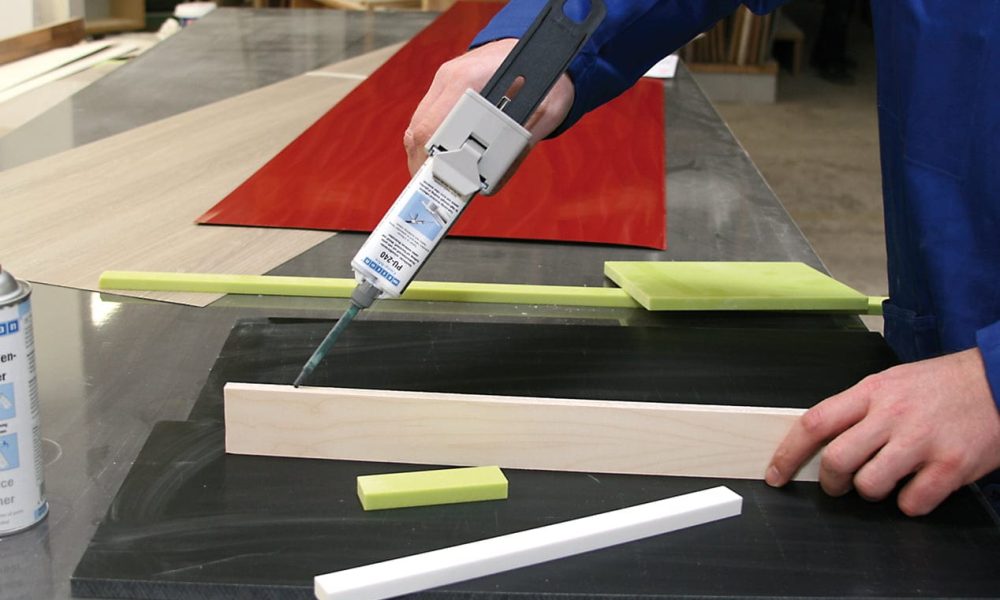
The polyurethane adhesives market is experiencing steady growth driven by their versatility, strong bonding capabilities, and wide-ranging applications across various industries. This overview delves into the key drivers, market segments, growth trends, and recent developments within the polyurethane adhesives market. The global market for polyurethane adhesives reached a value of USD 8.1 billion in 2022 and is anticipated to achieve USD 10.3 billion by 2030, with a compound annual growth rate (CAGR) of 5.0% during the forecast period from 2023 to 2030. The Asia Pacific region, particularly in the technology segment of dispersions, is expected to experience significant growth, leading to an increased demand for polyurethane adhesives.
The polyurethane adhesives market is experiencing significant growth, driven by their versatile properties and wide-ranging applications across various industries. Key drivers fueling the expansion of the polyurethane adhesives market include the increasing demand for lightweight and high-performance bonding solutions, the growing emphasis on sustainability and environmental compliance, and advancements in adhesive technology enhancing their strength, flexibility, and durability. Polyurethane adhesives offer exceptional bonding strength and versatility, making them ideal for bonding a variety of substrates including metals, plastics, wood, composites, and even dissimilar materials. They are widely used in industries such as automotive, construction, aerospace, electronics, and furniture manufacturing.
Download a sample copy of Report:
https://www.marketdigits.com/request/sample/666
Competitive Landscape:
Key players in the polyurethane (PU) adhesives market are actively enhancing their production capacities and resources to cater to the increasing demand. This is primarily achieved through the establishment of new manufacturing facilities. Additionally, collaboration and joint venture strategies are being adopted to bolster market presence and resource base. Some notable developments include:
- March 2022: Arkema S.A. bolstered its position in the adhesive solutions market by acquiring Ashland’s Performance Adhesives business in the U.S. This strategic move aimed to strengthen Arkema’s portfolio in the polyurethane (PU) adhesives segment.
- July 2021: Bostik, the Adhesive Solutions division of Arkema S.A., introduced a new range of polyurethane (PU) sealants tailored to meet evolving industry demands. These sealants prioritize advanced and sustainable features such as low isocyanates, solvent-free formulations, and bubble-free application, catering particularly to the construction sector.
- April 2021: Sika AG, a leading specialty chemical company, expanded its presence in Japan by acquiring Hamatite, a renowned adhesives and sealants manufacturer. This strategic acquisition further solidified Sika’s foothold in the Japanese market, enhancing its offerings and market reach.
These developments underscore the dynamic strategies employed by key players to reinforce their positions and capitalize on emerging market opportunities in the polyurethane (PU) adhesives sector.
Key Companies Profiled
- The 3M Company
- Dow Chemical Company
- BASF
- ADCO Global Inc.
- Avery Dennison Corp
- Arkema S.A.
- Ashland Inc.
- H.B. Fuller
- Henkel AG & Co.
- Huntsman Corporation
- Illinois Tool Works Inc.
- Pidilite Industries
- American Biltrite Inc.
- Adhesives Research Inc.
- Chemence
- Ellsworth
- RPM International Inc.
- Beardow & Adams (Adhesives) Ltd.
- Scott Bader Company Ltd.
- Ninghai Dingcheng Adhesive Co Ltd.
- Sika AG
Key Drivers:
- Demand from End-Use Industries: The polyurethane adhesives market is fueled by demand from end-use industries such as automotive, construction, aerospace, packaging, electronics, and furniture. These industries rely on polyurethane adhesives for bonding diverse substrates, including metals, plastics, composites, wood, and ceramics, in a wide range of applications.
- Growing Construction Activities: The construction industry is a significant consumer of polyurethane adhesives for bonding building materials, including insulation panels, flooring, roofing membranes, and façade elements. With increasing construction activities worldwide, particularly in emerging economies, the demand for polyurethane adhesives in the construction sector is expected to rise steadily.
- Advantages over Traditional Adhesives: Polyurethane adhesives offer several advantages over traditional adhesives such as epoxy, acrylic, and silicone, including high bond strength, flexibility, durability, chemical resistance, and temperature resistance. These properties make polyurethane adhesives suitable for demanding applications in harsh environments and extreme conditions.
- Rising Demand for Lightweight and Sustainable Solutions: Polyurethane adhesives contribute to lightweighting efforts in industries such as automotive and aerospace by replacing mechanical fasteners and welding techniques. Additionally, the growing focus on sustainability and environmental regulations is driving the adoption of solvent-free and low-VOC (volatile organic compound) polyurethane adhesives.
Enquiry before buying:
https://www.marketdigits.com/request/enquiry-before-buying/666
Growth Trends:
- Technological Advancements: Ongoing advancements in polyurethane chemistry, formulation technologies, and application methods are driving innovation in polyurethane adhesives. Manufacturers are developing high-performance adhesives with improved bond strength, curing speed, temperature resistance, and environmental sustainability to meet evolving customer requirements.
- Demand for Structural Bonding Solutions: There is a growing demand for polyurethane adhesives for structural bonding applications, particularly in industries such as automotive, aerospace, and construction. Structural adhesives offer advantages over mechanical fasteners and welding techniques, including weight savings, stress distribution, and design flexibility.
- Shift towards Water-Based and Solvent-Free Formulations: Environmental concerns and regulatory requirements are driving the shift towards water-based and solvent-free polyurethane adhesives. These formulations offer lower VOC emissions, reduced health and safety risks, and improved workplace conditions compared to solvent-based adhesives, aligning with sustainability goals and customer preferences.
- Expansion in Emerging Markets: Emerging economies in Asia-Pacific, Latin America, and the Middle East are witnessing rapid urbanization, infrastructure development, and industrial growth, driving demand for polyurethane adhesives in construction, automotive, and manufacturing sectors. Manufacturers are expanding their presence in these markets to capitalize on growth opportunities and cater to local demand.
Polyurethane (PU) Adhesives Market by Category
By Product Type, Polyurethane (PU) Adhesives Market is segmented as:
- Thermoset
- Thermoplastic
By Technology, Polyurethane (PU) Adhesives Market is segmented as:
- Solvent-borne
- Dispersion
- Hot-melt
- Reactive
- Others
By Applications, Polyurethane (PU) Adhesives Market is segmented as:
- Footwear
- Automotive
- Building & Construction
- Packaging
- Electrical & Electronics
- Furniture
- Others
By Region, Polyurethane (PU) Adhesives Market is segmented as:
- North America
- Latin America
- Europe
- South Asia
- East Asia
- Middle East & Africa
- Oceania
Recent Developments:
- Introduction of Bio-Based Polyurethane Adhesives: Manufacturers are developing bio-based polyurethane adhesives derived from renewable feedstocks such as soybean oil, castor oil, and other biomass sources. Bio-based adhesives offer environmental benefits, reduced dependence on fossil fuels, and enhanced sustainability credentials, appealing to environmentally conscious customers.
- Investments in Research and Development: Leading players in the polyurethane adhesives market are investing in research and development to innovate with new formulations, chemistries, and application technologies. R&D efforts focus on improving adhesive performance, durability, compatibility with substrates, and environmental sustainability to meet evolving customer needs.
- Expansion of Production Capacities: To meet growing demand and expand market presence, manufacturers are investing in the expansion of production capacities for polyurethane adhesives. New production facilities, manufacturing partnerships, and strategic acquisitions strengthen supply chain capabilities and enhance market competitiveness.
- Collaborations and Partnerships: Collaboration between adhesive manufacturers, raw material suppliers, end-users, and research institutions drives innovation and market development in the polyurethane adhesives industry. Partnerships enable knowledge sharing, technology transfer, and joint development of customized solutions to address specific application requirements and market demands.
Get this report at a discount:
https://www.marketdigits.com/request/discount/666
In conclusion, the polyurethane adhesives market is poised for continued growth driven by demand from diverse end-use industries, technological advancements, and sustainability initiatives. Key trends such as structural bonding solutions, water-based formulations, expansion in emerging markets, and bio-based innovations are shaping the future of the polyurethane adhesives industry. As manufacturers continue to innovate and collaborate to meet evolving customer needs and regulatory requirements, the polyurethane adhesives market is expected to witness further expansion and adoption across various sectors worldwide.
Contact Us:
1248 CarMia Way Richmond,
VA 23235, United States.
Phone: +1 510-730-3200
Email: [email protected]
Website: https://www.marketdigits.com