Polyfluoroalkyl Substances (PFAS) Waste Management Market Overview :
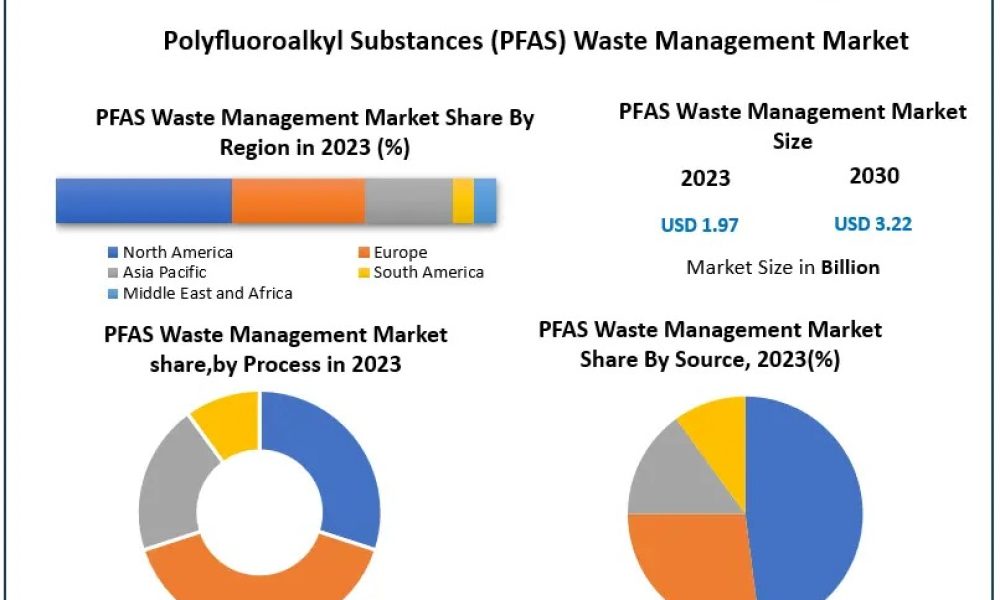
PFAS waste management market, valued at approximately USD 1.97 billion in 2023, is poised to grow steadily, with projections estimating it will reach over USD 3.22 billion by 2030, expanding at a CAGR of around 7.3%. The growth is primarily driven by increasing environmental concerns surrounding PFAS contamination, stringent regulatory frameworks, and the ongoing development of innovative remediation technologies.
Key Highlights & Insights
Market Growth Drivers: The PFAS waste management market is witnessing accelerated growth driven by stringent regulations from government agencies such as the US Environmental Protection Agency (EPA) and European Union regulators. These agencies impose rigorous treatment standards on industries handling PFAS-contaminated materials including soil, water, and solid waste. Advanced treatment technologies like advanced oxidation processes (AOPs), ion exchange, and granular activated carbon (GAC) filtration have been widely adopted to meet regulatory compliance and mitigate environmental contamination.
Dominating Region: North America currently leads the global PFAS waste management market. This is primarily due to proactive government policies aimed at PFAS contamination control, significant research funding, and the presence of major remediation service providers such as Veolia North America and Clean Harbors. The U.S. EPA’s health advisory limits on PFAS in drinking water have further stimulated demand for advanced PFAS cleanup solutions.
Key Challenges: The inherent stability and resistance of PFAS compounds to conventional degradation methods present ongoing challenges for remediation. High operational costs associated with advanced treatment technologies and the complexity of regulatory landscapes also impact market dynamics. Additionally, disposal and destruction of concentrated PFAS wastes require environmentally sound and cost-effective solutions.
Technological Advancements and Market Trends: Innovations such as plasma treatment, electrochemical oxidation, and treatment trains that combine multiple methodologies are increasing the effectiveness of PFAS removal. The integration of artificial intelligence (AI) and machine learning in process optimization is enhancing treatment efficiency, allowing companies to tailor remediation efforts to specific contamination profiles. Collaborative practices between landfills and wastewater treatment plants are emerging to improve overall PFAS management.
Market Segmentation & Outlook: The solid waste management segment holds a significant market share due to the concentration of PFAS in contaminated soils, industrial waste by-products, and landfill leachates. Treatment technologies like high-temperature incineration and encapsulation are commonly used for this segment. The market is projected to expand steadily, with estimates indicating a CAGR of over 7% and market size possibly doubling by 2030.
Recent Developments
- In 2024, Clean Harbors launched the “Total PFAS Solution,” a comprehensive service dealing with laboratory analysis, filtration, and destruction of PFAS, targeting industrial, municipal, and environmental sectors.
- Veolia North America’s integration with Suez’s assets expanded its market reach and treatment capabilities in North America.
- The US Department of Defense significantly increased funding for PFAS research and remediation programs, highlighting the growing attention to contamination cleanup.
Market Dynamics
- Technology Advancement: Emerging technologies like plasma treatment, electrochemical oxidation, and “treatment train” approaches integrating multiple treatment types are enhancing PFAS removal efficacy.
- Regulatory Impact: Environmentally focused regulations tighten permissible PFAS contamination levels in drinking water, soil, and waste, prompting greater demand for advanced waste management.
- Environmental & Health Concerns: PFAS’s association with health risks such as cancers and endocrine disruption fosters public and governmental pressure for rigorous cleanup actions.
Regional Analysis
- North America: Market leader with strong regulatory oversight and innovation in treatment solutions. The US Environmental Protection Agency’s guidelines on PFAS levels drive demand.
- Europe: Increasing environmental initiatives and regulations promote market growth with emphasis on sustainable waste management.
- Asia Pacific: Regional growth stimulated by rising environmental awareness and expanding industrial activity.
- Others: Emerging markets in Latin America, Middle East, and Africa are showing growing interest in PFAS waste management due to increased industrialization.
Want to know more? Request your sample report today : https://www.maximizemarketresearch.com/market-report/polyfluoroalkyl-substances-pfas-waste-management-market/258824/
Key Trends
- Integration of multiple treatment technologies in effective PFAS remediation strategies.
- Rising privatization of environmental testing and treatment services.
- Growth in research funding to develop scalable, cost-effective PFAS treatment.
- Increasing partnerships among landfills, wastewater facilities, and environmental service providers to optimize PFAS management.
Quote
Addressing the persistent environmental challenges posed by PFAS requires innovative technologies coupled with robust regulatory frameworks. The PFAS waste management market is evolving rapidly to meet these demands, ensuring safer ecosystems and public health protection.




