
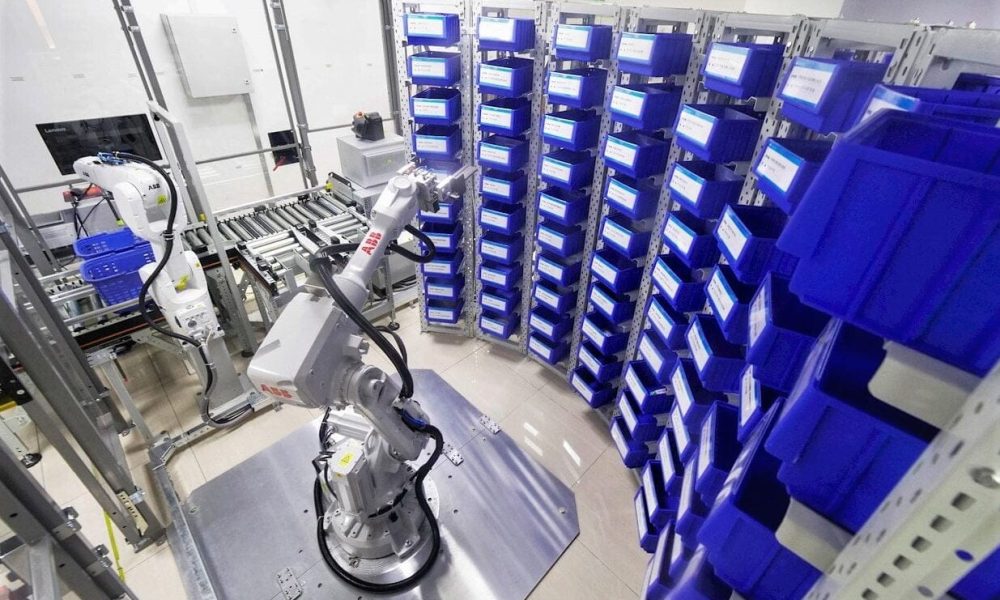
The pharmacy automation market is witnessing rapid growth, driven by the increasing need for accuracy, efficiency, and streamlined workflows in both hospital and retail pharmacies. With automation revolutionizing healthcare, the market is projected to grow at a CAGR of 8.0% from 2024 to 2034, reaching a valuation of USD 5,621.5 million in 2024 and exceeding USD 12,136.3 million by 2034.
𝐑𝐞𝐪𝐮𝐞𝐬𝐭 𝐚 𝐒𝐚𝐦𝐩𝐥𝐞 𝐑𝐞𝐩𝐨𝐫𝐭 𝐍𝐨𝐰 𝐭𝐨 𝐠𝐞𝐭 𝐏𝐫𝐞𝐦𝐢𝐮𝐦 𝐈𝐧𝐬𝐢𝐠𝐡𝐭𝐬: https://www.futuremarketinsights.com/report-sample#5245502d47422d35303739
The rise of smart technologies has significantly enhanced medication management, minimizing errors and improving patient safety. Automated dispensing systems, robotic prescription solutions, and digital medication tracking are becoming integral components of modern pharmacies, helping to reduce operational costs and optimize efficiency.
As healthcare providers prioritize digitization and automation, the demand for pharmacy automation systems continues to surge. This growth is further fueled by increased investments in healthcare infrastructure and regulatory support for automation adoption.
𝐊𝐞𝐲 𝐓𝐚𝐤𝐞𝐚𝐰𝐚𝐲𝐬:
Market Growth: Expected to exceed USD 12 billion by 2034, growing at 8.0% CAGR
Industry Shift: Rising adoption of automation in hospital & retail pharmacies
Technology Advancement: Smart systems improving efficiency, accuracy, and patient safety
Future Outlook: Expanding market due to digitization and investment in healthcare automation
𝐅𝐮𝐥𝐥 𝐑𝐞𝐩𝐨𝐫𝐭 𝐑𝐞𝐯𝐞𝐚𝐥𝐞𝐝 – https://www.futuremarketinsights.com/reports/pharmacy-automation-systems-market-092017
𝐖𝐡𝐚𝐭 𝐚𝐫𝐞 𝐭𝐡𝐞 𝐦𝐚𝐢𝐧 𝐝𝐫𝐢𝐯𝐞𝐫𝐬 𝐛𝐞𝐡𝐢𝐧𝐝 𝐭𝐡𝐞 𝐫𝐚𝐩𝐢𝐝 𝐠𝐫𝐨𝐰𝐭𝐡 𝐨𝐟 𝐭𝐡𝐞 𝐩𝐡𝐚𝐫𝐦𝐚𝐜𝐲 𝐚𝐮𝐭𝐨𝐦𝐚𝐭𝐢𝐨𝐧 𝐦𝐚𝐫𝐤𝐞𝐭?
The pharmacy automation market is experiencing rapid growth due to several key drivers:
- Need to reduce medication errors: Pharmacy automation helps prevent product contamination and errors, thereby reducing the risk of liabilities and increasing patient safety. Medication-related errors and their potential consequences have underscored the importance of automation in minimizing mistakes in dosage and dispensing.
- Increasing prescription volumes: The rising global disease burden and the increasing use of prescription medications are driving demand for automation technology to help enable faster prescription dispensing. An aging population and the subsequent increase in chronic diseases have led to a surge in prescription volume, straining traditional pharmacy workflows.
- Efficiency and Accuracy: Pharmacy automation systems offer enhanced accuracy and speed in tasks such as prescription filling, reducing errors and freeing up valuable time for pharmacists to engage in patient care and counseling.
- Cost containment and operational efficiency: The push for cost containment and operational efficiency in healthcare institutions has fueled the adoption of automation solutions. Pharmacy automation minimizes labor costs, optimizes inventory management, and reduces wastage by precise medication dispensing, leading to significant long-term savings.
- Stringent regulations and standards: The stringent regulations and standards in the pharmaceutical sector necessitate a meticulous approach to medication handling. Pharmacy automation not only aids in complying with these regulations but also offers a robust audit trail, simplifying record-keeping and accountability.
- Technological advancements: Rapid advancements in technology, including robotics, artificial intelligence, and machine learning, have led to the development of sophisticated pharmacy automation systems that can handle complex tasks with a high degree of accuracy.
- Reducing labor costs: Rapid growth in the focus on automation for several different purposes, such as reducing labor costs and increasing specialty drug dispensing systems, are the major factors projected to drive the growth of the global market.
- Growing demand for vaccines for several chronic disorders: An extensive rise in the demand for vaccines for several chronic disorders and a rising number of patients admitting and opting for hospital facilities due to their increased spending capacity in the healthcare sector coupled with the continuous introduction to many new and innovative automation devices by large market companies globally is anticipated to contribute significantly to the global market growth.
- Increased efficiency & electronic processes: The increasing benefits from pharmacy automation are projected to be the cause of markets growth, as there is improvement in the work efficiency and more of electronic processes.
𝐇𝐨𝐰 𝐝𝐨𝐞𝐬 𝐩𝐡𝐚𝐫𝐦𝐚𝐜𝐲 𝐚𝐮𝐭𝐨𝐦𝐚𝐭𝐢𝐨𝐧 𝐫𝐞𝐝𝐮𝐜𝐞 𝐦𝐞𝐝𝐢𝐜𝐚𝐭𝐢𝐨𝐧 𝐞𝐫𝐫𝐨𝐫𝐬
Pharmacy automation significantly reduces medication errors through several mechanisms:
- Barcode Scanning Technology: Scanning a medication’s barcode before dispensing ensures the correct medication is given to the patient in the correct dosage and form. This eliminates errors caused by miscommunication or human error and reduces the risk of medication mix-ups.
- Automated Dispensing Units: These units rapidly and accurately fill prescriptions, reducing the likelihood of errors due to human error or miscommunication. Automated dispensing ensures consistent efficiency and accuracy.
- Robotics and Central Fill Automation: Central fill automation virtually eliminates dispensing errors, achieving an error rate of less than one in one million, compared to a 1.5% error rate in community pharmacies using manual fills.
- Improved Medication Verification: Automated medication verification guarantees that a prescription is verified at every step using barcode scanning. This ensures that what’s being dispensed is what was ordered so it can be delivered to the right patient.
- Error-Proofing Inputs: Close integration between computer software and pharmacy automation, with human interfaces designed to error-proof inputs to the system, reduces error rates.
- Automated Medication Management Systems: End-to-end automated medication management systems, featuring automated pharmacy operations with bar-coded medication administration tightly interwoven with computerized physician order entry and decision support, have resulted in dramatically lowered mortality rates and medication error rates.
- Consistency and Accuracy: Pharmacy automation provides consistent accuracy around the clock, eliminating errors that might occur because a medication name or dosage was misread or because an incorrect count was dispensed.
- Medication Adherence: Automation systems provide reminders and alerts to healthcare providers when medications are due, improving medication adherence and overall patient outcomes.
By automating various aspects of the medication management process, pharmacy automation minimizes the risk of human error and improves accuracy and efficiency, enhancing patient safety.
𝐋𝐢𝐟𝐞 𝐒𝐜𝐢𝐞𝐧𝐜𝐞 & 𝐁𝐢𝐨𝐭𝐞𝐜𝐡𝐧𝐨𝐥𝐨𝐠𝐲 𝐈𝐧𝐝𝐮𝐬𝐭𝐫𝐲 𝐀𝐧𝐚𝐥𝐲𝐬𝐢𝐬: 𝐌𝐚𝐫𝐤𝐞𝐭 𝐒𝐜𝐨𝐩𝐞, 𝐈𝐧𝐧𝐨𝐯𝐚𝐭𝐢𝐨𝐧𝐬 & 𝐆𝐥𝐨𝐛𝐚𝐥 𝐓𝐫𝐚𝐝𝐞 𝐈𝐧𝐬𝐢𝐠𝐡𝐭𝐬 𝐀𝐜𝐫𝐨𝐬𝐬 𝟐𝟎+ 𝐂𝐨𝐮𝐧𝐭𝐫𝐢𝐞𝐬 – https://www.futuremarketinsights.com/industry-analysis/life-science-and-biotechnology
𝐊𝐞𝐲 𝐂𝐨𝐦𝐩𝐚𝐧𝐢𝐞𝐬 𝐢𝐧 𝐭𝐡𝐞 𝐌𝐚𝐫𝐤𝐞𝐭
- AmerisourceBergen Corporation
- Baxter International Inc.
- Swisslog Holdings AG
- Care Fusion Corporation
- Cerner Corporation
- Kirby Lester LLC
- Talyst, LLC.
- Omnicell Inc.
- ScriptPro LLC
𝐌𝐚𝐫𝐤𝐞𝐭 𝐒𝐞𝐠𝐦𝐞𝐧𝐭𝐚𝐭𝐢𝐨𝐧
By Product:
- Medication Dispensing Cabinets
- Packaging & Labelling Machines
- IV Pharmacy
- Robotic Dispensing Machines
- Carousel Storage
- Tablet Splitters
By Application:
- Drug Dispensing & Packaging
- Drug Storage
- Inventory Management
By End User:
- Hospital Pharmacies
- Clinic Pharmacies
- Retail Pharmacies
- Mail Order Pharmacies
- Pharmaceutical SME’s
By Region:
- North America
- Latin America
- Asia Pacific
- Middle East and Africa (MEA)
- Europe




