
The global perfume market continues to expand steadily as fragrances become an essential part of personal grooming and lifestyle choices. Consumers today view perfumes not only as cosmetic products but also as a way to express personality and identity. The rising influence of fashion trends, celebrity endorsements, and social media has significantly contributed to the growing popularity of perfumes across different demographic groups. Increasing awareness about personal hygiene and grooming, particularly among younger consumers, is further encouraging the adoption of fragrance products worldwide.
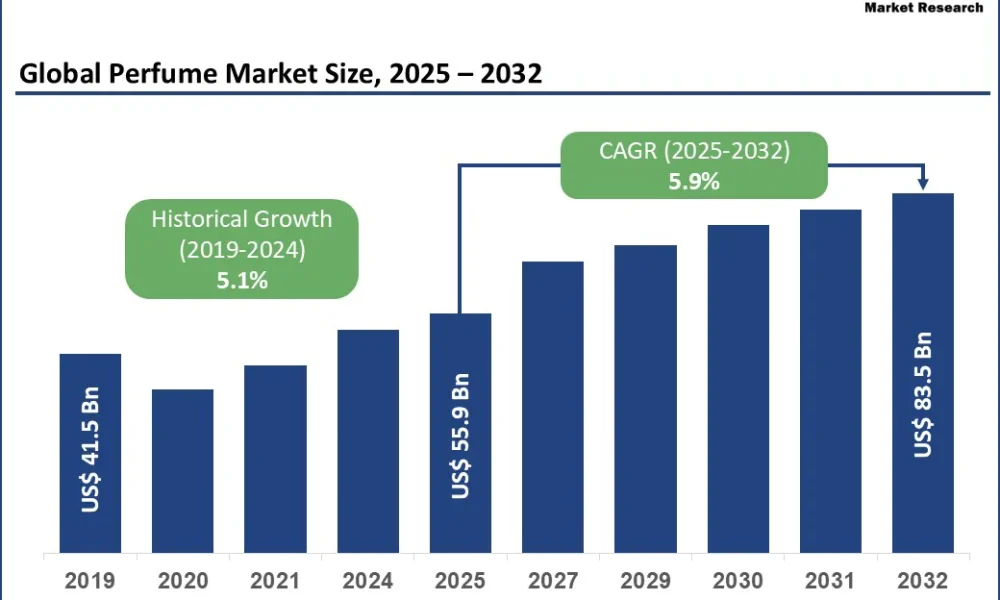
The market is also benefiting from a strong shift toward premium and luxury fragrances, as consumers increasingly seek unique scents and high-quality ingredients. Brands are investing heavily in product innovation, introducing long-lasting fragrances and limited-edition collections to attract customers. According to Persistence Market Research, the global perfume market size was valued at US$55.9 Bn in 2025 and is projected to reach US$83.5 Bn by 2032, growing at a CAGR of 5.9% between 2025 and 2032. The expansion is driven by increasing disposable incomes globally and evolving grooming habits among men and women. Premium fragrances represent a leading segment due to their strong brand value and exclusivity, while Europe remains a leading regional market due to its long-standing fragrance heritage and high consumer demand.
Download Your Free Sample & Explore Key Insights : https://www.persistencemarketresearch.com/samples/35620
Key Highlights from the Report
➤ The global perfume market is projected to grow from US$55.9 Bn in 2025 to US$83.5 Bn by 2032.
➤ Increasing consumer preference for premium and luxury fragrances is driving market expansion.
➤ Rising disposable income levels are encouraging consumers to spend more on personal grooming products.
➤ Growing popularity of celebrity-endorsed perfumes and designer fragrances is influencing purchasing decisions.
➤ Expansion of online retail platforms is improving accessibility to global fragrance brands.
➤ Continuous product innovation and limited-edition fragrance launches are strengthening brand competition.
Market Segmentation
The perfume market is segmented based on product type, consumer group, and distribution channel. Product categories include eau de parfum, eau de toilette, parfum, and other fragrance formats. Among these, premium and luxury fragrance products are gaining strong traction as consumers increasingly prefer high-quality scents with longer lasting effects. Premium fragrances often feature unique ingredient blends and sophisticated packaging, which appeal to consumers seeking exclusivity and prestige.
From a consumer perspective, the market caters to both men and women, with a growing segment of unisex fragrances gaining popularity. Fragrance brands are increasingly launching gender-neutral products to appeal to modern consumers who value individuality and personalization. Distribution channels include supermarkets, specialty stores, department stores, and online platforms. While physical retail remains a key sales channel, e-commerce platforms are rapidly gaining popularity as consumers prefer convenient online shopping and access to a wider variety of international brands.
Customize This Report for Your Exact Requirements : https://www.persistencemarketresearch.com/request-customization/35620
Regional Insights
Europe continues to hold a leading position in the global perfume market due to its deep-rooted fragrance culture and the presence of several renowned luxury perfume brands. Countries such as France, Italy, and Germany play a significant role in driving fragrance innovation and global perfume exports. The region’s long history of perfume craftsmanship and strong consumer demand for premium fragrances contribute significantly to market growth.
North America also represents a substantial market for perfumes, supported by rising personal grooming awareness and the popularity of designer fragrance brands. Meanwhile, the Asia-Pacific region is emerging as a high-growth market due to increasing urbanization, growing disposable incomes, and the influence of Western lifestyle trends. Younger consumers in countries such as China and India are increasingly adopting luxury fragrance products, creating strong growth opportunities for global perfume manufacturers.
Market Drivers
One of the key drivers of the perfume market is the growing demand for premium and luxury fragrances. Consumers are increasingly seeking sophisticated scents that reflect their personality and lifestyle. Luxury fragrance brands invest heavily in high-quality ingredients, creative packaging, and exclusive marketing campaigns, which enhance their appeal. As disposable incomes rise in many parts of the world, consumers are more willing to spend on high-end grooming products, including perfumes.
Another significant growth factor is the evolution of personal grooming trends across demographic groups. Perfumes are no longer limited to special occasions but are increasingly used as part of everyday grooming routines. The rising influence of social media, celebrity endorsements, and fashion trends has encouraged consumers to experiment with new fragrances. As a result, fragrance brands continue to introduce diverse scent profiles and innovative products to cater to evolving consumer preferences.
Market Restraints
Despite strong growth prospects, the perfume market faces certain restraints that may limit its expansion. One key challenge is the high cost associated with premium fragrance products, which can restrict adoption among price-sensitive consumers. Luxury perfumes often involve expensive ingredients and elaborate packaging, leading to higher retail prices. As a result, some consumers may opt for lower-cost alternatives or mass-market fragrances.
Another restraint is the increasing regulatory scrutiny related to fragrance ingredients and product safety. Governments and regulatory bodies across several regions have implemented strict guidelines for the use of certain chemicals in cosmetics and fragrances. Compliance with these regulations can increase manufacturing costs and limit ingredient choices for fragrance producers, potentially affecting product development and market expansion.
Market Opportunities
The perfume market offers significant opportunities through product innovation and personalization. Modern consumers are increasingly looking for unique scents that align with their personality and lifestyle preferences. Brands that offer customizable fragrance options or niche perfumes can attract consumers seeking distinctive experiences. Limited-edition collections and artisanal fragrances are also gaining popularity among fragrance enthusiasts.
Another promising opportunity lies in the rapid growth of digital retail and direct-to-consumer sales channels. Online platforms allow fragrance companies to reach a wider audience and provide personalized recommendations based on consumer preferences. Digital marketing strategies, including influencer collaborations and virtual fragrance experiences, can further strengthen brand engagement and expand global market reach.
Confirm Your Purchase & Access Full Insights : https://www.persistencemarketresearch.com/checkout/35620
Company Insights
Key players operating in the perfume market include:
- LVMH (Moët Hennessy Louis Vuitton)
- The Estée Lauder Companies Inc.
- Shiseido Co. Ltd.
- Chanel
- Hermès
- Giorgio Armani S.p.A.
- L’Oréal Luxe
- Kering Beauté
- Puig S.P.A.
- Coty Inc.
- Richemont Group
- Amouage
- Parfums de Marly
- Diptyque
- Penhaligon’s
Recent Developments
March 2024 – Coty Inc. expanded its luxury fragrance portfolio with new designer perfume launches targeting premium fragrance consumers.
September 2023 – The Estée Lauder Companies introduced new fragrance collections designed to appeal to younger consumers seeking modern scent profiles.
Future Opportunities and Growth Prospects
The future of the perfume market appears highly promising as global consumers continue to prioritize personal grooming and lifestyle expression. Rising demand for premium fragrances, innovative scent formulations, and personalized fragrance experiences will continue to drive product development. Fragrance manufacturers are likely to focus on unique ingredient combinations, eco-friendly packaging, and sustainable sourcing practices to meet changing consumer expectations.
Furthermore, expanding e-commerce channels and digital marketing strategies will allow perfume brands to reach new consumer segments worldwide. Emerging markets with rising disposable incomes and growing interest in luxury lifestyle products are expected to play a key role in shaping the long-term growth of the perfume market.




