
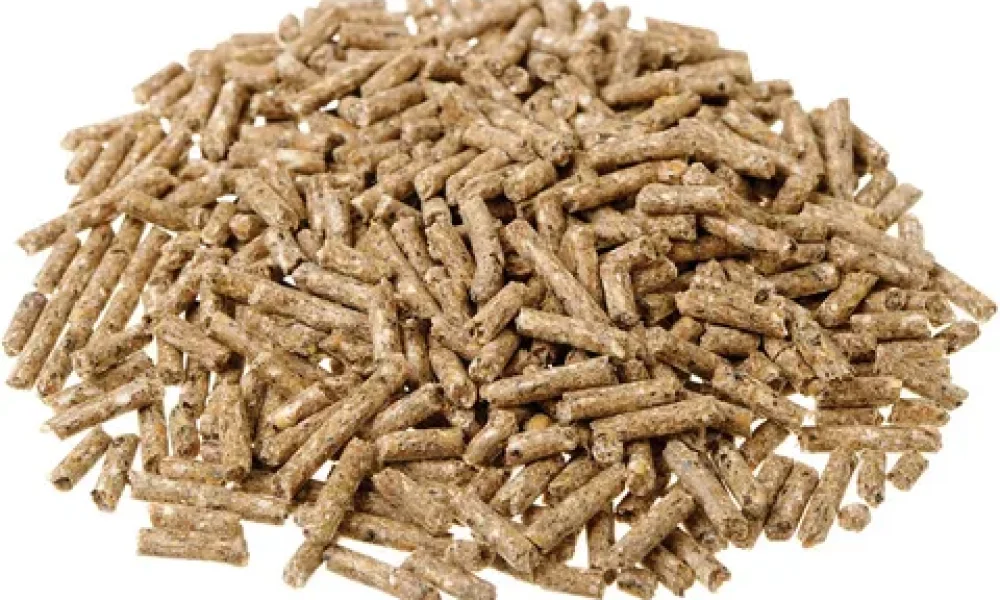
The global pellet binders market is on a steady growth trajectory, projected to expand from USD 1.7 billion in 2025 to nearly USD 2.5 billion by 2035, at a CAGR of 4.3%. This growth is fueled by the rising need for durable, efficient, and environmentally responsible feed and biomass solutions across the globe. With annual growth increasing consistently from USD 0.07 billion in 2026 to almost USD 0.09 billion by 2035, the industry demonstrates both resilience and long-term opportunity.
Growing Relevance in Feed and Biomass Industries
Pellet binders play a pivotal role in ensuring the durability and integrity of feed pellets, especially in high-volume livestock and aquaculture operations. In a sector where pellet quality directly impacts feed efficiency, nutrient retention, and animal performance, binders have moved from being a processing aid to an indispensable part of the feed value chain.
Their importance extends beyond animal nutrition. The biomass sector, particularly in renewable energy applications, relies on binders to improve pellet density and durability. This dual role ensures that binders remain relevant across both food security and clean energy agendas worldwide.
Lignosulfonates Lead as the Key Product Segment
By 2025, lignosulfonates are expected to command a 33% market share, cementing their role as the most widely used pellet binder. Known for their cost-effectiveness and strong binding efficiency, lignosulfonates are widely adopted in poultry and ruminant feed across Asia and Latin America.
In biomass, their ability to improve durability has driven interest from 2028 onward, while innovations in low-dust, heat-stable lignosulfonates are expected to strengthen penetration in Europe and North America by 2031. Manufacturers like Borregaard (LignoTech) are at the forefront of developing advanced lignosulfonate-based binders that align with both environmental standards and feed performance requirements.
Request Your Sample Now: https://www.futuremarketinsights.com/reports/sample/rep-gb-22470
Natural Sources Dominate with Consumer-Driven Growth
Natural sources are projected to account for 63% of the industry by 2025, supported by global shifts toward non-synthetic, biodegradable feed additives. In markets like Europe and North America, regulatory frameworks increasingly favor natural solutions, pushing demand for plant-based and lignin-derived binders.
Companies such as Novus International and Kemin Industries are rapidly expanding portfolios of natural pellet binders, addressing rising consumer concerns over feed safety and sustainability. This emphasis on cleaner formulations reflects the broader transition toward eco-friendly agriculture and aquaculture.
Poultry Feed Remains the Largest Application Segment
Poultry feed is estimated to hold 30% of market share in 2025, as pellet binders enhance feed efficiency and reduce dust levels in large-scale broiler and layer operations. Asia-Pacific and Latin America continue to dominate in poultry production, driving bulk demand for durable feed binders.
In Europe, poultry producers adopting antibiotic-free approaches are increasingly relying on premium binder formulations that improve pellet quality without compromising nutritional performance. Global feed giants like Cargill and ADM are leading this movement with tailored binder solutions that address specific challenges in poultry production systems.
Functional and Form Preferences: Binding Agents and Powders Take Lead
Binding agents are expected to retain the largest functionality share at 37%, underscoring their critical role in improving pellet stability and reducing feed fines. Meanwhile, powdered binders will dominate the form segment with a 41% share, thanks to their compatibility with dry feed mixes and ease of dispersion.
Companies such as Perstorp Group and ADDCON GmbH are enhancing formulations with added benefits like moisture resistance and nutrient retention, ensuring binders deliver value beyond mechanical performance.
B2B Sales Channels Cement Their Dominance
The B2B sales model is projected to account for 47% of the industry share in 2025, enabling manufacturers and integrators to secure bulk supplies while fostering long-term partnerships. Digital procurement platforms are further streamlining this model, making sourcing more efficient for feed producers.
Kemin Industries and Impextraco are actively strengthening their B2B offerings, ensuring that large-scale feed manufacturers can access customized, reliable binder solutions through direct relationships and digital channels.
Animal Feed Industry Holds Half of Market Demand
The animal feed industry is projected to represent 49% of end-use demand by 2025, highlighting the centrality of binders in commercial livestock and aquaculture operations. With increasing adoption of specialized nutrition and aquafeed formulations between 2028 and 2032, demand for high-quality binders will only intensify.
Global feed leaders such as Nutreco and Land O’Lakes are investing heavily in advanced binders that enhance feed integrity while supporting productivity and sustainability goals.
Get the Report Brochure Now: https://www.futuremarketinsights.com/reports/brochure/rep-gb-22470
Regional and Country-Level Growth Insights
The Asia-Pacific region is set to remain the fastest-growing market, driven by rising poultry, aquaculture, and swine feed demand. India stands out with a projected 4.6% CAGR, supported by integrated feed operations and adoption of natural binders. China follows closely at 4.1%, fueled by recovery in swine production and government-led food security initiatives.
In Europe, Germany and the United Kingdom are adopting advanced, low-dust binders in response to stricter feed regulations, while Australia lags slightly at 3.4% CAGR due to slower modernization of feed mills and preference for mash diets.
Competitive Landscape and Industry Innovation
The pellet binders market is increasingly competitive, with established giants and emerging innovators racing to capture share. Borregaard (LignoTech), with its 35% industry share, continues to lead by leveraging lignosulfonates across both feed and biomass sectors. Uniscope Inc., FMC Corporation, and Danisco (IFF) are also making strides with tailored solutions for aquaculture, poultry, and swine.
Recent developments underscore the pace of innovation. In June 2024, IFF’s Danisco Animal Nutrition & Health received EU-wide approval for two poultry feed solutions, including Axtra® XAP and Syncra® AVI, which integrate enzymes and probiotics to improve feed performance. Such breakthroughs signal a broader industry shift toward multifunctional binders that support both mechanical stability and animal health.
Future Outlook
With the pellet binders market holding a 25–30% share of the feed processing aids segment, its role in ensuring feed quality and operational efficiency is indisputable. While challenges like raw material volatility and regulatory scrutiny persist, the industry is well-positioned to adapt through innovation, regional diversification, and sustainability-driven strategies.
Both established players and new entrants have opportunities to expand, particularly by developing natural, multifunctional, and region-specific binders that align with global trends in agriculture, aquaculture, and renewable energy.
As the world balances the dual imperatives of feeding populations and powering clean energy transitions, pellet binders are proving to be a small but crucial ingredient in building a more sustainable future.



