
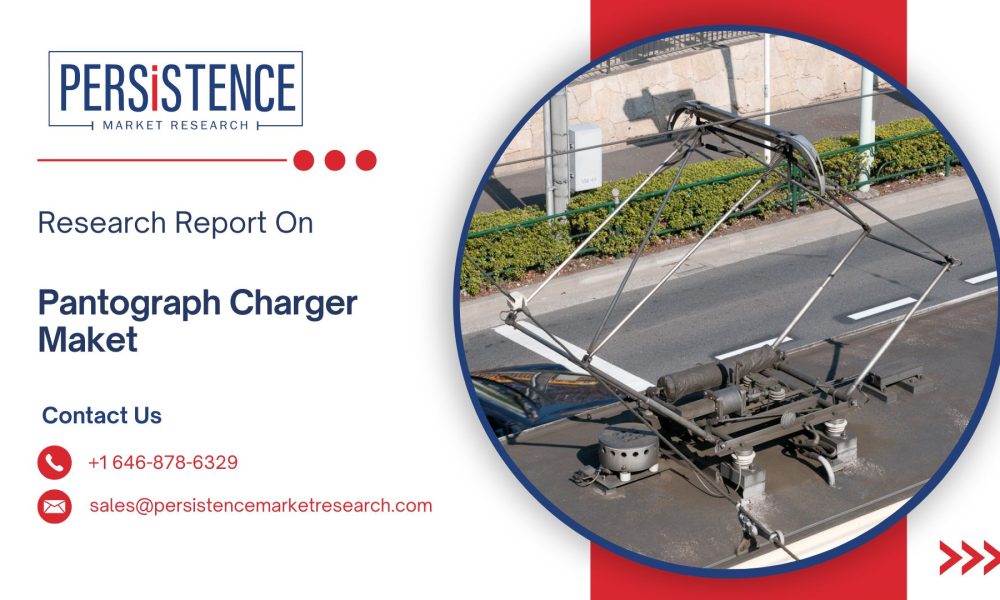
The global pantograph charger market is expected to grow from US$ 4.78 Bn in 2025 to US$ 21.19 Bn by 2032, registering an impressive CAGR of 23.7% during the forecast period. Pantograph chargers, widely used for electric buses and heavy-duty electric vehicles, enable rapid and automated charging through an overhead connection, significantly reducing downtime compared to traditional plug-in systems.
Market growth is driven by the surging adoption of electric buses in public transportation fleets worldwide, spurred by environmental regulations, urban air quality goals, and the urgent need for sustainable mobility solutions. Supportive government incentives, combined with investments in electric vehicle infrastructure, are creating favorable conditions for pantograph charger deployment. The technology’s ability to offer high power output, fast charging times, and operational efficiency is making it the preferred choice for high-frequency transit routes.
✅ Key Highlights from the Report:
➤ Market to grow from US$ 4.78 Bn in 2025 to US$ 21.19 Bn by 2032 at a 23.7% CAGR.
➤ Rising adoption of pantograph chargers in public bus networks.
➤ Automated charging solutions reducing operational downtime.
➤ Asia-Pacific leads due to large-scale electric bus adoption in China.
➤ Government incentives accelerating EV infrastructure expansion.
➤ Increased focus on high-power, ultra-fast charging solutions for heavy vehicles.
📊 Market Segmentation:
The pantograph charger market can be segmented by type, application, and charging capacity. By type, upward-moving pantographs are gaining traction due to their ability to connect automatically to vehicle-mounted charging points without human intervention. Downward-moving pantographs are also popular in certain regions due to lower infrastructure requirements and ease of integration with existing bus depots.
By application, the public transportation segment dominates, as electric buses require fast turnaround charging for daily operations. The commercial vehicle segment, including trucks and logistics fleets, is expected to see rapid growth as electrification expands beyond passenger transit. Charging capacities of 150–300 kW remain common, but demand for ultra-fast chargers exceeding 450 kW is increasing to support high-frequency routes and extended operational hours.
Get a Sample Copy of Research Report (Use Corporate Mail id for Quick Response): https://www.persistencemarketresearch.com/samples/35383
📊 Regional Insights:
Asia-Pacific holds the largest market share, driven primarily by China’s aggressive push toward electric public transport. Large-scale adoption of electric buses in metropolitan cities, coupled with significant government subsidies for EV infrastructure, is fueling market growth. Countries like Japan and South Korea are also implementing pilot projects for pantograph chargers to modernize their urban transit systems.
Europe ranks as the second-largest market, with strong commitments from countries like Germany, the Netherlands, and the Nordic nations to transition to zero-emission public transportation. North America is seeing increased adoption in the U.S. and Canada, particularly in states and provinces with strong green mobility policies. Meanwhile, Latin America and the Middle East & Africa are emerging markets where adoption is beginning through pilot programs and infrastructure trials.
Market Drivers
A primary driver for the pantograph charger market is the global shift toward zero-emission public transportation, with electric buses replacing diesel fleets. The technology enables fast, automated charging, making it ideal for high-frequency and high-mileage routes.
Government initiatives and subsidies for EV infrastructure are also boosting adoption. As cities aim to reduce emissions and improve air quality, pantograph chargers offer a scalable solution for mass transit electrification.
Market Restraints
High initial infrastructure costs can limit adoption, especially in regions with limited EV funding. Installing pantograph systems requires significant investment in charging stations, grid connections, and civil works.
Standardization issues between manufacturers can also pose challenges, as interoperability is crucial for multi-vendor public transport networks. Additionally, grid capacity limitations in certain urban areas may slow large-scale deployment.
Market Opportunities
There is growing opportunity in integrating pantograph chargers with renewable energy sources such as solar and wind, creating sustainable charging ecosystems. The expansion of electrification beyond buses to trucks, trams, and other heavy-duty vehicles presents a significant growth avenue.
Furthermore, partnerships between OEMs, infrastructure providers, and municipalities can accelerate adoption, while advances in high-capacity charging technology will enable even faster and more efficient fleet operations.
👉 Reasons to Buy the Report:
✔️ Detailed market projections with CAGR and value forecasts through 2032.
✔️ Insight into emerging high-capacity charging technologies.
✔️ Comprehensive segmentation by type, application, and region.
✔️ Analysis of government policies driving adoption.
✔️ Profiles of leading players with recent strategic developments.
👉 Frequently Asked Questions (FAQs):
➤ How large will the pantograph charger market be by 2032?
➤ Who are the major players in the global pantograph charger market?
➤ What is the projected CAGR for the pantograph charger market from 2025 to 2032?
➤ Which region will lead the pantograph charger market during the forecast period?
➤ What charging capacities are expected to dominate the market?
📌 Key Players
✦ Siemens AG
✦ ABB Ltd.
✦ Schunk Transit Systems GmbH
✦ Siemens Mobility
✦ Heliox Energy
✦ Alstom S.A.
✦ Wabtec Corporation
■ Siemens launched an ultra-fast 600 kW pantograph charging solution in 2025 for high-capacity bus fleets.
■ ABB partnered with multiple European cities to deploy automated overhead charging systems for electric buses.
Explore more related market insights and reports by visiting our website.




