
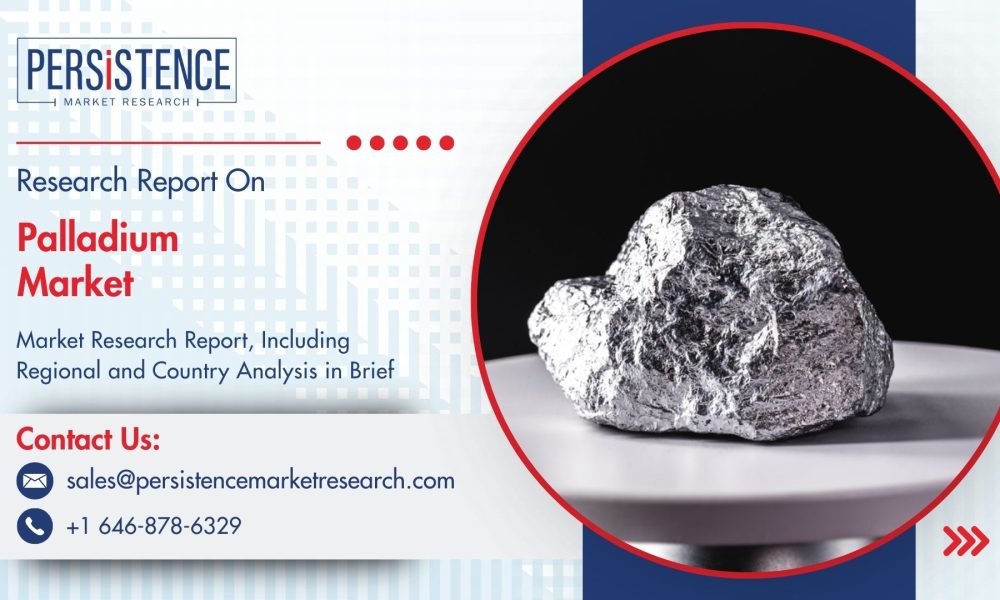
Introduction
The global palladium market has gained considerable momentum in recent years, driven by its vital role in the automotive, electronics, and industrial sectors. Known for its exceptional catalytic properties, palladium is a key component in emission control systems, particularly catalytic converters, which reduce harmful exhaust gases from vehicles. Additionally, its growing use in renewable energy technologies, chemical processing, and jewelry has reinforced its importance in the global commodities market.
This report provides an in-depth analysis of the palladium market, covering its key growth drivers, challenges, technological innovations, and regional dynamics. As demand for cleaner energy and environmentally friendly solutions continues to rise, palladium is poised to play a crucial role in advancing sustainability and driving industrial efficiency.
Market Projections and Forecast
According to Persistence Market Research’s projections, the global palladium market size is likely to be valued at US$ 15.1 billion in 2025 and is estimated to reach US$ 20.5 billion by 2032, growing at a CAGR of 4.5% during the forecast period from 2025 to 2032.
The primary growth driver of this market is the increasing demand for palladium in automotive catalytic converters, as stricter emission regulations worldwide continue to push automakers toward high-performance materials. Additionally, the electronics and industrial manufacturing sectors are adopting palladium due to its superior conductivity and corrosion resistance, further contributing to its market expansion.
North America and Asia-Pacific are expected to witness strong growth due to their advanced automotive industries, expanding electronics sector, and rising adoption of renewable energy solutions.
Get a Sample PDF Brochure of the Report (Use Corporate Email ID for a Quick Response): https://www.persistencemarketresearch.com/samples/4339
Market Dynamics
Drivers of Market Growth
Rising Automotive Demand for Catalytic Converters
Palladium’s critical role in catalytic converters makes the automotive sector its largest consumer. As governments enforce stricter emission norms, automakers are increasingly relying on palladium-based systems to reduce pollutants, boosting global demand.Growth in Industrial and Chemical Applications
Beyond automotive, palladium is used extensively in chemical reactions, hydrogen purification, and as a catalyst in various industrial processes. Its ability to accelerate reactions while maintaining high efficiency drives strong demand in chemical and energy sectors.Increasing Use in Electronics
The electronics industry benefits from palladium’s conductivity and durability. It is used in connectors, sensors, and semiconductors, particularly in high-performance devices. The growing reliance on electronics in consumer goods, communication systems, and electric vehicles supports market growth.Emerging Role in Renewable Energy
Palladium is gaining attention for its use in hydrogen storage and fuel cell technologies, positioning it as a vital material for clean energy initiatives. As countries transition toward renewable energy, demand for palladium in these applications is expected to accelerate.
Challenges in the Market
Price Volatility
Palladium prices are highly volatile, influenced by supply-demand imbalances, geopolitical tensions, and mining challenges. This volatility poses difficulties for manufacturers and investors, making it a barrier to consistent adoption.Supply Constraints
The majority of palladium is mined in a few countries, including Russia and South Africa. Any disruption in these regions—whether due to political instability, labor strikes, or sanctions—can significantly impact global supply.Substitution by Other Metals
Rising costs of palladium have led industries to explore alternatives like platinum and rhodium for catalytic converters and industrial uses. While palladium offers superior performance, the substitution trend may restrain its long-term demand growth.
Market Trends and Technological Innovations
Shift Toward Hybrid and Electric Vehicles
Although EVs reduce reliance on catalytic converters, hybrid vehicles still require them. As hybrid adoption grows globally, palladium demand in this segment remains significant.Recycling of Palladium
Recycling initiatives are becoming critical to address supply constraints. Advances in recovery technologies are allowing industries to reclaim palladium from used catalytic converters and electronics, reducing dependence on primary mining.Sustainable Mining Practices
Mining companies are focusing on eco-friendly and energy-efficient methods to extract palladium, aligning with global sustainability goals. This trend is particularly prominent in regions with stringent environmental regulations.Expanding Use in Hydrogen Economy
With the hydrogen economy gaining traction, palladium’s role in hydrogen purification and storage is expected to grow. Governments and industries investing in hydrogen-based energy solutions are likely to create new opportunities for the palladium market.
Palladium Market Segmentation
By Application
Automotive (Catalytic Converters)
Electronics
Jewelry
Chemical & Industrial Processing
Energy & Hydrogen Storage
By End-Use Industry
Automotive & Transportation
Electronics & Semiconductors
Healthcare & Pharmaceuticals
Industrial Manufacturing
Renewable Energy
By Region
North America
Europe
Asia-Pacific
Latin America
Middle East & Africa
Regional Analysis
North America
North America holds a dominant position in the palladium market, driven by stringent emission norms and a well-established automotive sector. The U.S. is a key contributor, with strong demand from both automotive and industrial applications. Recycling initiatives in the region also support long-term palladium availability.
Europe
Europe’s automotive industry is a major consumer of palladium, as countries adopt stricter environmental policies. Germany, the U.K., and France lead the region in terms of demand. Additionally, the region’s focus on renewable energy and hydrogen technologies is expanding palladium applications.
Asia-Pacific
Asia-Pacific is expected to record the highest growth during the forecast period, fueled by rapid industrialization, expanding automotive production, and growing electronics manufacturing in countries like China, Japan, and India. The region’s large population and rising disposable incomes are also driving demand for vehicles, thereby boosting palladium usage in catalytic converters.
Latin America
While still an emerging market, Latin America shows potential, particularly in Brazil and Mexico, due to increasing vehicle production and industrial activities.
Middle East & Africa
South Africa remains one of the largest producers of palladium, playing a key role in global supply. The region’s mining sector significantly influences global market stability, making it a critical part of the palladium value chain.
Key Companies Profiled in the Report
Anglo American Platinum
Norilsk Nickel
Sibanye Stillwater Limited
Impala Platinum Holdings Limited
North American Palladium Ltd.
Johnson Matthey
Heraeus Holding
BASF SE
Lonmin PLC
Vale S.A.
Future Outlook
The palladium market is poised for steady growth, supported by its indispensable role in the automotive and industrial sectors. While price volatility and supply constraints pose challenges, advancements in recycling technologies and the expansion of renewable energy applications provide significant opportunities.
The shift toward sustainability and clean energy will further cement palladium’s importance in hydrogen fuel cells and related technologies. Meanwhile, hybrid vehicle production will sustain demand for catalytic converters in the near term, ensuring palladium’s relevance in the evolving automotive landscape.
Conclusion
The palladium market is entering a dynamic phase of growth, driven by environmental regulations, industrial demand, and technological advancements. With its critical applications in catalytic converters, electronics, and renewable energy, palladium continues to be a vital resource for global industries.
Although supply volatility and high costs remain challenges, innovation in recycling, sustainable mining, and new energy applications are shaping the future of the market. As countries push toward greener economies, palladium’s role in emission control and clean energy solutions will remain central, ensuring long-term market growth.
Explore the Latest Trending Research Reports:




