
Introduction
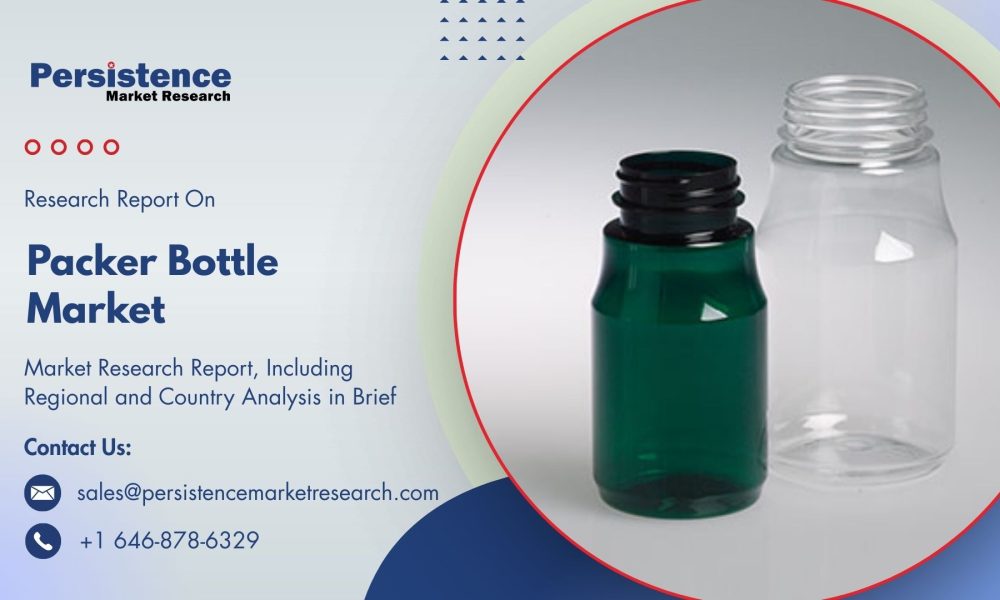
The packer bottle market has witnessed steady growth over the past decade, supported by its extensive use across pharmaceuticals, nutraceuticals, personal care, and food & beverages. These bottles, typically made of plastic or glass, are designed for durability, tamper resistance, and ease of storage, making them the preferred packaging solution for tablets, capsules, vitamins, and dietary supplements.
As global demand for healthcare products and nutritional supplements continues to rise, packer bottles have become essential for product preservation, safety, and consumer convenience. This report provides a detailed analysis of the packer bottle market, examining key growth drivers, challenges, trends, technological advancements, and regional performance.
Market Projections and Forecast
According to Persistence Market Research’s projections, the global packer bottle market is forecast to expand at a CAGR of 5.6%, growing from a value of US$50.2 Bn in 2023 to US$73.5 Bn by the end of 2030.
The market’s steady growth is primarily attributed to increasing demand from the pharmaceutical and nutraceutical industries, coupled with rising consumer awareness about health and wellness. Additionally, advancements in packaging technologies and sustainability initiatives are expected to further support market expansion. North America is anticipated to remain the largest market, while Asia-Pacific is likely to experience the fastest growth during the forecast period.
Get a Sample PDF Brochure of the Report (Use Corporate Email ID for a Quick Response): https://www.persistencemarketresearch.com/samples/33989
Market Dynamics
Drivers of Market Growth
- Growing Demand for Pharmaceuticals and Nutraceuticals:
Rising incidences of chronic diseases and increased health awareness are fueling demand for medicines, dietary supplements, and vitamins. Packer bottles are the most preferred packaging format for these products, offering durability and safety features. - Convenience and Safety Features:
Packer bottles provide tamper-evident closures, child-resistant caps, and portability, making them ideal for consumers and manufacturers. Their ability to preserve product integrity has significantly contributed to their rising adoption across industries. - Rising Popularity of E-Commerce:
The surge in online retail for pharmaceuticals and supplements has created new opportunities for the packer bottle market. With products being shipped directly to consumers, secure and sturdy packaging like packer bottles has become increasingly essential. - Innovation in Packaging Materials:
Manufacturers are focusing on lightweight, recyclable, and sustainable materials for packer bottles. This innovation is aligning with global sustainability goals while providing brands with cost-efficient and eco-friendly solutions.
Challenges in the Market
- Environmental Concerns Around Plastic Packaging:
A large share of packer bottles are made from plastic, raising concerns over environmental pollution. Increasing government regulations and consumer demand for sustainable packaging could pose challenges for traditional plastic-based solutions. - Intense Market Competition:
The packer bottle market is highly fragmented, with several global and regional players competing. Pricing pressures and the need for differentiation create significant competition among manufacturers. - Raw Material Price Volatility:
Fluctuations in raw material prices, particularly for plastics, impact manufacturing costs, thereby influencing profit margins and market growth.
Market Trends and Technological Innovations
- Shift Toward Sustainable Packaging:
Growing awareness about plastic waste has encouraged manufacturers to introduce recyclable and biodegradable packer bottles. Companies are increasingly investing in bio-based plastics and glass alternatives to meet sustainability goals. - Smart Packaging Solutions:
Integration of digital technologies like QR codes, tamper-evident seals, and RFID tags is gaining traction. These features enhance supply chain visibility, product authentication, and consumer trust. - Customization and Branding Opportunities:
Packer bottles are evolving into more than just containers—they are becoming tools for branding. Manufacturers are offering custom shapes, colors, and labeling options to help brands differentiate themselves in competitive markets. - Expansion in Emerging Markets:
With the growing middle-class population and rising healthcare expenditure in regions like Asia-Pacific and Latin America, demand for pharmaceuticals and supplements is increasing, thereby driving demand for packer bottles.
Packer Bottle Industry Segmentation
By Material Type:
- Plastic (HDPE, PET, PP)
- Glass
By Capacity:
- Below 100 ml
- 100 ml–250 ml
- 250 ml–500 ml
- Above 500 ml
By End-Use Industry:
- Pharmaceuticals
- Nutraceuticals
- Food & Beverages
- Personal Care
- Others
By Distribution Channel:
- Online
- Offline (Pharmacies, Retail Stores, Wholesale)
Regional Analysis
North America
North America dominates the packer bottle market, driven by strong demand from the pharmaceutical and nutraceutical sectors. The region’s well-established healthcare infrastructure, combined with high consumer awareness about preventive healthcare, has supported the use of packer bottles. The United States is the leading contributor, with robust adoption in dietary supplements and vitamin packaging.
Europe
Europe represents a mature market for packer bottles, with high demand from pharmaceuticals and personal care industries. The region’s strict regulations around packaging sustainability and recyclability are driving innovations in eco-friendly packer bottle solutions. Germany, France, and the U.K. are key markets.
Asia-Pacific
Asia-Pacific is projected to experience the fastest growth during the forecast period, fueled by increasing healthcare spending, rising population, and growing dietary supplement consumption. Countries such as China and India are emerging as lucrative markets, supported by their expanding pharmaceutical manufacturing industries and rising disposable incomes.
Latin America and Middle East & Africa
These regions are witnessing steady growth, with increasing adoption of pharmaceuticals and nutraceuticals. While the markets are still developing, government initiatives to improve healthcare access and rising demand for packaged healthcare products are driving growth opportunities.
Key Companies Profiled in the Report
- Gerresheimer AG
- Berry Global, Inc.
- Amcor plc
- Alpha Packaging
- Pretium Packaging, LLC
- Comar LLC
- Origin Pharma Packaging
- All American Containers
- Berk Company
- Drug Plastics & Glass Co., Inc.
Future Outlook
The future of the packer bottle market looks promising, supported by growing demand across pharmaceuticals, nutraceuticals, and food & beverages. Sustainability will play a critical role, with manufacturers expected to invest in recyclable materials, lightweight designs, and eco-friendly alternatives to reduce environmental impact.
Additionally, the integration of smart packaging technologies such as QR codes and RFID tags will enhance product traceability, consumer engagement, and regulatory compliance. Emerging economies in Asia-Pacific and Latin America are expected to drive significant demand as healthcare access expands and disposable incomes rise.
Conclusion
The packer bottle market is on a steady growth trajectory, driven by the expanding pharmaceutical and nutraceutical industries, coupled with rising consumer demand for safe, durable, and convenient packaging solutions. Despite challenges such as environmental concerns and raw material price fluctuations, the market is poised to thrive, thanks to sustainability-focused innovations and increased global healthcare spending.
As the industry evolves, manufacturers must balance functionality, affordability, and sustainability to remain competitive. With advancements in materials, digitalization, and customization, packer bottles are set to play an even more significant role in the global packaging landscape by 2030.
Explore the Latest Trending Research Reports:




