

Ozone Generation Market Size, Share and Trend Analysis Report : Global Opportunity Analysis and Industry Forecast 2021-2030
🌐 Ozone Generation Market Overview
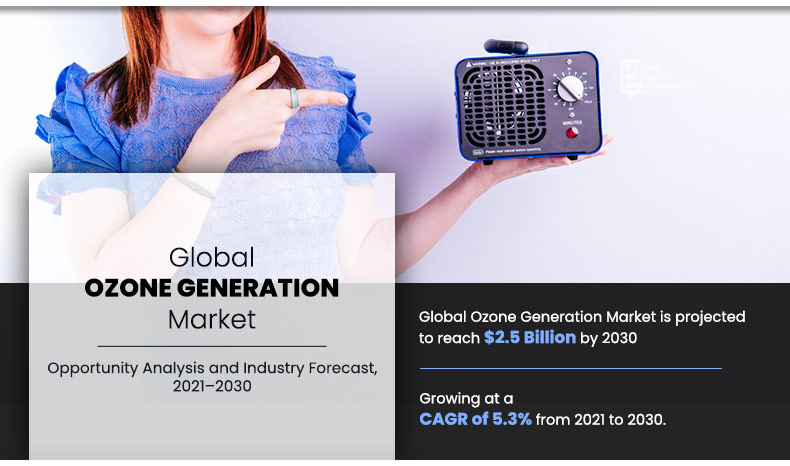
According to a recent report by Allied Market Research, the ozone generation market was valued at $1.5 billion in 2020 and is projected to reach $2.5 billion by 2030, growing at a CAGR of 5.3% from 2021 to 2030. The growth is primarily driven by rising hygiene concerns, demand for clean water, air purification, and industrial applications.
Download PDF Brochure: https://www.alliedmarketresearch.com/request-sample/2610
Ozone (O₃), a highly reactive gas consisting of three oxygen atoms, is increasingly used for sterilization, oxidation, and disinfection across municipal, industrial, and residential sectors. Since ozone is unstable at atmospheric conditions, it must be generated on-site using specialized ozone generators.
⚙️ Market Drivers
🧼 Rising Hygiene & Disinfection Needs
Post-pandemic hygiene awareness has led to increased demand for air and water disinfection solutions in public spaces, hospitals, and homes. Ozone’s effectiveness in oxidizing bacteria and viruses makes it a preferred method in medical equipment sterilization and water treatment.
💧 Water Treatment Demand
Ozone is a powerful oxidizer used in wastewater treatment, eliminating organic and inorganic contaminants. As water pollution rises globally, the adoption of ozone generators in municipal water treatment is expanding significantly.
🌬️ Air Purification
Urban pollution, increasing airborne diseases, and stricter air quality regulations have prompted the use of ozone-based air purification systems, especially in industrial and commercial buildings.
⚡ Technology Insights
The ozone generation market is segmented by technology into:
- Corona Discharge
- Ultraviolet (UV) Radiation
- Cold Plasma
- Electrolytic
Among these, corona discharge technology dominated the market in 2020 and is expected to retain its lead. This method is highly efficient and widely used in large-scale industrial and municipal ozone generation applications.
🧪 Application Analysis
Based on application, the market is categorized into:
- Wastewater Treatment
- Air Purification
- Medical Equipment
- Food & Beverages
- Others
The medical equipment segment led the market in 2020 and is anticipated to remain dominant through 2030. The use of ozone in sterilizing surgical tools, hospital rooms, and personal protective equipment (PPE) surged during the COVID-19 pandemic.
🏭 End-Use Segmentation
The end-use segments of the ozone generation market include:
- Industrial
- Residential
- Municipal
- Others
The industrial sector accounted for the largest market share in 2020, driven by its use in chemical processing, pharmaceutical manufacturing, and food sanitation. This trend is expected to continue as industries aim to comply with environmental regulations and sustainability standards.
Procure This Report (225 Pages PDF with Insights, Charts, Tables, and Figures): https://bit.ly/41v6r4u
🌏 Regional Outlook
🌟 Asia-Pacific: Market Leader
Asia-Pacific held the highest share of the ozone generation market in 2020 and is projected to continue its dominance through 2030. The region’s rapid urbanization, industrialization, and increasing public investments in clean water and air solutions are key growth factors. Countries like China, India, and Japan are heavily investing in municipal water treatment and environmental management infrastructure.
🌍 Other Key Markets
- North America and Europe are mature markets driven by environmental regulations, especially related to air and water quality.
- Emerging markets in Latin America and Africa are expected to see gradual adoption due to growing awareness and foreign investments in infrastructure.
🏢 Key Market Players
Leading companies in the global ozone generation market include:
- Daikin Industries, Ltd.
- Evoqua Water Technologies LLC
- Electrolux
- Ebara Corporation
- Fuji Electric Co., Ltd.
- Mitsubishi Electric Corporation
- MKS Instruments
- Teledyne Technologies
- Toshiba Corporation
- Xylem Inc.
These players are focusing on technological innovation, cost-effective production, and regional expansion to gain competitive advantage.
🦠 Impact of COVID-19
The COVID-19 pandemic initially disrupted the ozone generation market, particularly in sectors like hospitality, entertainment, and public transit—where air purification systems were widely used. Additionally, oxygen shortages in hospitals during the pandemic diverted focus from ozone-based disinfection to essential oxygen supply for patients.
However, the long-term impact has been positive as the demand for clean, virus-free environments surged post-pandemic, especially in medical and residential sectors.
⚠️ Market Challenges
- High Equipment Cost: Advanced ozone generation systems involve significant upfront investments.
- Short Half-Life: Ozone’s instability requires on-site, real-time production, which limits storage and transport.
- Health Concerns: At high concentrations, ozone can be harmful to human health, leading to concerns in residential use.
🔮 Future Outlook
The ozone generation market is set for steady growth as global awareness around sustainability, water scarcity, and public health intensifies. With technological advancements in ozone production and integration in smart environmental systems, the market is poised to offer substantial opportunities, particularly in emerging economies and industrial zones.
Other Trending Reports:-
Environmental Remediation Market
About Us:
Allied Market Research (AMR) is a market research and business-consulting firm of Allied Analytics LLP, based in Portland, Oregon. AMR offers market research reports, business solutions, consulting services, and insights on markets across 11 industry verticals. Adopting extensive research methodologies, AMR is instrumental in helping its clients to make strategic business decisions and achieve sustainable growth in their market domains. We are equipped with skilled analysts and experts and have a wide experience of working with many Fortune 500 companies and small & medium enterprises.
Pawan Kumar, the CEO of Allied Market Research, is leading the organization toward providing high-quality data and insights. We are in professional corporate relations with various companies. This helps us dig out market data that helps us generate accurate research data tables and confirm utmost accuracy in our market forecasting. Every data company in the domain is concerned. Our secondary data procurement methodology includes deep presented in the reports published by us is extracted through primary interviews with top officials from leading online and offline research and discussion with knowledgeable professionals and analysts in the industry.




